OpenAI Accuses Chinese Firm DeepSeek of Intellectual Theft
OpenAI has leveled serious allegations against the Chinese artificial intelligence developer DeepSeek, accusing the company of systematically appropriating American AI technologies through sophisticated data extraction techniques.
These accusations, outlined in a congressional memorandum released this week, assert that DeepSeek has been engaged in what OpenAI terms “ongoing efforts to free-ride” on capabilities developed in the United States.
The AI powerhouse has conveyed to the House Select Committee on China that employees of DeepSeek devised specialized algorithms to access OpenAI’s models, subsequently extracting outputs for the purpose of training.
According to an array of reports from Bloomberg News and Reuters, their tactics involved routing queries through intermediary servers, thereby obscuring their true origin and circumventing established access barriers.
Central to this controversy is a technique called distillation, which permits less sophisticated AI systems to glean insights from their more advanced counterparts by scrutinizing their responses.
While there are legitimate applications for this method, OpenAI explicitly forbids the use of its outputs to construct rival systems.
The firm asserts that DeepSeek has implemented “new, obfuscated methods” purposefully designed to circumvent detection.
DeepSeek captured attention last year with its R1 model, which purportedly delivered performance metrics comparable to leading American systems at a minuscule fraction of the expenditure.
The Chinese enterprise claims to have invested roughly $6 million in training R1, contrasting sharply with the $100 million that OpenAI allocated for GPT-4 development. Such a disparity in costs has provoked scrutiny of the methodologies employed to garner such efficiency.
David Sacks, the White House AI adviser, remarked that there is “substantial evidence” indicating that DeepSeek has indeed derived knowledge from OpenAI’s models.
He foresees that U.S. AI companies will soon adopt preventative measures aimed at thwarting similar acts of intellectual appropriation.
Concurrently, the National Security Council has commenced a review of DeepSeek’s application in light of prevailing security apprehensions.
- Plausible new product launches by DeepSeek, including an agent-based model designed to rival OpenAI.
- The congressional memo highlights DeepSeek’s chatbot’s evident political bias, as it deliberately avoids addressing sensitive subjects deemed controversial by Chinese authorities, such as Taiwan or the Tiananmen Square protests.
Representative John Moolenaar, chairing the House China Committee, characterized the situation as emblematic of the “CCP’s playbook: steal, copy, and kill.” He cautioned that Chinese enterprises will persist in leveraging American AI innovations for an unfair competitive edge.
This dispute unfolds against a backdrop of escalating concern regarding AI competition between the United States and China.
The CEO of Google DeepMind recently asserted that Chinese AI technologies now trail their American counterparts by merely months, underscoring the fierce global race toward achieving artificial general intelligence.
Despite the gravity of the allegations, DeepSeek remains intent on advancing its AI capabilities. Technical documentation indicates that Nvidia has aided DeepSeek in the development of R1, which necessitated an astonishing 2.8 million GPU hours of H800 processors.
Further complicating the landscape are recent regulatory developments. Chinese authorities have allegedly sanctioned DeepSeek’s acquisition of Nvidia’s more sophisticated H200 AI chips, contingent upon final stipulations.
Earlier in the year, the Trump administration permitted Nvidia to export these processors to China, yet Chinese regulators retain ultimate approval authority.
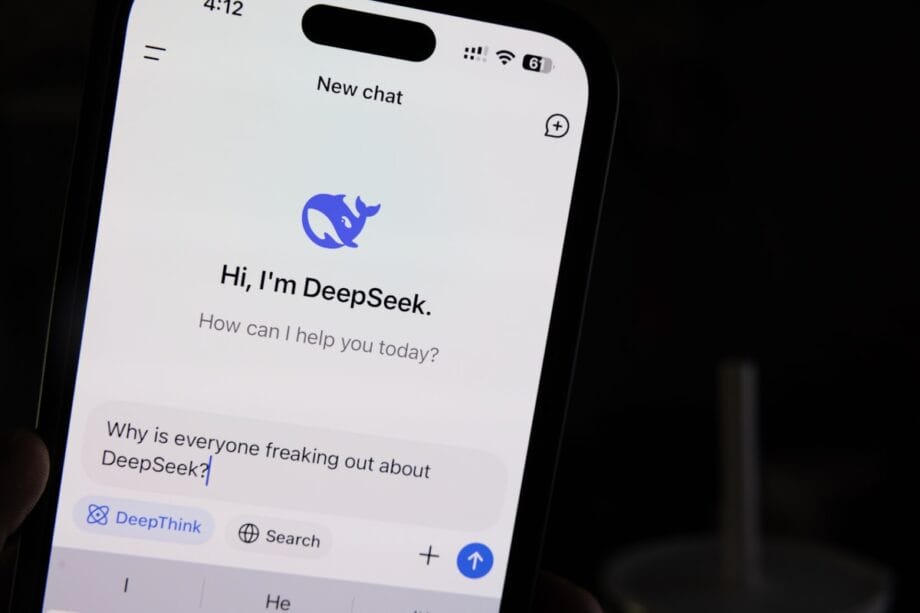
The allegations between OpenAI and DeepSeek epitomize the fundamental tensions inherent in global AI development, caught between open innovation and the imperative of intellectual property protection.
As the significance of AI capabilities nears that of strategic assets, disputes over technology transfer and competitive practices will likely escalate among the foremost nations in AI advancement.
Source link: Technobezz.com.