Quick Summary
Cloud robotics is transforming industrial automation by combining AI, cloud computing, and connected robotics to create smarter, more adaptable, and cost-effective operations. By leveraging cloud-based processing, robots can share data, learn collectively, perform complex tasks, and continuously improve without relying solely on onboard hardware.
Industries including manufacturing, logistics, healthcare, agriculture, and maintenance are adopting cloud robotics to boost productivity, reduce downtime, and enhance operational efficiency. Although challenges such as cybersecurity, network reliability, latency, and standardization remain, advances in AI, 5G, and edge computing are driving the next generation of intelligent, collaborative, and autonomous robotic systems.
Introduction
Cloud robotics is one of the most revolutionary changes. It is a technology that combines the intelligence of cloud-based systems with the operational capabilities of a traditional robotic system. In fact, this combination allows robots to become more powerful in their work, more flexible, and able to work not only with humans but also with other machines. As the use of AI-powered automation rises across sectors, cloud robotics, a major technology, is gaining momentum in industrial operations.
What is Cloud Robotics?

Cloud robotics connects robots to cloud infrastructure, enabling them to instantly access powerful computational resources, AI models, and shared data storage.
A traditional robot that relies solely on its onboard processor for decision-making is very different from a cloud-connected robot that can offload complex tasks, such as object recognition, path planning, and predictive maintenance, to cloud servers. That means it reduces the use of a single robot’s computer resources and gives the whole group a chance to learn simultaneously.
Communication between robots enables the exchange of information, mutual assistance, and continuous refinement of tactics, thus giving rise to a smarter, more adaptive form of automation.
The Effect of Cloud Robotics on Industrial Automation?

Linking robotics to cloud computing is changing industrial automation by increasing its intelligence, speed, and flexibility. Assisted by AI, cloud-connected robots can make complex decisions; for example, they can visually analyze industrial lines, identify defective items, or even autonomously adjust operations. To scale robotic fleets rapidly, industries adopt cloud computing, enabling lightweight production machines that can be easily adjusted as demand changes.
On top of that, cloud-enabled robots can exchange information, perform cooperative actions, and improve overall work processes, leading to reduced downtime and a more effective labor division, which is especially important in third-party logistics and distribution centers.
In addition, cloud access offers the benefits of remote monitoring and control, allowing managers to safely operate or adjust procedures without any physical presence, even when the potential for danger exists, or the manufacturing facilities are far apart from each other, as it is a dual benefit of improving both efficiency and the safety of the work environment.
Applications of Cloud Robotics Across Industries
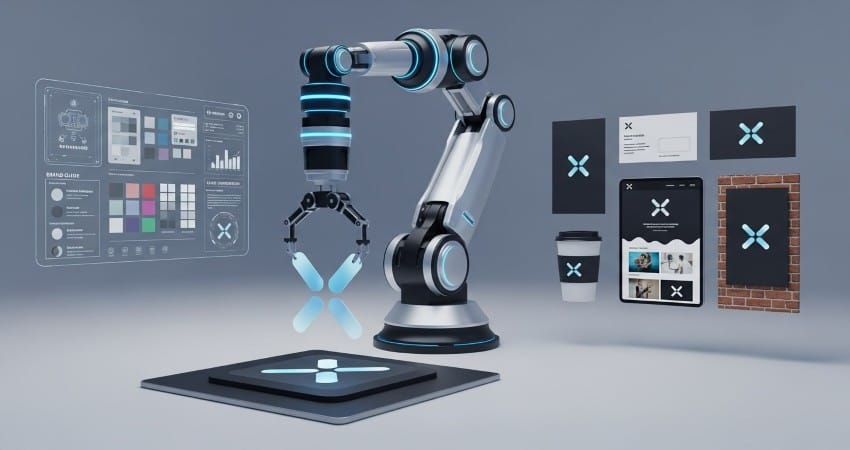
Cloud robotics is becoming a solution to industrial problems in different sectors:
- Manufacturing: Cloud-connected robots in smart factories can completely overhaul assembly operations, instantly respond to production schedule changes, and perform defect detection with AI-visual inspection.
- Logistics and Warehousing: Cloud-connected AMRs efficiently handle materials, manage stock, and identify routes on a moment-to-moment basis. By sharing cloud data, robots can adapt their behavior to changes in the warehouse layout or variations in order volume.
- Healthcare: Surgical robots and rehabilitation equipment primarily rely on cloud intelligence to enable new methods, improve accuracy, and personalize patient care. Sharing data in the cloud is a key factor in achieving better surgical outcomes and reducing human error.
- Agriculture: Farming drones and driverless farm vehicles use cloud-based AI to perform tasks such as crop monitoring, determining irrigation timing, and pest control. Data gathered from different areas is used to improve models, leading to more accurate predictions and supporting sustainable farming methods.
- Inspection and Maintenance: Robots are connected to the cloud, making it easier to conduct preventive maintenance and inspect the premises. AI interprets sensor data to pinpoint when equipment failure is likely, reducing downtime and improving operational efficiency.
Advantages of Cloud Robotics

Robots perform better and respond more quickly when they’re linked to cloud intelligence. This link enables them to take up difficult tasks such as 3D mapping and natural language processing, as it has a major step beyond the capabilities of built-in chips alone.
- Advanced Computational Power: Complex calculations are performed in the cloud, so robots do not need strong internal hardware. This gives them more ability to solve complex problems fast during operations.
- Rapid Learning and Adaptation: When robots are connected to a shared cloud network, they can leverage collective experience. For example, if a system is deployed at one facility, it can learn from tasks performed elsewhere, thereby accelerating AI training and improving operational efficiency.
- Lower Hardware Costs: Since each robot requires only limited processing power, companies can deploy lighter, lower-cost machines, making advanced automation more accessible across many industrial operations.
- Continuous Updates: With cloud connectivity, AI models and software get updated remotely. That means robots can keep evolving and maintain peak performance without anyone doing any physical intervention.
Challenges in Cloud Robotics Implementation

Despite its advantages, cloud robotics presents several challenges:
- Data Security: When robots are tied to the cloud, they generate large volumes of day-to-day operational data. Keeping that info safe from breaches is critical, especially if we’re talking about sensitive industrial workflows that matter.
- Network Dependence: Cloud robotics really hangs on dependable, fast connectivity. If the link is interrupted, performance can degrade, especially for work that requires real-time feedback.
- Latency Issues: Some industrial jobs, such as high-speed assembly or self-guided navigation, require essentially instant responses. If the cloud adds a delay, robot responsiveness can be limited, even when everything else is fine.
- Standardization: There isn’t a single universal set of protocols for integrating cloud robotics, so deployment across multiple vendors and systems can become messy. That often means building custom, side-specific solutions rather than relying on a single standard.
AI-Driven Autonomy Shapes the Future of Industrial Automation

The future of cloud robotics depends on progress in artificial intelligence, 5G, and edge computing. Hybrid cloud-edge architectures are the trend, with robots handling local tasks without delay and offloading jobs that require significant brainpower to the cloud. This method not only speeds up processing but also enriches systems with human-like intelligence, making them highly flexible.
Besides, cloud robotics will be a valuable tool for boosting collective intelligence within robot fleets. Robot teams will exchange live information, fine-tune how work is shared, and react flexibly to changes in their surroundings. On top of that, robots will become increasingly independent, capable of making predictions, and very safe when working with humans in shared environments.
According to Pristine Market Insights, research on the cloud robotics market indicates that it is ushering in a new era of industrial automation that emphasizes not only mechanization but also adaptability, collaboration, and AI-powered intelligence.


