In this digital era, healthcare technology is rapidly evolving into new and ultra-modern innovations. Healthcare systems are eager to jump onto the technology adoption bandwagon to utilize its benefits. Moreover, as healthcare becomes more customer-centric, it has become imperative for healthcare organizations to keep pace with rapidly advancing technologies.
So, let us walk through the major advantages of technological innovation to see how it has influenced healthcare firms and what it has in store for the future of healthcare.
1. Impact of Artificial Intelligence in Healthcare Industries

With the advent of artificial intelligence in healthcare, doctors have gained access to an enhanced support system that helps them diagnose and treat patients more effectively than before. The various capabilities of artificial intelligence, such as predictive analytics, have unlocked numerous cost-saving and unique customer-experience opportunities in healthcare. Here are a few ways in which artificial intelligence has powered healthcare sectors:
For Diagnosis
Imaging techniques with AI have evolved to help avoid errors. For instance, AI algorithms are developed for use in cardiology and radiology and are used extensively to achieve accurate results. It is also used to identify cancer cells in their early stages, as well as to detect heart attacks, etc.
For Medicine Development
Artificially intelligent applications contribute to the creation of new tailored medicines. According to the California Biomedical Research Association, it takes $359 million and 12 months to develop new medicines. AI significantly reduces the time required to develop new medicines, as well as the associated costs.
Evolution of Prosthetics
The look-alike of body parts and prosthetics uses AI systems. Since prosthetics can only replace the missing body parts and not perform the intended functions, AI can help. For instance, a prosthetic leg can be programmed to kick a ball that comes into sight with the intervention of AI.
Virtual Systems for Follow-Ups
AI-powered virtual checkup systems enable follow-ups for both doctors and patients. For instance, health chatbots are reliable solutions, as they can answer medical questions by assessing symptoms.
Robotic-Assisted Surgeries
The impact of robots can be seen in surgeries, emergency care, and other areas. Artificial Intelligence encompasses a wide array of technologies that mimic human cognitive abilities.
Other AI Applications in Healthcare
- Fraud Detection.
- Analyzing participants for clinical trials.
- Preliminary diagnosis.
- Cybersecurity management.
- Clinical decision support.
- Population health analysis.
- Disease management.
2. Blockchain Technology for Healthcare Industries

The ability of blockchain technology to coexist across multiple locations and be shared by a whole new community provides healthcare with immense potential to handle the large volumes of data being generated. According to studies, blockchain is estimated to reach over $5.61bn by the end of 2025.
Blockchain technology provides independent EMRs (Electronic Medical Records) to manage data, as critical data may be scattered across disparate units. By enabling value-based, enhanced patient-centric services, blockchain is estimated to save the industry $100-$150bn per year by 2025 in data breaches, IT, and other operational costs.
Here’s a detailed view of different ways in which Blockchain technology impacts healthcare industries:
- Addresses Data Security Concerns: Blockchain is a secure solution that can be made use of to safeguard patient data. It prevents fraudsters from accessing critical patient information.
- Claim Processing Made Simpler: Blockchain technology streamlines complex billing processes by eliminating the need for multiple validations and third-party intervention.
- Safeguarding Public Health: Blockchain technology enables authorities to share a common stream of patient information without disclosing patient details. This helps take necessary precautions and warns the public about disease or epidemic risks.
3. Virtual Healthcare

Virtual healthcare provides industries with savings in cost and time. According to the National Health Council, 133 million people have a chronic disease, and this figure is mounting every year. Also, 75% of healthcare spending is for treating chronic diseases. This is where Virtual healthcare finds a crucial role.
Virtual care provides doctors with an easy medium to monitor and interact with patients. This helps patients with chronic ailments, such as the common cold and seasonal allergies, resolve their minor health concerns. Also, healthcare providers can address the following concerns:
- Schedule appointments.
- Enter data systematically into prescriptions.
- Handle physician appointments.
- Access to patient medical records and test results.
Virtual care portals provide patients with the key to healthy data and connecting to healthcare providers when the need arises. Research indicates that there would be $7 billion in savings for the US Healthcare system if all patients adopted virtual healthcare.
4. Internet of Medical Things (IoMT)

Also termed as Healthcare IoT, the Internet of Medical Things is a connected infrastructure of medical devices and software. Medical devices equipped with Bluetooth and WiFi enable machine-to-machine communication, facilitating easy tracking and diagnosis of health conditions. Fitbit, which tracks steps via Bluetooth to your smartphone, is one example of IoMT. This tabulated data is then shared with your doctor via automated reports over a Wi-Fi network.
The following are the benefits of IoMT implementation:
- Automation: Device automation prevents errors.
- Remote Monitoring: For healthcare providers, patient accountability is a key factor to address.
- Precision Medicine: Tailor-fit delivery of medicines is critical to avoid side effects.
5. 3D Printing
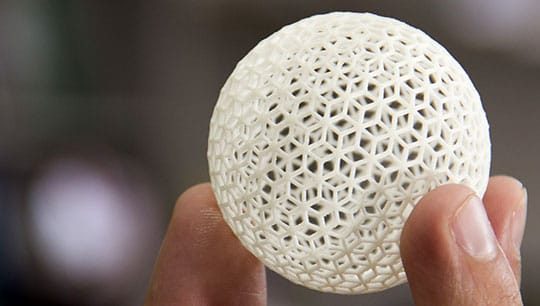
3D Printing is revolutionizing healthcare and represents a major technological breakthrough in modern prosthetics. Highlighting the growing impact of 3D medical products, the Food & Drug Administration reports that approximately 100,000 knee replacement surgeries are performed each year using 3D Printing technology.
3D Printing is the process of creating a physical object from a digital design. This process enables better optimization of surfaces and structures by improving understanding of the required weight, strength, and material. The process also makes it easier for surgeons and patients to better understand the condition, complexities, and specific needs.
3D Printing technology is evolving rapidly in healthcare, with applications including 3D-printed implants, prosthetics, and pens. It improves the operations of healthcare firms by enabling doctors to work rapidly.
6. Centralized Monitoring of Patients in Hospitals and Clinics

Research has shown that around 90 percent of alarms in hospitals and clinics are not active. Moreover, 44 percent of cardiac arrests in hospitals take place due to not being able to attend on time for in-house patients. This is where off-site patient monitoring is crucial.
Centralized monitoring provides better care, allowing technicians to interact directly with caretakers and respond on time.
7. Nanomedicine
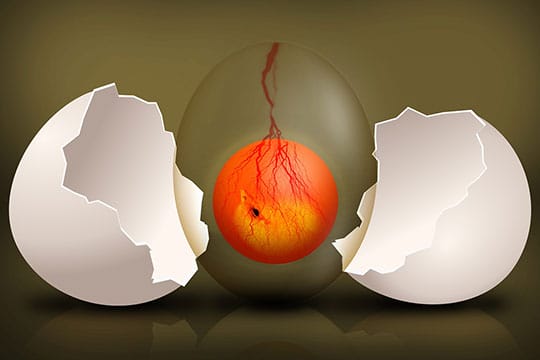
Another rapidly growing technology in the medical field is Nanomedicine. Utilizing the nanometer scale, nanotechnology is used to detect and treat various diseases. Its unique properties focus on developing nanoparticles for diagnostic and therapeutic applications that offer potential solutions to critical challenges in treating cancer, cardiovascular disease, and other conditions. Targeted medicine delivery is the biggest advantage of nanomedicine.
The global nanomedicine market is forecast to grow by around $350 billion by the end of 2025.
8. Fully-Automated Delivery System: First Hybrid Closed-Loop Insulin Delivery System

Also called ‘Artificial Pancreas’, the FDA approved the first hybrid closed-loop insulin delivery system to help manage Type-1 Diabetes. This helps patients manage their insulin levels themselves.
9. Mobile Technology

With the increase in digital customers today, the preference for using mobile or tablet devices to record and track health is growing rapidly. Studies reveal that the use of mobile and tablet devices for healthcare has tripled from 13% in 2014 to 48% today. Recent developments in mobile technology have enabled both doctors and patients to interact more effectively, better understand health conditions, and improve diagnosis, treatment, and consultations. Apart from the growing number of mobile apps that streamline healthcare services, the new 5G Mobile technology is also promising an enhanced future in the medical field.
As wireless communication advances each day, the ability to communicate rapidly improves patients’ lives. According to research by Qualcomm, 5G will impact the healthcare industry by providing value-based healthcare services that will generate over $650 billion by 2025.
10. Healthcare Wearables
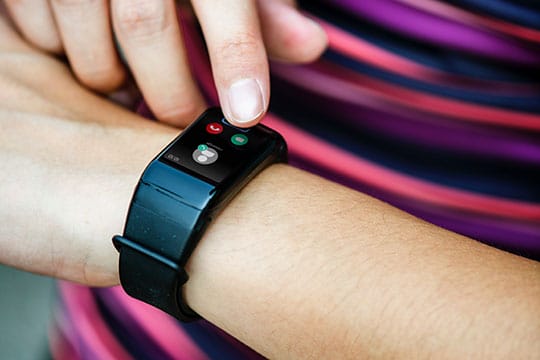
In this digitally driven era, consumers are increasingly turning to health wearables that enable easy, regular tracking of heart rate, glucose, physical activity, sleep, and much more. By enabling easy tracking of health improvements, health wearables are gaining widespread adoption in healthcare diagnosis and support. Given the capabilities of health wearables to enhance clinical services, health wearable company Fitbit has partnered with Google to explore developing healthcare solutions.
Final Words

With technological evolution unlocking unique and innovative opportunities for the healthcare industry, it is clear that the above-mentioned digital trends have a long way to go in providing customer-centric healthcare services. Hence, it is imperative that health organizations keep pace with evolving technologies and adopt the right digital partners to facilitate their digital transformation and gain a competitive advantage.
This article is written by Tony Joseph. Tony believes in building technology around processes, rather than building processes around technology. At Fingent, he specializes in custom software development, especially in analyzing processes, refining it and then building technology around it. He understands and analyzes the client's operational structure, discovers key improvement areas and comes up with technology solutions.
 This article is written by Tony Joseph. Tony believes in building technology around processes, rather than building processes around technology. At Fingent, he specializes in custom