Quick Summary
Power over Fiber (PoF) is emerging as a modern alternative to traditional Power over Ethernet for offices with growing bandwidth and power demands. By combining optical fiber for high-speed data with copper conductors for DC power, PoF overcomes copper’s 100-meter distance limit, reduces cable weight and congestion, and eliminates electromagnetic interference.
PoF also enables centralized network infrastructure, reducing the need for floor-level telecom closets while simplifying Wi-Fi 6/7, security, and smart-building deployments. Its long-term scalability makes it particularly useful for corporate offices, warehouses, healthcare facilities, and large campuses, providing infrastructure that can support rising network speeds without requiring in-wall cabling to be replaced.
Introduction
The modern office looks completely different today, with open floor plans, glass huddle rooms, and hot-desking replacing traditional cubicles. Behind this sleek design lies a growing challenge: every corner needs reliable high-speed connectivity and power. Workplaces now run on a dense web of hardware – Wi-Fi 6/7 access points on the ceiling, 4K video bars, smart locks, and security cameras.
For years, Power over Ethernet (PoE) handled these devices through copper cables. But as bandwidth and power demands surge, legacy copper is running out of steam. To fix these problems, smart network builders are moving to Power over Fiber (PoF). By pairing the near-unlimited speed of glass fiber with lightweight power conductors, PoF offers a faster, far more flexible foundation for enterprise networks.
The Physical and Performance Barriers of Legacy Copper
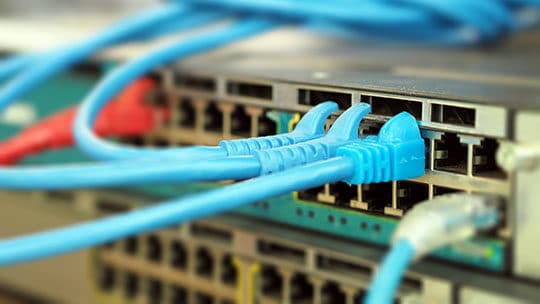
When Power over Ethernet first arrived, it was a game-changer for basic IP phones and early cameras. Today, modern Wi-Fi 7 access points require 30 or 60 watts to power their advanced components. As businesses push more data and power through copper wires, three major physical limits become apparent:
1. The Rigid 100-Meter Distance Limit
Standard Ethernet cables have a hard physical barrier: they cannot reliably carry data past 100 meters (328 feet) from the switch. In a large office building or multi-story headquarters, devices are frequently placed much further away. To bridge that gap with copper, IT teams have to build extra telecommunications closets – known as Intermediate Distribution Frames (IDFs) – on multiple floors. These take up valuable square footage and require dedicated cooling and backup power.
2. Cable Tray Congestion, Weight, and Heat
Next-generation networks require thicker Category 6A (Cat6A) cables to support 10 Gbps over full distances. When technicians bundle dozens or hundreds of these thick, rigid cables together in drop ceilings, several operational problems emerge:
- Physical Strain: Thick copper bundles add substantial weight, putting structural strain on ceiling grids, cable trays, and wall mounts.
- Blocked Airflow: Stuffed cable pathways block air circulation in ceiling plenum spaces, making building climate control harder and raising potential fire safety inspection issues.
- Heat Trapping: High-power PoE standards push significant electrical current through thin copper strands. When bundled tightly, internal heat builds up. Over time, elevated temperatures degrade data performance, increase signal attenuation, and accelerate cable jacket deterioration.
3. Electromagnetic Interference (EMI)
In busy commercial buildings, copper lines often run alongside elevator motors, heavy electrical conduits, and large AC units. These power sources create electromagnetic interference (EMI), which causes random line noise, dropped video calls, and laggy network responses.
What Exactly is Power over Fiber?

Power over Fiber solves these headaches by changing what goes inside the cable. Instead of relying solely on heavy copper wires, a PoF system uses a hybrid composite cable.
Inside one thin cable jacket, two components work side by side:
- Glass Optical Fiber Strands: Carry high-speed network data as pulses of light over huge distances with zero signal loss.
- Integrated Copper Conductors: Carry direct current (DC) electrical power from a central supply directly to the end device.
At the far end of the cable, a small, unobtrusive remote unit or media converter splits the line back into a standard Ethernet data connection and standard PoE power.
| Network Feature | Traditional Copper PoE (Cat6/Cat6A) | Power over Fiber (PoF) |
| Maximum Distance | Hard limit of 100 meters (328 ft) | Several kilometers for data; up to 1km for power |
| Cable Size & Weight | Thick, heavy, and bulky in bundles | Ultra-thin, flexible, and lightweight |
| Data Capacity | Drops off over longer distances | Virtually unlimited optical bandwidth |
| Interference (EMI) | Vulnerable to power line noise | Completely immune to electromagnetic noise |
| Extra Closet Space | Needs telecom closets (IDFs) every floor | Centralized in one main server room (MDF) |
How PoF Solves Practical Office Problems

Upgrading to a modern optical infrastructure helps IT teams future-proof their workplace, particularly in resolving office cabling challenges.
1. Reclaiming Expensive Real Estate
With Power over Fiber, you can move to a centralized network setup. All active switches and central power supplies are housed in one main distribution frame (MDF), usually on the ground floor or in the basement. Fiber-copper lines run directly from that one room out to devices across every floor. By eliminating secondary IDF closets on every level, businesses can turn those small rooms back into profitable workspaces or meeting rooms.
2. Easy Wi-Fi 6/7 and Smart Security Upgrades
Upgrading an office to Wi-Fi 7 usually means adding more access points closer together. Hybrid fiber cables are so light and flexible that technicians can pull them through tight conduits and drop ceilings in a fraction of the time it takes to pull heavy Cat6A copper.
Experienced optical equipment manufacturers, like VSOL, help businesses make this shift smoothly by offering tailored network deployment solutions that enable enterprise IT teams to connect fast fiber backbones directly to everyday office gear without overcomplicating the setup.
Key Efficiency Gains for Workspace Operations:
- Cleaner Aesthetics: Thin hybrid cables hide easily behind glass partitions, modern architectural features, and open-ceiling layouts.
- Rapid Relocation: Moving or adding an access point or camera requires minimal labor because the lightweight cabling is easy to re-route.
- Reduced Energy Costs: Eliminating floor-level server closets removes the need for localized AC cooling units running 24/7 on every floor.
- Unified Emergency Power Backup: Because all power originates from a central rack in the main server room, a single centralized UPS system or backup generator keeps every Wi-Fi point, smart lock, and security camera operational during a building power outage.
- Centralized Cloud Management: Leading optical hardware manufacturers provide unified cloud management platforms that allow IT teams to remotely monitor real-time traffic, track power consumption, and manage remote conversion endpoints across multiple sites.
Key Industry Use Cases for Power over Fiber
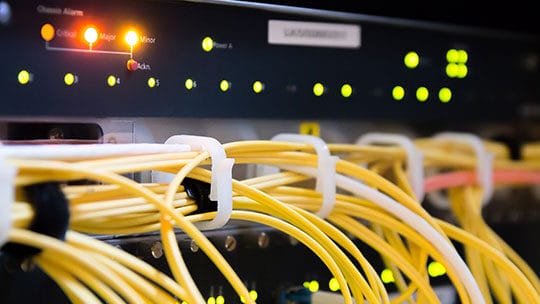
PoF technology is particularly valuable in specific commercial environments where legacy copper falls short:
Open-Plan Corporate Headquarters
Modern corporate offices feature architectural glass walls, exposed concrete ceilings, and dynamic seating. PoF hybrid cables offer the slim visual profile needed for clean aesthetic integration while delivering the multi-gigabit bandwidth required for dense Wi-Fi 7 deployments.
High-Density Smart Warehouses and Logistics Hubs
Logistics facilities often span hundreds of thousands of square feet, far exceeding the 100-meter limit of standard Ethernet. PoF allows network planners to run continuous data and power lines from a central server room directly to ceiling-mounted access points and IP cameras mounted hundreds of meters away along warehouse aisles, eliminating the need to construct climate-controlled network huts in the middle of the warehouse floor.
Healthcare Facilities and Large Campuses
Hospitals and university campuses require non-stop uptime, strict isolation from electromagnetic noise generated by medical equipment, and centralized backup power. PoF provides complete immunity to electrical interference while ensuring critical security cameras and wireless access points remain powered by a central UPS during emergencies.
Practical Step-by-Step Deployment Strategy
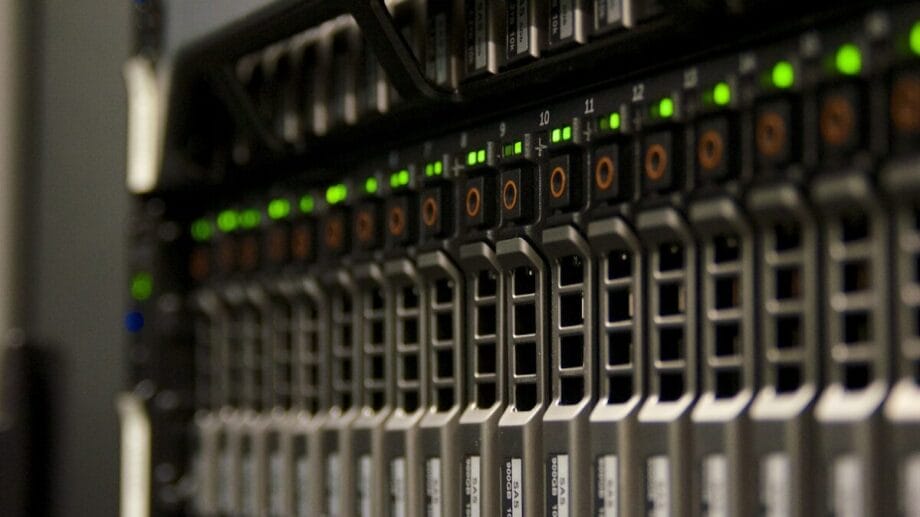
For IT directors planning a transition to Power over Fiber, a structured implementation roadmap ensures a smooth rollout:
Step 1: Conduct a Comprehensive Device Audit
Document every connected endpoint, noting required data speeds (1Gbps, 2.5Gbps, 10Gbps) and power requirements (PoE 15W, PoE+ 30W, or PoE++ 60W). Map the physical location of each device to identify runs exceeding 100 meters.
Step 2: Calculate Power Budgets and Select Cable Gauges
Determine the required capacity of the central DC power supply in the main server room. Use distance and wattage calculations to select the appropriate composite cable specification (e.g., 2-strand single-mode fiber paired with 18 AWG copper conductors).
Step 3: Design the Central MDF Architecture
Plan the rack space in the main distribution frame for central switching, optical patch panels, and centralized Class 2 DC power shelves. Ensure adequate UPS battery backup is connected to the central power shelf.
Step 4: Install Hybrid Cabling and Remote Conversion Endpoints
Route plenum-rated hybrid fiber cables from the MDF through main cable pathways to end locations. Install compact media converters or optical wall plates near endpoints, connecting them via short standard Ethernet patch cords.
Step 5: Perform Optical and Electrical Testing
Test optical fiber strands using an Optical Time-Domain Reflectometer (OTDR) to verify clean light transmission. Test DC voltage levels at remote converter locations under full load to confirm proper power delivery before connecting production hardware.
Long-Term Infrastructure Longevity

Network hardware like laptops and switches usually gets replaced every 3 to 5 years, but the cabling hidden inside your walls is expected to last 15 to 20 years.
Investing heavily in traditional copper cables today carries a real risk of premature obsolescence. As workplace data needs grow from 1 Gbps to 10 Gbps and beyond, copper cables quickly reach their physical bandwidth limits. Glass optical fiber, by contrast, has virtually unlimited data capacity. Once a hybrid fiber infrastructure is installed, upgrading your network speed is simple: you just swap out the transceiver modules on either end, leaving the cables inside the walls untouched.
By combining the endless speed of optical fiber with safe, centralized DC power delivery, Power over Fiber eliminates distance bottlenecks, declutters ceiling pathways, and lowers long-term maintenance costs. As modern offices continue to evolve into smart, flexible workspaces, PoF is rapidly becoming the gold standard for enterprise cabling.