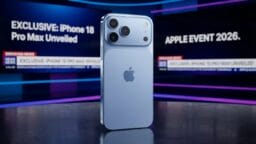
Delivery Wait Times for iPhone 18 Pro Series Signal Concerns
In a notable shift, just two days after the commencement of pre-orders for the iPhone 18 Pro series, a significant reduction in delivery wait times across key international markets has surfaced, contrasting starkly with the previous year’s data.
This trend has incited apprehensions regarding the demand robustness for Apple’s premium product lineup.
According to Jefferies’ recent analysis, the wait times across the United States, United Kingdom, Germany, and Japan have diminished by an impressive 5 to 11 days, with the U.S. market reflecting immediate availability for the iPhone 18 Pro.
Conversely, markets such as China and Hong Kong exhibit elongated wait periods, albeit analysts caution that speculative purchases may obscure the genuine demand landscape.
Jefferies upholds a somber “Underperform” rating for Apple, establishing a 12-month price target at $263.66. Considering Apple’s current valuation at approximately $332.27, this forecast suggests a potential 21% decline.
Decreased Delivery Wait Times — A Weak Demand Indicator
Since the onset of pre-orders at 8:00 a.m. Eastern Time on September 12, Jefferies has meticulously monitored delivery wait times across six pivotal markets: the United States, United Kingdom, Germany, Japan, China, and Hong Kong.
This year, India has been introduced as an additional market; however, year-over-year evaluations principally concentrate on the original six.
As of midday Eastern Time on September 14, wait times for the iPhone 18 Pro Max in the United States, United Kingdom, Germany, and Japan have diminished by approximately 5 to 11 days compared to the iPhone 17 Pro Max’s wait times from the previous year.
Furthermore, the iPhone 18 Pro reveals a parallel trend, with the U.S. boasting immediate availability while other international markets register wait times reduced by approximately 1 to 11 days in comparison to last year.
Jefferies postulates that the current year’s production timeline aligns closely with last year’s output, suggesting that the contraction in delivery durations may be a harbinger of faltering demand.
The report references the significantly longer wait times observed for the iPhone 17 series relative to the iPhone 16 series last year — a harbinger of robust sales.
In contrast, the current reversal within the iPhone 18 Pro series prompts analysts to adopt a more cautious stance regarding forthcoming sales forecasts.
In the Indian market, the iPhone 18 Pro is witnessing wait times of merely 2 to 3 days, while the iPhone 18 Pro Max stands at around 12 days — both conspicuously shorter than those recorded in China. It remains challenging to discern this situation as a definitive indicator of heightened demand.
China and Hong Kong Contrast — Speculation Clouds Demand Interpretation
China and Hong Kong stand apart in this pre-order landscape. Recent data indicates that wait times for the iPhone 18 Pro Max have escalated to 24.5 days in both regions, an increase from 19.8 days and 17.2 days respectively during the same timeframe last year — reflecting extensions of approximately 4 days and 7 days, in stark contrast to the declines observed in other principal markets.
However, Jefferies expresses caution regarding the pronounced figures emanating from China and Hong Kong, noting a historical tendency for speculative buying to inflate wait times during new iPhone launches.
Thus, these delays may predominantly reflect channel stockpiling as opposed to authentic end-user demand.
Analysts maintain that once the initial shipment phase commences on September 18, secondary-market resale valuations will serve as pivotal indicators for actual demand levels.
Should resale premiums diminish swiftly — or, in a drastic scenario, dip below the launch price — it could suggest an expeditious evaporation of initial speculative demand.
JPMorgan Offers an Optimistic Perspective
Not all Wall Street analysts share a pessimistic view of the iPhone 18 Pro pre-order cadence. In a divergent perspective, JPMorgan indicated that, despite the first-week performance trends for the available models falling short of those observed with the iPhone 17 series, it would be untimely to infer that reduced wait times correspond to diminished demand.
JPMorgan emphasizes that with the base model yet to debut and the anticipated foldable Duo set to launch this fall, supply distribution for the Pro Max and Pro may diverge from previous years.
Consumers, particularly in the Chinese market, might be postponing their purchases in anticipation of the Duo’s release. The firm advocates for a close examination of wait time trajectories to gauge demand resilience against production velocity.
JPMorgan’s global tracking data reveals that on the inaugural pre-order day, average home-delivery wait times for the iPhone 18 Pro and 18 Pro Max were 7 days and 19 days, respectively.
In comparison, the corresponding wait durations for the iPhone 17 series were 15 days and 24 days. Focusing on the United States, the wait times for the iPhone 18 Pro and Pro Max registered at 2 days and 22 days, in contrast to 4 days and 21 days from the previous year.
In China, wait intervals for the iPhone 18 Pro and Pro Max were logged at 13 days and 21 days, down from 30 days for both models last year — marking the most substantial year-over-year disparity across all regions.
JPMorgan sustains an “Overweight” rating on Apple, attaching a price target of $340.
Duo Software Receives Acclaim Amid Hardware Scrutiny
In addition to the pre-order dynamics of the iPhone 18 Pro series, Jefferies is also scrutinizing Apple’s forthcoming foldable-screen innovation, the Duo.
Scheduled for pre-order commencement on October 16, initial reviews have generally been favorable — though accolades primarily center around the software experience, including iOS adaptation for its foldable architecture, seamless transitions between interfaces, native split-screen functionality, app continuity, and dual-app multitasking capabilities.
Conversely, the Duo’s hardware specifications have garnered criticism. Concerns have been raised regarding the limited number of floating windows — permitting at most two simultaneous applications — juxtaposed against competitors like the Samsung Galaxy Z Fold 8, which accommodates three, along with a noticeable absence of PC-like features.
Jefferies’ comparative analysis juxtaposes the Duo’s specifications against prominent Android foldable contenders:
- Starting Price: Apple Duo – $1,999, Samsung Galaxy Z Fold 8 – $1,899, Xiaomi 18 Fold – Approx. RMB 10,999.
- Weight: Apple Duo – 254 g, Samsung Galaxy Z Fold 8 – 201 g, Xiaomi 18 Fold – 219 g.
- Folded Thickness: Apple Duo – 11.3 mm, Samsung Galaxy Z Fold 8 – 9.7 mm, Xiaomi 18 Fold – 10.68 mm.
- Main Camera: Apple Duo – 48 MP, Samsung Galaxy Z Fold 8 – Dual camera, Xiaomi 18 Fold – 200 MP Leica main sensor.
- Telephoto Lens: Apple Duo – None, Samsung Galaxy Z Fold 8 – None, Xiaomi 18 Fold – 50 MP, 3.5x optical zoom.
- Processor: Apple Duo – A20 Pro (2nm), Samsung Galaxy Z Fold 8 – 3nm process, Xiaomi 18 Fold – 3nm process
Note: Specifications compiled by Jefferies. The Duo and Samsung both utilize dual-camera systems; the Xiaomi 18 Fold features a triple-camera configuration.
On the camera front, the Duo boasts a 48-megapixel primary lens alongside a 48-megapixel ultra-wide lens, devoid of a dedicated telephoto option.
In contrast, several Android foldable flagship models already integrate triple-camera systems with optical zoom capabilities. In terms of processing power, the Duo employs Apple’s proprietary A20 Pro built on a 2-nanometer process, providing a technological edge over competitors.
Premium Pricing Strategy Under Scrutiny
Jefferies analysts assert that Apple has traditionally not solely depended on hardware specifications to garner market share; the synergy between software and hardware, coupled with user experience, has remained pivotal for its competitive standing.
However, at a near $2,000 pricing threshold, hardware specifications may play a critical role in determining whether current iPhone users elect to upgrade to the Duo, and may also complicate Apple’s efforts to attract high-end Android foldable users.
Consequently, despite the favorable preliminary reception of the Duo’s software capabilities, Jefferies’ overarching assessment of the new foldable device remains unchanged since its introduction.
With the iPhone 18 Pro pre-order wait times diminishing, demand in China and Hong Kong awaiting validation, and the Duo’s premium pricing strategy possibly facing challenges from hardware specification comparisons, Jefferies sustains its “Underperform” rating on Apple shares.
The price target is a function of a discounted cash flow model projected through fiscal 2031, featuring a weighted average cost of capital of 7.8% and a perpetual growth rate of 4.3%, akin to approximately 30 times Apple’s anticipated fiscal 2026 earnings.
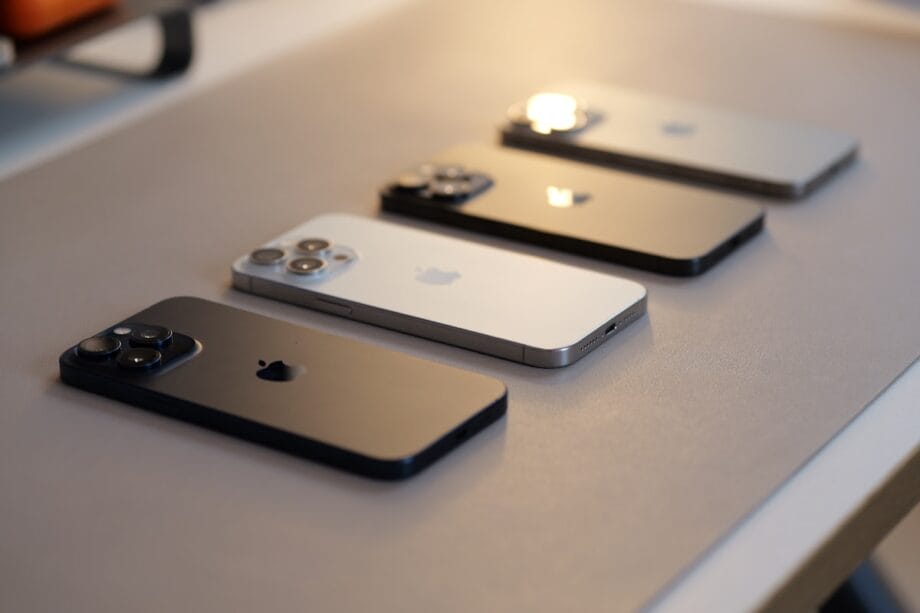
Market participants await the initial sales performance of the iPhone 18 Pro series, closely examining subsequent shipment data post-official launch on September 18, alongside the trajectory of secondary-market resale prices in China and Hong Kong, to ascertain the demand strength more definitively.
Source link: Finance.biggo.com.