Quick Summary
AI Copilots vs Personalized AI Agents highlights two distinct approaches to enterprise AI. Copilots provide reactive, human-in-the-loop assistance for tasks such as drafting, research, and decision support, while personalized AI agents proactively execute multi-step workflows with minimal oversight. This shift can help organizations move beyond basic productivity gains toward automated, end-to-end business processes.
Copilots improve employee productivity by saving time and supporting better decisions, while agents provide scalability, consistent execution, and 24/7 automation. However, greater autonomy requires stronger security, governance, permissions, and monitoring. For many organizations, a hybrid approach works best, with agents handling repetitive workflows and copilots supporting employees when human judgment is needed.
Introduction
The corporate environment shows a clear divide. Modern companies are shifting from simple chat interfaces to unified cognitive systems. For leaders, evaluating this transition requires comparing interactive tools with autonomous systems. Both act as enterprise AI solutions, but they serve different operational roles and deliver different financial returns.
An interactive copilot acts as a helper. It needs a human to initiate and approve every action. Conversely, personalized AI Agents act as goal-directed workers that execute complete workflows with little oversight. Leaders must grasp these structural differences to invest capital wisely. To remain competitive, decision-makers are tracking evolving AI trends to align their systems.
The Evolution from Support to Full Workflow Participation
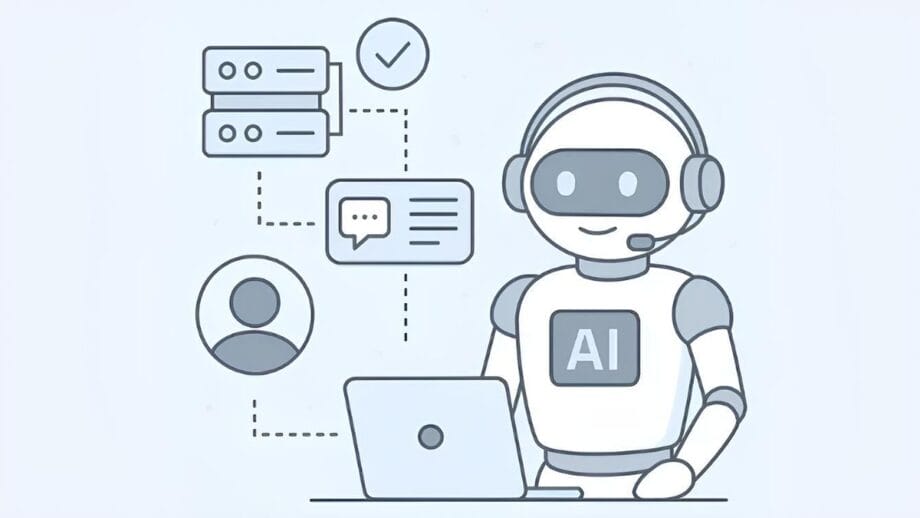
Early AI focused on individual speed. Workers used interactive tools to draft text or summarize meetings. Yet, humans still had to move data manually across apps to trigger subsequent business steps.
This approach kept firms in a basic support phase.
The rise of personalized AI agents is changing this paradigm. These systems interpret files, make rules-based decisions, and complete multi-step tasks autonomously. This shift occurs alongside a modernization of data architecture. Many firms are replacing central data silos with decentralized data mesh systems. Giving business units ownership of their data pipelines guarantees that high-quality, real-time sources feed these autonomous systems.
Many companies are eager to move past basic helpers.
Data shows that 85% of organizations increased AI spending recently, yet a mere 6% saw clear returns within a year.
This gap stems from deployment issues, not bad tech. Using automation as a thin wrapper rather than integrating it deeply into back-end systems leads to failure.
Defining Interactive AI Copilots: Reactive Assistance with Human-in-the-Loop
A copilot operates as a reactive assistant. It supports human output rather than replacing it. It responds only to immediate user prompts or local files. The human reviews the draft and takes the final action.
For example, a sales rep can use a copilot to pull past client emails from a CRM. The tool saves time, but the rep makes all decisions. These tools have wide adoption, but they carry risks. Relying mindlessly on drafts can cause errors if humans fail to check the work.
Defining Personalized AI Agents: Proactive, Event-Driven Task Executors
Conversely, personalized AI Agents are proactive, goal-directed systems. They plan execution paths, interact with external systems, and adapt to problems autonomously. These tools act on events rather than chat prompts. A database change or an inventory drop can trigger an agent to execute a process from start to finish with little human input.
This autonomy runs on specialized architectures:
| Agent Type | Operating Mechanism | Typical Corporate Scenario |
| Prompt-and-Response | Reacts to specific user inputs or simple rules. | Customer support chatbots and instant query helpers. |
| Cognitive Task | Learns from historical records and user choices over time. | Lead scoring optimization and recommendation tools. |
| Autonomous Multi-Agent | Coordinates with external tools and APIs for complex tasks. | Dynamic logistics and supply chain balance. |
AI Copilots vs Personalized AI Agents: A Side-by-Side Comparison
Understanding the difference between AI Copilots and personalized AI agents helps organizations select the right model for their operational goals, risk tolerance, and level of AI maturity.
| Feature | AI Copilots | Personalized AI Agents |
| Primary Role | Assist users with tasks and recommendations | Execute tasks and workflows autonomously |
| Human Involvement | Required at every step | Required mainly for oversight and exceptions |
| Trigger Mechanism | User prompts and requests | Events, goals, and predefined business conditions |
| Decision Making | Provides suggestions | Makes rules-based decisions within defined boundaries |
| Workflow Scope | Supports individual tasks | Handles end-to-end business processes |
| System Access | Typically read-focused | Can read, write, update, and trigger actions across systems |
| Implementation Complexity | Lower | Higher |
| Governance Requirements | Moderate | Extensive |
| Typical Use Cases | Content creation, meeting summaries, research assistance | Invoice processing, lead qualification, customer support routing, inventory management |
In practice, copilots enhance human productivity, while personalized AI Agents focus on operational execution. One improves how employees work – the other changes how work gets done.

Workflow Integration: Comparing Copilots and Agents Across Systems
Comparing these models within platforms like Dynamics 365 reveals their different paths. They can run separately, or they can combine to form unified AI agent solutions.
| Department | Copilot Assistance (Human-in-the-Loop) | Autonomous AI solutions (Event-Driven Automation) |
| Sales Operations | Compiles deal risks and drafts client emails. | Scrapes intent data, prioritizes leads, and updates CRM records. |
| Customer Service | Suggests text for reps to review and edit. | Categorizes, prioritizes, and routes inbound support tickets. |
| Supply Chain | Analyzes warehouse shipping reports. | Monitors stock levels and triggers replenishment orders. |
| Finance | Outlines proposed follow-up activities. | Matches invoices to purchase orders and releases payments. |
These technologies support each other. An autonomous agent can triage a support case, and a copilot can then help the rep draft the resolution. This leaves the employee to focus on empathy and judgment.
The Tangible Yield: Direct Business Benefits of Copilots and Agents
Both systems improve business output, but they create value in distinct ways. Understanding these differences helps companies direct tech investments toward specific goals.
AI Copilots: Employee Support and Fast Execution
- Saves Time: Cuts hours spent on routine research, summary drafting, and file parsing.
- Frees Up Attention: Lets staff focus on strategic choices, creative tasks, and client relationships.
- Speeds Up Training: Aids onboarding by giving new hires immediate access to corporate guides.
- Informed Decisions: Delivers critical data inside active workspaces to prevent tool switching.
Personalized AI Agents: System Scalability and Process Flow
- Autonomous Execution: Completes multi-step tasks behind the scenes without manual prompt triggers.
- Controlled Scaling: Expands processing capacity without requiring a proportional hike in headcount.
- Lower Error Rates: Executes rules-governed steps with standard accuracy and consistency.
- Non-Stop Support: Operates 24/7 to process incoming files, route tickets, or balance stocks.
Agents handle high-volume background work, and copilots support employees who manage exceptions. This balanced approach delivers greater speed and adaptability than relying on a single system alone.
Addressing Security, Governance, and Control
Autonomy requires rigorous oversight. Copilots present minimal risk since they cannot write to databases or execute actions without user permission. Conversely, Personalized AI Agents act independently across systems. A failure can cause cascading errors across multiple apps.
For example, an error in a credential-checking agent can trigger faulty orders by a procurement agent, leading to improper payouts before IT can intervene.
Security researchers highlight system gaps. An analysis of Model Context Protocol (MCP) servers showed that 40% of systems contained vulnerabilities that exposed API keys. Agents are vulnerable to memory poisoning, where bad actors inject malicious inputs into long-term databases.
To secure operations, security teams are moving away from network firewalls. Instead, they use Zero Trust models and identity-centric controls. Assigning non-human workers unique, temporary credentials ensures they inherit only the permissions they need. IT teams must establish clear boundaries, use automated safety switches, and review agent access to prevent runaway loops.
A Strategic Guide for Successful Implementation
Building an automated business requires disciplined engineering. Leaders should adopt a staged framework:
- Target the Use Case: Select repetitive, well-documented workflows. Customer support routing and invoice processing are good starting points.
- Check Data Quality: AI systems require clean data. Organize data mesh pipelines to guarantee real-time data access.
- Define Permissions: Avoid over-privileged accounts. Apply the principle of least privilege to restrict what systems can read or write.
- Pilot and Track: Run a pilot with a small group of users. Monitor completion rates, speed, and accuracy before deploying widely.
By partnering with systems experts, companies can build secure, reliable architectures that shift human labor from routine entry to strategic oversight.
Selection Criteria: AI Copilot vs Personalized AI Agent
The selection depends on process maturity, data readiness, and organizational capabilities.
Choose AI Copilots when:
- Human oversight remains central to decision-making.
- Tasks focus on content production, customer chat assistance, or strategic planning.
- You need immediate productivity gains with lower setup risk.
Choose Personalized AI Agents when:
- Workflows are structured and repeatable.
- Tasks include invoice matching, lead routing, or inventory orders.
- Operating with minimal human intervention is a core objective.
Many enterprises adopt a hybrid approach. Autonomous systems execute repetitive tasks, leaving copilots to assist employees with complex exceptions. This balances efficiency with human judgment.
Future-Proofing with Balanced Automation

These tools mark different stages of enterprise adoption. Copilots support individual productivity. Agents extend automated execution across workflows.
The best roadmap matches these tools with specific business needs. Leaders who blend human skill with autonomous systems will successfully scale operations, minimize delays, and yield strong financial returns.