China Halts Meta’s Acquisition of AI Startup Manus
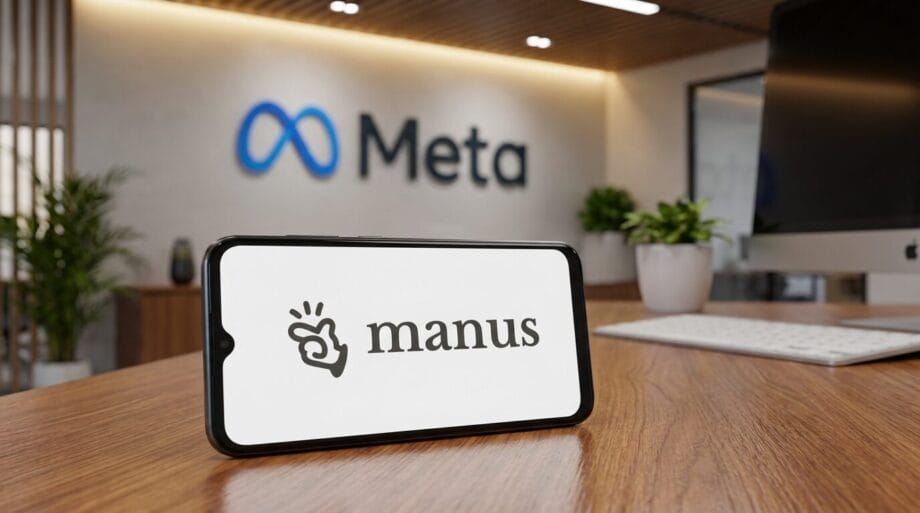
HONG KONG (AP) — In a surprising turn of events, China has decisively blocked the acquisition of the artificial intelligence startup Manus by the American technology behemoth Meta.
This intervention underscores Beijing’s escalating concerns surrounding the transfer of sophisticated technology.
The National Development and Reform Commission, China’s principal planning body, issued a brief statement announcing the prohibition of foreign acquisitions involving Manus, mandating all parties to retract their involvement.
Notably, the statement refrained from explicitly mentioning Meta Platforms, the parent company of Facebook and Instagram.
This resolution was reached by the commission’s Office of the Working Mechanism for Security Review of Foreign Investment, adhering to pertinent Chinese laws and regulations.
This action follows a prior announcement by Chinese authorities indicating an examination of the proposed deal.
While the commission did not divulge specific reasons for the prohibition, the timing is particularly striking, occurring less than a month before a scheduled visit by the U.S.
President Donald Trump is to visit Beijing for discussions with Chinese leader Xi Jinping in May. Such a move reflects the tightening of scrutiny within China’s AI sector amidst intensifying geopolitical tensions with the U.S. over technological supremacy.
Originally announced in December, Meta’s acquisition of Manus — a company with origins in China but operationally based in Singapore — was notable for its rarity, being a significant case of a U.S. tech enterprise purchasing an AI firm with substantial Chinese affiliations.
The acquisition was perceived as a strategic maneuver to augment AI capabilities across Meta’s platforms, thanks to Manus’s advanced “general-purpose” AI agent capable of executing complex tasks autonomously.
Meta had previously asserted that there would be “no continuing Chinese ownership interests in Manus,” alongside plans to cease operations in China.
Nevertheless, in January, China declared it would scrutinize the acquisition for compliance with its legal framework.
China’s Ministry of Commerce emphasized that any enterprises engaged in external investments, technology exports, data transfers, and cross-border acquisitions must adhere strictly to Chinese law. Meta maintained that the majority of Manus’ workforce is situated in Singapore.
Manus has not provided a response to inquiries regarding this matter. However, its website indicates that the company “is now part of Meta,” suggesting that the deal had been finalized prior to the prohibition.
On Monday, Meta asserted that the Manus transaction “fully complied with applicable law.”
“We anticipate an appropriate resolution to the inquiry,” the company stated from its California headquarters.
Prior to the acquisition, Manus was operated by Singapore-based Butterfly Effect Pte, yet the startup’s roots trace back to entities registered in Beijing several years ago.
“China is demonstrating its readiness to engage in hardball tactics concerning AI talent and capabilities, which it considers a pivotal national security asset,” remarked Lian Jye Su, chief analyst at Omdia, a technology research and advisory group.
“This event could serve as a portent for future regulatory actions by Chinese authorities regarding acquisitions involving domestic deep-tech firms.”
Su further suggested that Beijing’s acquisition ban might deter similar endeavors by U.S. tech giants going forward. “In the context of rivalry, it mirrors U.S. export controls, entity lists, and investment restrictions on China,” he noted.
Source link: Wral.com.