China Blocks Meta’s Acquisition of AI Startup Manus
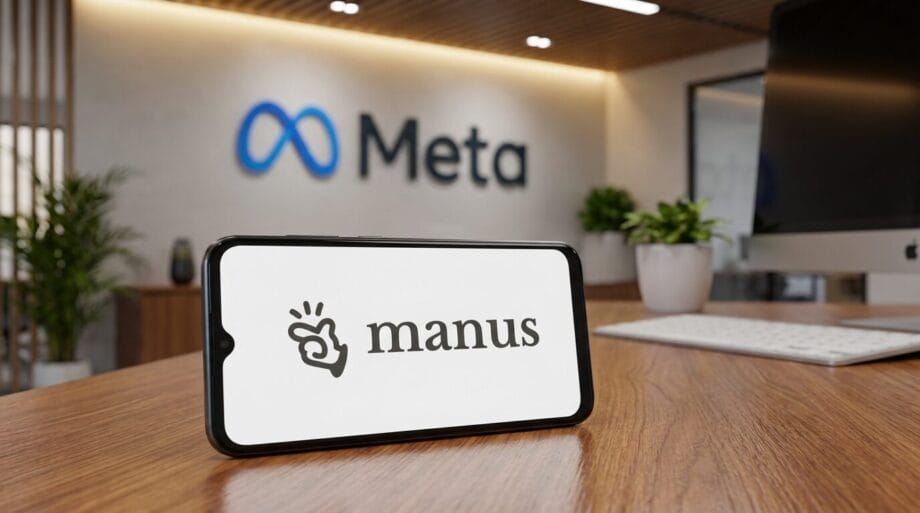
HONG KONG — In a surprising turn of events, China has obstructed the acquisition of Manus, an artificial intelligence startup, by U.S. tech magnate Meta, citing concerns over the transfer of advanced technologies.
On Monday, a succinct announcement from the National Development and Reform Commission (NDRC), the primary planning body in China, declared the foreign acquisition of Manus to be prohibited, thereby mandating all involved parties to dismantle the agreement.
Notably, the statement refrained from explicitly naming Meta Platforms, the parent company of Facebook and Instagram.
The decision was executed by the NDRC’s Office of the Working Mechanism for Security Review of Foreign Investment, aligning with current Chinese legislation. This intervention followed earlier indications from Chinese authorities that they were scrutinizing the deal.
Details regarding the rationale behind the prohibition were not provided in the commission’s announcement. Coincidentally, this development emerged less than a month prior to the U.S.
President Donald Trump’s anticipated visit to Beijing to engage with Chinese leader Xi Jinping in May signals a tightening grip by China’s communist hierarchy over the AI sector amid escalating geopolitical tensions with the United States over technological dominance.
Meta had disclosed its acquisition of Manus in December, marking a rare instance of a major U.S. tech firm attaining an AI company with significant ties to China.
Manus, which boasts a “general-purpose” AI agent capable of executing complex, multistep tasks autonomously, was expected to bolster Meta’s AI capabilities across its platforms.
Meta previously asserted that there would be “no continuing Chinese ownership interests in Manus,” alongside a commitment from Manus to cease its operations within China. However, in January, Chinese authorities initiated an investigation into whether the acquisition complied with national laws.
China’s commerce ministry then clarified that all enterprises partaking in outbound investments, technology exports, data transfers, and cross-border acquisitions are obliged to adhere to Chinese legal stipulations. Meta had indicated that the majority of Manus’ workforce resided in Singapore.
No comments were issued by Manus in response to inquiries. Their website, however, indicates that the company “is now part of Meta,” suggesting that the acquisition had reached completion.
Meta, in a recent statement, affirmed that the Manus transaction “complied fully with applicable law,” expressing optimism regarding the outcome of the ongoing inquiry.
Prior to the acquisition, Butterfly Effect Pte, based in Singapore, was the company behind Manus, which has historical connections to entities registered in Beijing established several years prior.
“China is demonstrating a willingness to adopt a hardline approach concerning AI talent and capabilities, which it perceives as a vital national security asset,” remarked Lian Jye Su, chief analyst at the technology research and advisory firm Omdia.
“This sets a precedent for how Chinese authorities may react in future scenarios involving acquisitions of high-tech companies.”
According to Su, Beijing’s acquisition prohibition may discourage similar endeavors by U.S. tech behemoths in the future, reflecting a mirroring effect of U.S. export controls and investment restrictions related to China within the context of global rivalry.
Source link: Wxxinews.org.