Apple Prepares for Pivotal Milestone with 20th Anniversary iPhone
Apple is on the verge of a significant evolution in its smartphone lineage, as the highly anticipated 20th anniversary iPhone is set to launch in the fall of 2027.
This upcoming iteration promises to unveil the most comprehensive redesign since the groundbreaking iPhone X, which marked its tenth anniversary in 2017.
That model famously abolished the Home button and introduced a striking edge-to-edge display, establishing a new paradigm for Apple’s design philosophy over the past decade.
The forthcoming device aims to further refine this aesthetic and functionality, potentially setting a new benchmark for future releases.
The 2027 version is expected to signify a noteworthy transformation in design, prominently featuring an all-glass construction with a gracefully curved display.
Insights from Bloomberg’s Mark Gurman indicate that this ambitious redesign will manifest primarily as a glass entity, crafted without any discernible cutouts on the screen.
This new version is poised to revive the glass back, elegantly wrapping around all four edges of the device, embodying the vision of former design chief Jony Ive for an iPhone that resembles a singular pane of glass.
Reports reveal that Apple has restructured its supply chain to facilitate the manufacture of this avant-garde device, aspiring for build quality akin to that of the original iPhone Air.
Unlike the aggressive “waterfall” edges utilized by competitors such as Samsung, Apple appears to be concentrating on a mellow, uniform quad-curved panel accentuated with “micro-curves.”
This gentler design aims to enhance user interactions, making gestures from the edges of the display feel instinctive while mitigating distortion in on-screen imagery.
Nonetheless, the true consequences of this design may depend not solely on its physical curvature. Leaker “Ice Universe” has speculated that the display could amalgamate optical refraction with ingeniously crafted visual illusions, culminating in a sleek presentation, possibly designated as a “Liquid Glass Display” in accordance with Apple’s existing software aesthetic.
A speculative mock-up revealed an impressively narrow bezel measuring merely 1.1mm, eclipsing the current 1.44mm on the iPhone 17 Pro.
There remains an air of mystery surrounding the front design, particularly concerning the incorporation of sophisticated technologies such as Face ID and the front-facing camera.
Apple aims to obscure these features beneath the display, with reports alluding to a pioneering “spliced micro-transparent glass” window that allows Face ID’s infrared sensors to operate efficiently.
However, experts, including DSCC’s Ross Young, caution that this technology might not be fully developed by 2027.
Thus, it seems likely that the device may still incorporate a small hole-punch design or a scaled-down version of the upcoming Dynamic Island expected in the iPhone 18 Pro models.
In regard to dimensions, Apple is reportedly contemplating two models for the anniversary release, approximately 6.3 and 6.9 inches, closely mirroring the sizes of the iPhone 18 Pro and Pro Max.
Notably, the larger model may be marketed as a 7-inch device, owing to its slimmer bezels that provide a more generous display area.
The frame of the new iPhone is anticipated to be adorned with a sleek, polished band, although uncertainty lingers regarding material selection.
Some rumors hint at a potential departure from the aluminum utilized in prior models, while leaker Fixed Focus Digital has refuted claims regarding a transition to titanium or Liquid Metal.
Given the heat generated by on-device AI processing, aluminum remains the most pragmatic choice at present, especially for “straight-edged” handheld devices, though a different approach may be feasible for the curved anniversary model.
Moreover, Apple is revisiting the notion of solid-state haptic buttons, reviving a previously shelved initiative dubbed “Project Bongo.”
This strategy seeks to supplant mechanical buttons such as the Side button, volume controls, Action button, and Camera Control with haptic alternatives integrated within the frame, allowing for zero physical movement upon activation.
This innovation aligns seamlessly with the device’s aesthetic vision as an uninterrupted expanse of glass, with trials indicating optimal performance under varying conditions, including wet hands and extreme temperatures.
An ultra-low energy microprocessor is anticipated to sustain button functionality, even when the device is powered off or when battery levels are depleted.
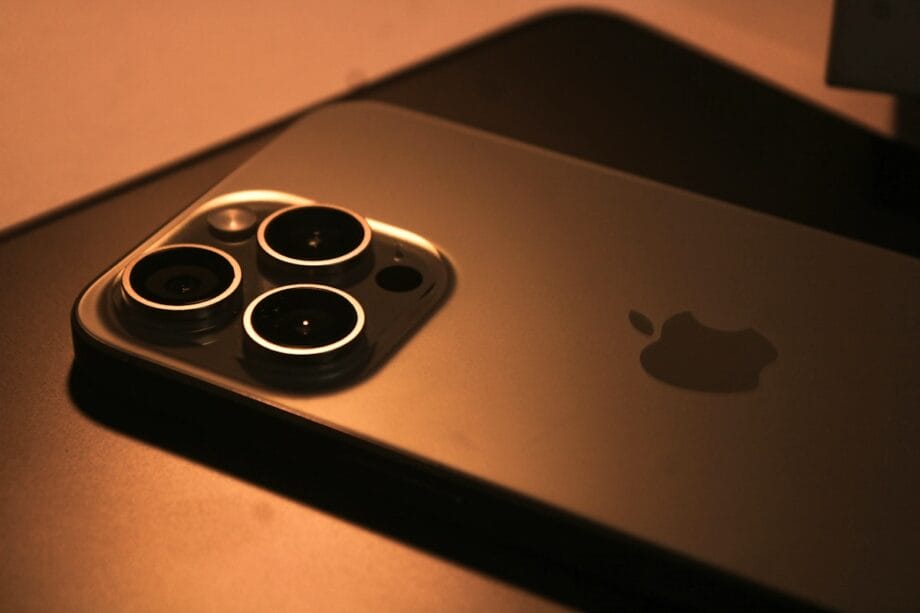
As the anticipation mounts for this landmark anniversary iPhone, it remains to be seen how these ambitious features and design elements will influence not only the future of the iPhone but also the broader smartphone arena.
Source link: News.ssbcrack.com.