Prepare for AI-Induced Workforce Disruption
A newly formed coalition comprising companies and policymakers has underscored the necessity to equip the U.S. workforce for impending upheaval attributable to artificial intelligence (AI), regardless of the magnitude of change anticipated.
The bipartisan alliance, which includes state authorities, philanthropic organizations, and prominent employers like Amazon, Microsoft, Bank of America, and Eli Lilly, seeks to cultivate a novel “people strategy” tailored for the era of artificial intelligence.
Dubbed RAISE US, this initiative is set to launch on Thursday, steered by former Commerce Secretary Gina Raimondo, who served under President Joe Biden, in conjunction with former Indiana Governor Eric Holcomb, a Republican.
The coalition’s mission transcends mere retraining initiatives; it aims to reassess longstanding policies like unemployment insurance and serves as a laboratory for evaluating the most effective methods to transition workers to emerging fields.
The endeavor will investigate corporate incentives designed to retain employees whose positions are threatened by AI while preparing them for new opportunities.
Raimondo articulated that while there is considerable focus and financial investment on advancing technology—ranging from chips to models—insufficient attention is directed toward securing a promising future for the American worker.
The existing workforce development landscape in the U.S. is often disjointed across various state administrations and federal entities, creating confusion among job seekers.
Business leaders have remarked on the need for a unified approach, particularly for white-collar jobs most susceptible to AI displacement.
“Scaling up efforts can never be accomplished by isolated institutions,” noted Brad Smith, Microsoft’s vice chair and president.
The overarching objective of this coalition is to “pull all the levers at once,” as stated by Raimondo. This entails collaboration with employers to facilitate skill acquisition and logistical support for workers in transitioning to new roles, as well as synergizing with educational institutions to implement diverse training methodologies.
The coalition also anticipates proposing policy adjustments, such as modifying unemployment benefits to enable displaced workers to maintain financial support while launching AI-driven ventures.
Business groups and legislators have reiterated the urgency of preparing the U.S. workforce for potential disruptions.
The Leadership Now Project, consisting of over 400 current and former business leaders, dedicated several discussions during its spring meeting to a discourse on the risks AI poses to employment, drawing comparisons to the ramifications of globalization and offshoring in preceding decades.
This time, however, Holcomb remarked, “The extent of change and transformation in jobs and careers is unprecedented—I believe it is unlike any shift we have witnessed in human history.”
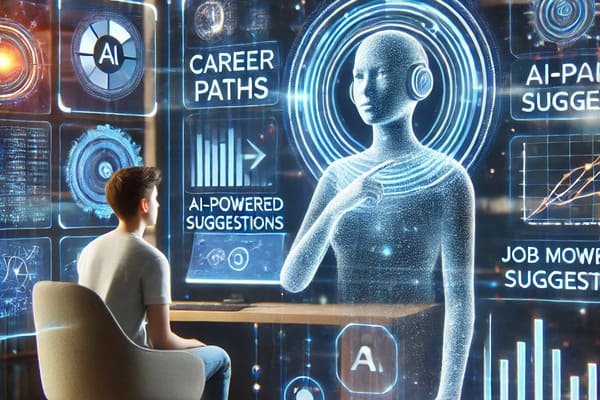
The initiatives under RAISE US will differ from state to state. For instance, in Maryland, the coalition plans to enhance a service-year program aimed at exposing individuals to burgeoning sectors such as healthcare. In Arkansas, efforts will concentrate on establishing “an AI-powered career navigation platform.”
Both Holcomb and Raimondo express optimism regarding the benefits of AI, yet they acknowledge the potential for significant portions of the workforce to be marginalized.
“I do not subscribe to the notion that humans will find themselves entirely devoid of employment opportunities, idly occupying their leisure,” Raimondo affirmed, adding, “Nevertheless, I harbor concerns—my involvement in this initiative is driven by those very worries.”
Source link: Hindustantimes.com.