Smartphone enthusiasts evaluate devices through myriad lenses. While high-performance capabilities and adeptness in managing demanding applications, such as graphics-intensive gaming, captivate certain consumers, others gravitate towards simpler interfaces featuring expansive batteries or superior cameras.
Among various distinguishing metrics, slimness reigns as a remarkably sought-after trait, particularly within the upper echelons of pricing.
Technological ingenuity enables some smartphones to achieve impressive thinness while still maintaining commendable specifications. The Samsung Galaxy S25 Edge exemplifies this, boasting a mere 5.8 mm profile and a weight of just 163 grams.
Mirroring the chipset employed in the bulkier S25 Ultra, it also features a primary camera with an astounding 200 MP resolution.
Although the more compact design sacrifices a telephoto lens and marginal battery longevity, the S25 Edge remains a formidable choice, particularly with the latest One UI 8.5 enhancements.
However, the Galaxy S25 Edge does not hold the title of the slimmest smartphone. The recently unveiled iPhone Air is slimmer at 5.6 mm, while the Infinix Hot 60 Pro+ presents an even trimmer option at 6 mm. Intriguingly, several models, including some from Samsung, surpass the sleek profile of the S25 Edge.
1. Apple iPhone Air
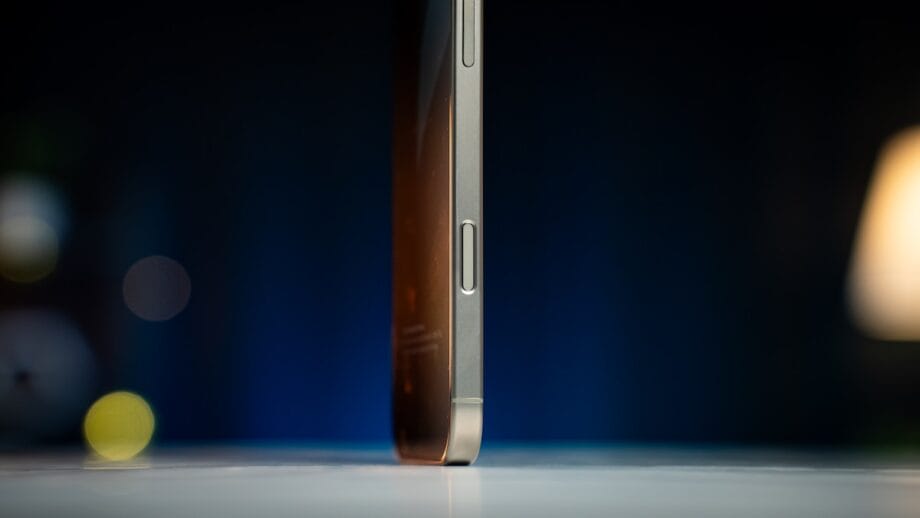
Launched on September 19, 2025, the iPhone Air stands as Apple’s slimmest smartphone to date, measuring a remarkable 5.6 mm—0.2 mm thinner than the Galaxy S25 Edge.
Interestingly, though thinner, the iPhone Air marginally outweighs its rival at 165 grams compared to the Edge’s 163 grams.
Priced at $999, the iPhone Air undercuts the Galaxy S25 Edge by about $100, evident in certain design compromises.
While it incorporates a wide camera akin to the iPhone 17 Pro, it lacks telephoto and ultra-wide cameras, in stark contrast to the S25 Edge, which provides both functionalities, save for the telephoto lens found in the S25 Ultra.
Furthermore, the iPhone Air’s video recording capabilities max out at 4K 60 fps, falling short of the S25 Edge’s impressive 8K recording option.
Despite these discrepancies, both devices boast competitive main cameras without any overt superiority.
This trend is mirrored in their performance, where the S25 Edge features a substantially larger 3,900 mAh battery against the 3,149 mAh of the iPhone Air. Notably, independent evaluations reveal comparable longevity between the two, with neither offering remarkable battery endurance.
2. Samsung Galaxy Z Fold 7
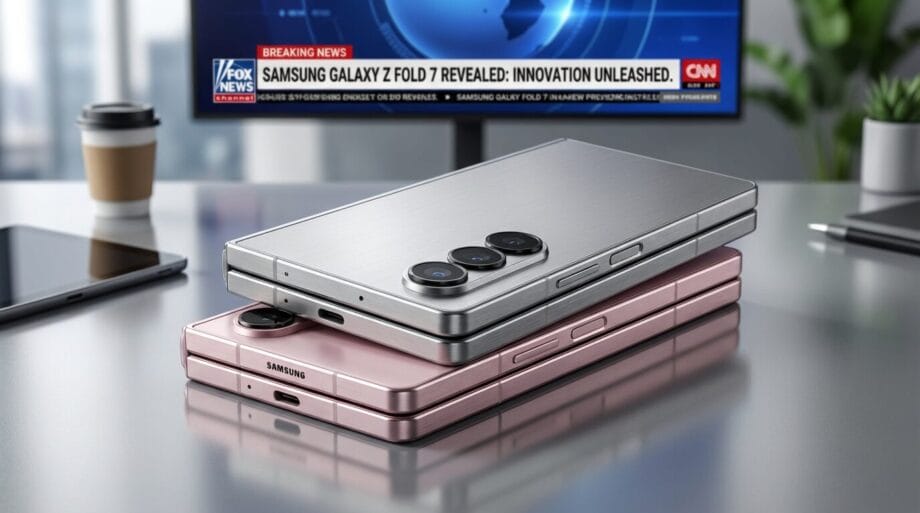
While the Galaxy S25 Edge flaunts a striking slimness, Samsung has also engineered thinner alternatives, albeit with some caveats.
The Galaxy Z Fold 7, primarily a foldable device, presents a folded thickness of 8.9 mm, which, although decent, does not rival the Edge. However, upon unfolding, the device reveals an astonishingly thin profile of just 4.2 mm.
This remarkable thinness wouldn’t be feasible in a standard slab phone, given the constraints of current technology.
Fortunately, the Z Fold 7’s unique design, with its expanded width when unfolded, permits the accommodation of essential components, including the primary camera inherited from the S25 Ultra, a telephoto lens, and an enhanced 4,400 mAh battery—500 mAh more than the S25 Edge—while supporting storage options of up to one terabyte.
3. Samsung Galaxy Z Trifold

The Galaxy Z Trifold further underscores Samsung’s commitment to innovation, achieving an astonishing 3.9 mm thickness when fully unfolded.
However, when closed, it takes on a bulkier stance at 12.9 mm, reminiscent of a solid brick. Despite this, the device commands attention, notably due to its exorbitant price tag of $2,899, positioning it as a niche product for enthusiasts.
Employing design principles similar to the Fold 7, the Galaxy Z Trifold exploits its increased width to further minimize thickness.
Spec-wise, it parallels the Fold 7, offering expanded storage options, a retained telephoto lens, and an impressive 5,600 mAh battery that surpasses both the S25 Edge and the Galaxy Z Fold 7.
4. Oppo R5

In the realm of ultra-thin slab phones, both the Galaxy S25 Edge and the iPhone Air reign supreme in recent times, maintaining a stature that few have dared to challenge. Yet, the Oppo R5, launched back in 2014, expertly eclipses both in terms of thinness.
The year 2014 marked a fiercer race among manufacturers striving for the slimmest form. The R5, a forerunner in this category, accomplished this feat by discarding the headphone jack—a practice that the Galaxy S25 Edge also adheres to.
Although the R5 fell short in specifications, relegating it to limited performance with a singular nano-SIM support and no microSD capacity, its record of thinness remains a significant point of historical interest within the smartphone evolution timeline.
5. Vivo X5 Max
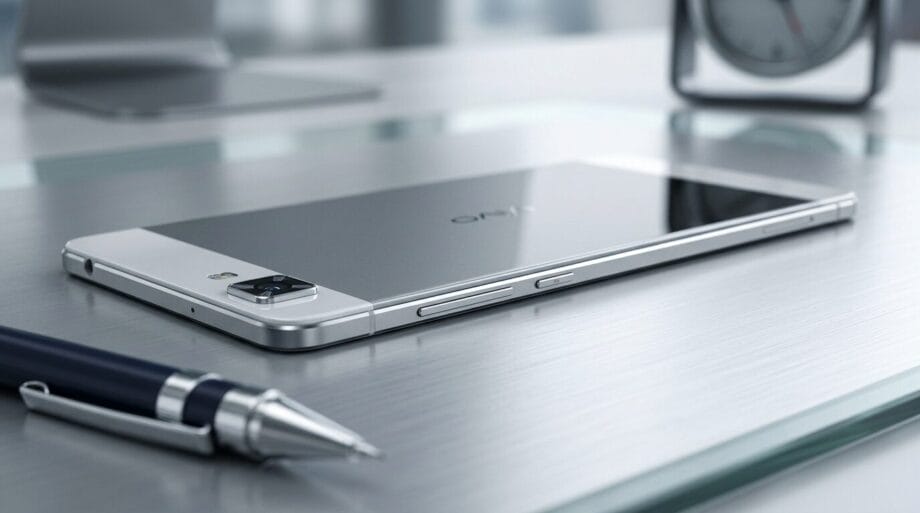
The pursuit of ultra-thin construction oftentimes necessitates sacrifices in essential features, such as the headphone jack—a trend that gained traction and has persisted.
Yet, remarkable innovation emerged in the form of the Vivo X5 Max, a 2014 device that measures a mere 4.8 mm, outpacing the S25 Edge by a full millimeter while preserving a 3.5 mm headphone jack and dual SIM slots, with one accommodating microSD expansion.
The X5 Max’s design eschews significant camera bump protrusions, showcasing its pioneering status among contemporaries.
Nevertheless, it is important to note that while its thinness was revolutionary at the time, the model now feels antiquated with scant competitive features.
Its legacy, however, serves as a testament that if manufacturers like Samsung or Apple desired to include headphone jacks, they indeed possess the capacity to innovate towards that end.
Source link: Bgr.com.