A Disruption on a Short Trip: Headphones and Passenger Etiquette
An incident involving an American Airlines passenger on a flight from Miami to Tampa has sparked significant discussion around proper in-flight conduct.
After repeatedly playing a video on her phone at full volume, despite numerous warnings from the crew, the individual was eventually removed from the aircraft—an event that has since gone viral on social media, emphasizing rising tensions concerning noise regulations in air travel.
The Confrontation: A Viral Display of Discontent
Taking place in late February, this confrontation has garnered renewed attention online. Footage, captured by fellow passengers, reveals an irate woman standing in the aisle, vociferously engaging with flight attendants as she questioned her removal from the plane, which had yet to depart the gate.
Eyewitness accounts indicate that the discord began while the cabin was still boarding, as the woman played a video aloud.
Cabin crew reportedly made multiple requests for her to either silence the device or don headphones—an essential expectation aimed at preserving tranquility in shared spaces.
In defense of her actions, the passenger asserted she had muted the sound following a second warning, claiming she had only played the video for “30 seconds” at a modest volume.
However, by the time the airport police arrived to escort her off the plane, she was audibly using expletives and protesting what she perceived as an excessive reaction to an inconsequential breach of etiquette.
As officers led her from the aircraft, other passengers were heard cheering and applauding, signaling the level of disruption the situation had caused and highlighting the strong sentiments many travelers hold regarding maintaining a serene environment on board.
American Airlines’ Stance on Noise Regulations
American Airlines, akin to most prominent U.S. airlines, maintains a clear directive for passengers to use headphones when operating personal electronic devices that emit sound, alongside adhering to crew directives concerning noise levels.
While many flyers view these guidelines as mere etiquette, the airline underscores that repeated disregard for crew requests can escalate into safety and compliance concerns.
Industry specialists suggest that a continued argument or refusal to comply with crew requests moves the issue beyond mere courtesy.
In these instances, crew members are compelled to act under federal safety regulations that necessitate passengers to comply with lawful instructions, particularly before departure, when securing the cabin is vital.
American Airlines confirmed that law enforcement was summoned to the gate following the passenger’s ongoing disruptive behavior, who reportedly appeared under the influence.
The airline has consistently advocated for a “quiet cabin” ethos, reminding customers that audio should remain inaudible to others and asserting that crew decisions regarding disruptive conduct are final.
Tightening Headphone Policies Across the Industry
This incident aligns with a broader trend among airlines to formalize headphone usage within their operational guidelines and safety protocols.
For instance, United Airlines has recently revised its policies to state explicitly that passengers neglecting to use headphones may face removal from flights or denial of transport.
This shift reflects escalating frustration from both crew and passengers over the prevalence of loud phone calls and social media content shared in close quarters.
What might have once been addressed with a gentle reminder is now increasingly connected to broader concerns about unruly behavior within the aviation sector—an issue regulators have been closely monitoring following a notable uptick in disruptive incidents over recent years.
Flight attendants assert that having clear, written policies equips them with stronger support when interventions are necessary.
A refusal to comply with simple requests, such as wearing headphones, can be documented as noncompliance with airline regulations, rather than an arbitrary decision.
For travelers, the consequence is a growing intermingling of etiquette and enforcement. An act as elementary as leaving a phone’s volume on could lead to repercussions extending beyond disapproving glances from fellow passengers, including removal from the aircraft or potential bans from the airline in serious circumstances.
Passenger Rights and Safety Regulations
As officers boarded the flight to remove the woman, she was heard questioning whether the United States still upheld the tenets of “free speech.”
This sentiment reflects a common misunderstanding that constitutional protections for expression encompass behavior within the confines of commercial airline cabins, particularly when safety protocols are implicated.
Legal analysts advise that upon purchasing a ticket, travelers enter into an agreement with the airline, granting it the authority to enforce conditions for travel and to refuse service to those who create disturbances or disregard crew commands.
These agreements are supported by federal regulations that empower pilots and flight attendants to ensure order and safety for all on board.
U.S. regulators have repeatedly emphasized that law enforcement intervention should be reserved for genuinely disruptive individuals who violate commands—not merely irritating behaviors. However, they support airlines when crew actions can be traced to documented policies, safety briefings, and discernible patterns of defiance.
This means that a passenger loudly disputing a crew request over headphone use, especially if intoxication is involved, risks violating both airline policies and federal directives. Once police are summoned, the decision to eject a passenger is rarely reversed.
Implications for Everyday Travelers
This Miami-Tampa episode serves as a stark reminder that basic courtesies in flight are increasingly viewed as enforceable standards.
Adhering to the use of headphones, switching devices to silent during announcements, and calmly responding to crew requests are not simply acts of politeness—they constitute a shared responsibility for ensuring a safe and orderly flight experience.
Travel experts advise passengers to consider noise in the cabin with the same seriousness as seat belts or tray tables: compliance with crew directives is imperative, regardless of individual opinions on the duration of a video played or its volume.
Observing crew requests promptly and reserving any criticisms for discussion with the airline post-flight is far less precarious than engaging in an aisle confrontation.
This incident also highlights how swiftly an otherwise routine short-haul journey can devolve into chaos.
A few moments of loud audio, defiance, and a heated exchange with crew members culminated in police intervention, delayed departures, and a surge of online attention once fellow passengers shared their recordings.
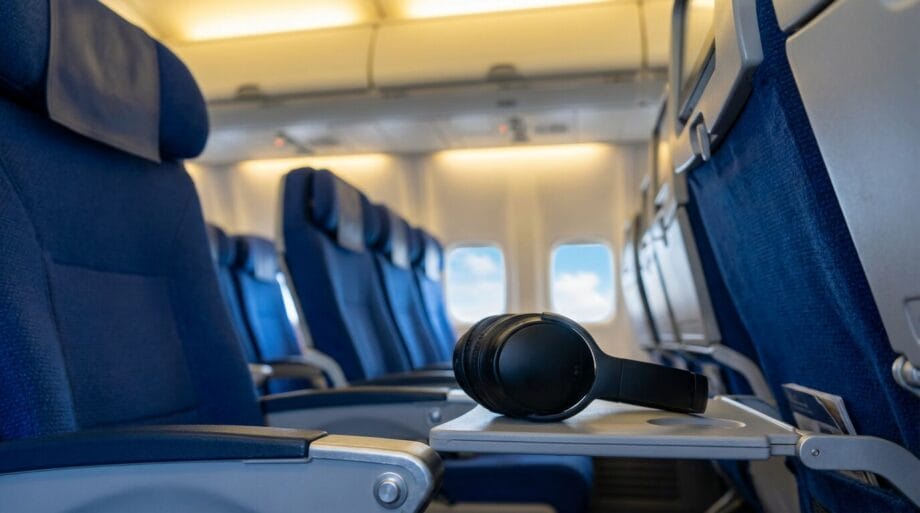
As airlines continue to formalize headphone policies and address disruptive behavior, the key takeaway for seasoned travelers is unequivocal: maintain personal audio levels, heed crew instructions, and recognize that, whether at altitude or on the ground, the right to a serene cabin environment outweighs any individual’s inclination to broadcast their personal soundtrack.
Source link: Thetraveler.org.