Meta Platforms Enhances AI Initiatives Through Collaboration with Nvidia
Meta Platforms is advancing its artificial intelligence framework and the development of personal AI agents by strengthening its partnership with Nvidia, which is poised to invest $3 billion in Meta’s equity offerings.
The two entities aim to optimize Meta’s Muse models and AI agents, while broadening the implementation of Nvidia’s computing and networking technologies.
Nvidia’s commitment involves a substantial investment of $3 billion in Meta Platforms, coinciding with an expansion of their collaboration on Muse, the AI assistant and model family developed by Meta.
This agreement encapsulates a financial investment along with plans to enhance model training and inference, augment Nvidia’s computing infrastructure, and investigate tools for monitoring AI agents.
“AI agents represent a new computing paradigm—software that comprehends our objectives, reasons, utilizes tools, and accomplishes tasks on our behalf,” states Jensen Huang, the Founder and CEO of Nvidia.
The timing of this deal aligns with Meta’s increased expenditure on AI systems aimed at catering to billions of users across platforms such as Facebook, Instagram, and WhatsApp.
Furthermore, the company is engaged in an unparalleled equity fundraising initiative to sustain the infrastructure required for these aspirations.
This expanded partnership underscores a transformation in the dynamics between AI infrastructure providers and their principal clients.
Nvidia is not merely supplying necessary computing systems but is also investing in businesses that seek to amplify their use of Nvidia’s technology.
Meta’s fundraising initiative has escalated to $97.5 billion, following an uptick in its proposed common-stock offerings.
Nvidia’s investment is part of a broader financial strategy, although the comprehensive financial and technical specifics regarding their enhanced collaboration remain undisclosed.
Muse Integrates AI Agents with Meta’s Infrastructure Ambitions
Muse, internally designated as Hatch, is pivotal to CEO Mark Zuckerberg’s vision of delivering what he terms “personal superintelligence” to users.
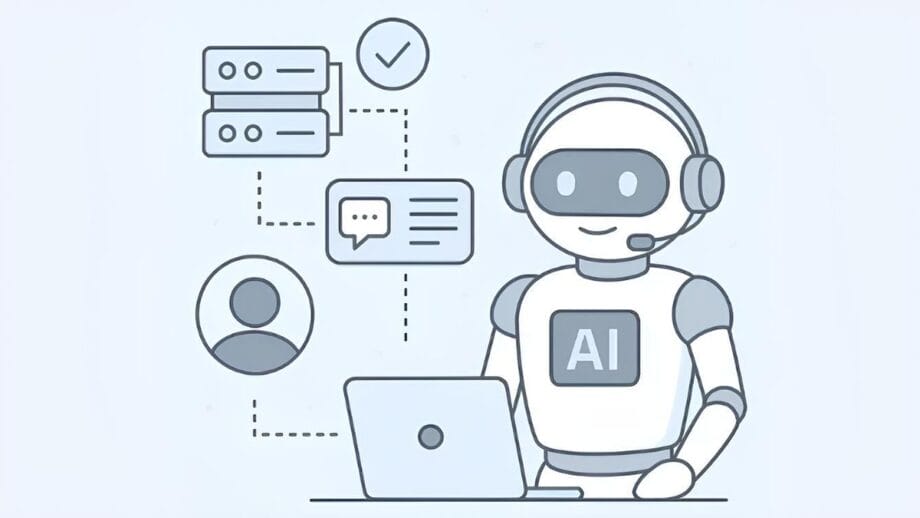
Diverging from traditional digital assistants that predominantly react to specific queries, these AI agents possess the ability to interpret goals, leverage integrated tools, and undertake assignments on behalf of users.
Rooted in the open-source AI framework OpenClaw, Muse can interface with a variety of applications and services, including email, calendars, payments, healthcare, shopping, and smart home control mechanisms.
Users maintain the autonomy to revoke access at any time, according to available reports. This versatility enhances the role of AI assistants from mere information retrieval to orchestrating tasks across diverse digital platforms.
However, such functionality necessitates stringent operational standards. An agent engaging with multiple applications must adeptly process requests, retrieve pertinent information, and execute actions while adhering to user-granted permissions.
As the array of connected services expands, the underlying infrastructure must accommodate increasingly intricate workloads, all while ensuring optimal performance and controlling operational expenses.
Meta and Nvidia are poised to optimize the Muse initiative and the broader suite of models throughout both training and inference processes.
Training pertains to developing a model from datasets, while inference involves the execution of tasks by the trained model upon receiving requests.
Enhancements to both stages are crucial for distinct reasons. Training performance dictates the resources and time needed for model development, whereas inference efficiency influences the costs and responsiveness involved in servicing users at scale.
The companies have asserted that their joint efforts will concentrate on performance augmentations and the total cost of ownership, a metric that assesses the overall expenses tied to deploying and operating technological solutions.
Meta also anticipates a broader integration of Nvidia’s infrastructure, incorporating Vera Rubin systems and Vera central processing units (CPUs) for next-gen AI agents.
This deployment will utilize Nvidia Spectrum-X Ethernet networking and BlueField-4 technologies to bolster network efficiency and throughput.
For Meta, these strategic investments are fundamental to embedding AI capabilities within services that cater to billions.
For Nvidia, a deeper engagement in model optimization and infrastructure deployment fortifies its relationship with a significant client at a time when demand for AI computing is accelerating investments within the technology sector.
AI Infrastructure Investment Shapes Technological Financing
The collaboration between Meta and Nvidia forms a component of a larger strategy to secure the necessary capital for its AI ventures.
On October 26, Meta unveiled concurrent public offerings amounting to $22.5 billion in Class A common stock alongside $12.5 billion in depositary shares representing mandatory convertible preferred stock.
Following this, the company augmented its common-stock offering to $25 billion, culminating in an initial total of $37.5 billion before factoring in any additional proceeds from other financing channels.
Moreover, Meta has delineated a separate at-the-market share-sale program of up to $60 billion. While the company has not made a definitive commitment to proceeding with this program, the terms and timing remain contingent on forthcoming decisions.
Consequently, the $97.5 billion figure exemplifies the expanded fundraising initiative, not merely the capital already secured.
Other chip manufacturers are similarly eager to participate. Meta indicated that Nvidia, Advanced Micro Devices (AMD), and Broadcom have expressed interest in collectively acquiring up to $5 billion in Class A common shares.
AMD has concurrently announced a $1 billion investment in Meta, bringing the total disclosed commitments from chipmakers to $4 billion. However, it remains unclear whether these investments are part of an organized financing arrangement.
These developments elucidate the increasingly intricate relationship connecting AI infrastructure expenditure and the financing strategies of technology vendors.
Chipmakers stand to gain when clients enhance their computing capabilities, while strategic investments can entrench suppliers financially within the companies procuring their solutions.
While these relationships signify a trend, they do not inherently guarantee proportional returns relative to investments made.
Nevertheless, they underscore how the development of AI infrastructure is increasingly interwoven with multifaceted decisions: securing financing, acquiring computing resources, expanding data center capacities, and creating applications that generate sufficient value to warrant the associated expenditures.
The companies are also contemplating further collaboration on Nvidia’s OpenShell Reference Architecture, which includes OpenShell for safer agent deployment and Sentry for supervising agent behavior.
This prospective cooperation would transcend pure computational performance, aiming to address deployment and oversight methodologies for AI agents.
No specific timeline for the potential implementation of OpenShell and Sentry collaboration has been disclosed, nor has the comprehensive technical scope for the expanded Muse initiative been fully articulated.
The agreements signify mutual areas of cooperation, yet the scope of their operational results remains to be seen.
Source link: Mexicobusiness.news.