An esteemed technology authority cautions that individuals are fundamentally misusing ChatGPT by approaching conversational platforms as if they were conventional search engines.
Countless internet users are gravely misunderstanding the essence of artificial intelligence by treating chatbots as interchangeable with traditional search engines.
As highlighted in a recent report by El Economista, this pervasive behavioral transition is resulting in the consumption of spurious information presented as established truth.
Experts in technology now warn that such dependence on language models for discovering facts fundamentally squanders the genuine potential these systems possess.
The Hallucination Hazard
For over twenty years, digital navigation has depended on search algorithms indexing established encyclopedias, credible news sources, and scholarly databases.
The meteoric rise of generative algorithms has drastically disrupted this traditional informational framework in an astonishingly brief period.
Instead of relying on verified materials, a vast number of users now solicit immediate, synthesized responses from conversational interfaces.
AI expert Jon Hernández contends that this change signifies the most significant error in contemporary technology utilization.
On the Roca Project podcast, Hernández elucidated that users erroneously equate a chatbot’s authoritative tone with factual reliability.
Since these models are programmed to predict language rather than validate data, they often conjecture and confidently fabricate entirely fictitious narratives.
This inherent design flaw renders generative models exceedingly perilous when employed as primary sources of objective knowledge.
Relying on a system that is susceptible to hallucinations for historical facts, medical guidance, or technical specifications inevitably propagates egregious misinformation.
Hernández emphasizes that treating a language model as an infallible digital encyclopedia constitutes a perilous distortion of its intended design.
A Symbiotic Workflow
Rather than acting as an immaculate repository of human knowledge, artificial intelligence is engineered to function as an interactive processor.
Hernández underscores that the true efficacy of this technology resides in the dynamic, real-time collaboration between human intellect and machine capability.
The software excels at manipulating existing data, producing innovative frameworks, and streamlining intricate workflows when steered by an informed human operator.
Viewing the software merely as a passive search engine detracts from its most potent analytical capabilities. Optimal outcomes are realized when users perceive the program as a dedicated collaborator rather than a simplistic query box.
By actively refining prompts and iterating together, the human user ensures that the final output remains anchored in reality.
This method necessitates that users bring a foundational understanding to their interactions to identify potential inaccuracies.
“Four eyes see more than two,” Hernández remarked, emphasizing that the human must consistently act as the ultimate editor and verifier.
When effectively integrated, the machine manages structural complexities while the human operator preserves the factual integrity of the endeavor.
The Delegation Dilemma
Aside from the search engine misapprehension, a secondary challenge is arising as professionals seek to fully outsource their daily tasks to these platforms.
Many individuals unwisely delegate entire projects to avoid engaging in actual labor. This hands-off methodology invariably results in subpar outputs fraught with structural inconsistencies and factual oversights.
Automated systems are adept at generating high volumes of content; however, they fundamentally lack contextual intelligence and critical thinking abilities.
When users relinquish their oversight responsibilities, they expose their organizations to substantial operational hazards and the threat of public embarrassment.
The technology cannot operate as an autonomous employee capable of executing multifaceted professional tasks without rigorous human oversight.
The contemporary workforce must significantly revise its current approach to digital assistants in order to genuinely capitalize on the ongoing technological transformation.
Successful integration of these models demands increased human engagement, not diminished, as workers must perpetually guide and refine the digital output.
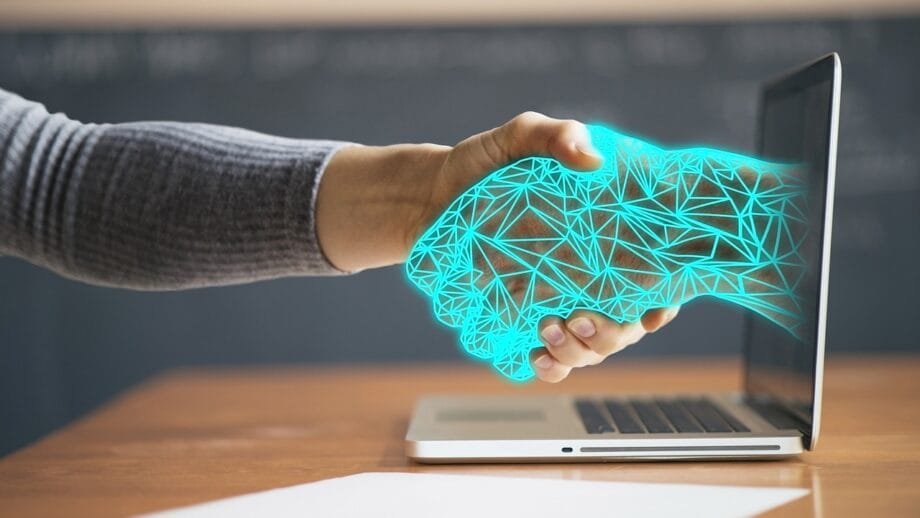
Ultimately, those who thrive will be those who master this collaborative partnership rather than those attempting to automate their roles entirely.
Source link: Dagens.com.