A recent leak regarding the iPhone 18 Pro’s battery has garnered considerable interest, suggesting that Apple may again employ varying battery capacities across different global markets.
Sources citing Digital Chat Station on Weibo report that the anticipated China variant of the iPhone 18 Pro is undergoing tests with a battery capacity of approximately 4056mAh, whereas the U.S. version could come equipped with a larger 4288mAh battery.
At first glance, this disparity appears noteworthy.
However, numerical capacity alone does not encapsulate the entire scenario. More salient inquiries revolve around the rationale for such divergence, the tangible battery life that the larger cell might afford, and whether this revelation holds substantial relevance for prospective buyers of the iPhone 18 Pro.
Quick Assessment: Is This Battery Leak Significant?
While the leak is intriguing, it does not necessarily indicate a groundbreaking advancement in battery longevity.
If verified, the U.S. iPhone 18 Pro’s battery could indeed be roughly 232mAh larger than its Chinese counterpart, representing an approximate 5.7% difference in capacity.
This variation likely stems from Apple’s persistent adherence to eSIM-only configurations in the U.S., while models intended for the Chinese market still accommodate physical SIM card technology.
For the majority of users, this disclosure should be regarded as a minor hardware adjustment rather than a signal of significant battery enhancement.
Insights from the Leak
Current reports indicate the following projected battery capacities:
| Model | Projected Battery Capacity |
|---|---|
| iPhone 18 Pro (China) | Approximately 4056mAh |
| iPhone 18 Pro (U.S.) | Approximately 4288mAh |
| Difference | Approximately 232mAh |
Apple has yet to validate these specifications.
Reportedly arising from prototype testing, the final retail configurations could still be subject to change ahead of launch.
Nonetheless, the leak intrigues observers as it aligns with Apple’s ongoing strategy of leveraging distinct internal designs for eSIM-exclusive models versus those utilizing physical SIM slots.
Why a Larger Battery for the U.S. Model?
The most plausible justification relates to the nonexistence of a physical SIM tray.
Since the iPhone 14 series, Apple has predominantly marketed U.S. models devoid of physical SIM card slots. Instead, activation of mobile service is facilitated through eSIM technology.
Conversely, China represents a significant market for Apple, where reliance on physical SIM support remains prevalent.
Although the SIM tray may appear inconsequential externally, it occupies vital internal space. Eliminating this component permits Apple to slightly reconfigure internal arrangements, potentially augmenting battery size.
If the leak holds true, the larger 4288mAh battery may merely arise from Apple’s utilization of accessible space in the eSIM-centric design.
This observation does not imply that Apple is deliberately offering one market a superior product; rather, it reflects varying hardware necessities.
Comparative Analysis of Rumored Battery Capacities
Reviewing previous iterations offers valuable context.
| Model | Battery Capacity |
|---|---|
| iPhone 14 Pro | 3200mAh |
| iPhone 15 Pro | 3274mAh |
| iPhone 16 Pro | 3582mAh |
| iPhone 17 Pro | 3988mAh–4252mAh |
| iPhone 18 Pro (China, rumored) | 4056mAh |
| iPhone 18 Pro (U.S., rumored) | 4288mAh |
The disclosed iPhone 18 Pro battery capacities appear less startling when juxtaposed against preceding Pro models.
In contrast to the iPhone 17 Pro, the alleged Chinese variant would deliver a modest enhancement, while the U.S. model would exhibit a slight increase.
This suggests that Apple may be perpetuating its recent trajectory of battery capacity growth rather than unveiling any revolutionary improvements.
Estimating Extra Battery Life from 232mAh
The numerical difference between 4056mAh and 4288mAh is approximately 232mAh.
In percentage terms, this translates to around 5.7%.
Hypothetically, a battery scaled by 5% to 6% might yield an additional 30 to 45 minutes of mixed usage under specific conditions.
However, empirical outcomes seldom align perfectly with battery capacity increments.
Battery longevity is contingent upon numerous elements, including:
- Processor efficiency
- Display brightness
- Refresh rate
- Cellular modem performance
- Camera utilization
- Background activity
- Gaming and video playback
Consequently, users are likely to perceive only a modest distinction between the two battery capacities.
Battery Capacity vs. Battery Life
This distinction is paramount, often overlooked amidst battery speculations.
While a larger battery can contribute positively, overall battery life is contingent upon the entire system’s functionality.
The iPhone 18 Pro is anticipated to incorporate Apple’s forthcoming A20 Pro chip, rumored to leverage an advanced manufacturing process.
If Apple achieves better power efficiency, battery longevity might improve, even if the capacity itself experiences only a nominal enhancement.
Conversely, battery life may remain static if emerging features demand additional power.
For prospective buyers, battery capacity should be perceived as a component of a broader spectrum rather than the sole determinant.
Historical Precedent
If Apple does implement varied battery capacities across markets, it will not represent an entirely novel approach.
The company has a history of distributing varying hardware configurations according to regulatory requirements, network compatibility, and SIM card support.
The transition to eSIM-exclusive models in the United States has afforded Apple the opportunity to reimagine internal layouts, where battery positioning can diverge.
This is why this latest rumor resonates authentically with many industry experts.
Evaluating the Reliability of the Leak
The information originates from Digital Chat Station, a prominent figure among Chinese technology leakers.
Historically, the account has accurately disclosed smartphone specifications prior to their release, including those pertinent to Apple products.
However, even trusted sources may not always provide correct information.
More importantly, specifications from prototypes can alter during development.
As Apple has yet to declare the iPhone 18 Pro officially, these battery figures ought to be regarded as preliminary insights rather than finalized specifications.
In Anticipation of the iPhone 18 Pro

While battery capacity holds significance, many users are more concerned with the practicality of keeping their iPhone charged throughout the day.
Regardless of whether the final iPhone 18 Pro arrives with a 4056mAh or 4288mAh battery, it is likely that most individuals will charge their devices at desks, in vehicles, beside beds, or while on the go.
A dependable MagSafe charging setup can frequently augment the daily experience more effectively than a marginal bump in battery capacity.
Accessories such as the ZEERA MagSafe Charging Series can mitigate charging inconveniences today while remaining valuable across future iPhone iterations that continue to embrace MagSafe technology.
Is Waiting for the iPhone 18 Pro Worth It?
If battery life is your sole motive for postponing, this leak alone is unlikely to suffice.
The anticipated battery capacities indicate incremental enhancements as opposed to substantial leaps.
Users transitioning from an iPhone 14 Pro or older model may still derive significant benefits from the comprehensive suite of updates, including the new processor, enhanced efficiency, camera advancements, and battery improvements.
For those already in possession of a recent Pro model, the 4056mAh versus 4288mAh debate will likely not serve as a decisive factor.
If battery life remains your highest priority, it may also be prudent to juxtapose the iPhone 18 Pro with the larger iPhone 18 Pro Max, which is anticipated to deliver markedly extended endurance.
The most actionable insight is that battery capacity figures warrant careful interpretation.
The gap between 4056mAh and 4288mAh may sound substantial in headlines, yet the actual impact could be relatively minimal.
For the average user, daily battery experience is shaped by numerous factors beyond the raw size of the battery.
A more efficient processor, optimized thermal management, software refinements, and convenient charging choices are often more influential on daily utilization than marginal enhancements in capacity.
Until Apple formally unveils the iPhone 18 Pro, the rumored battery figures ought to be considered an engaging clue toward Apple’s design philosophy rather than a definitive rationale for upgrading.
Concluding Remarks
The recent battery leak surrounding the iPhone 18 Pro intimates that Apple may persist in deploying different battery capacities across international markets, with the U.S. model potentially reaching 4288mAh while the Chinese variant tests closer to 4056mAh.
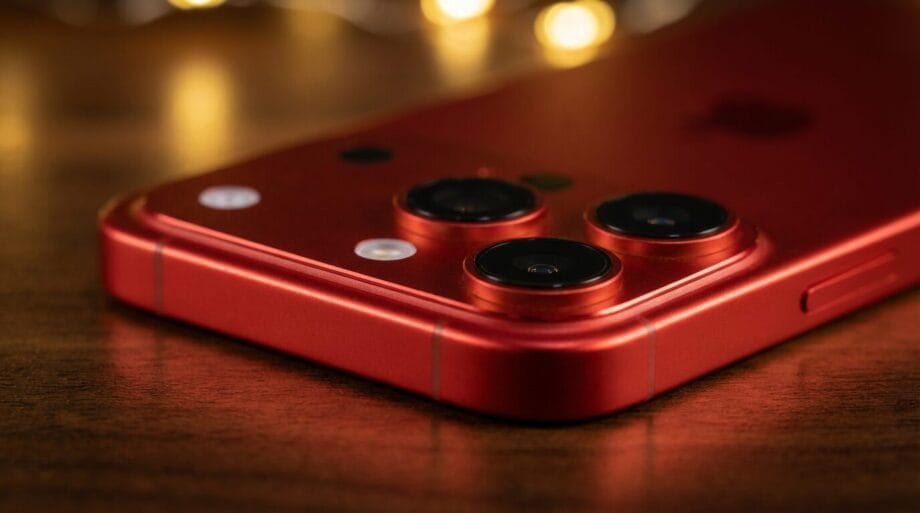
If substantiated, the difference is likely attributed to Apple’s eSIM-only configuration, rather than an intentional market advantage.
Crucially, battery capacity alone does not equate to battery longevity.
The actual narrative of the iPhone 18 Pro will hinge on how Apple harmonizes battery size, A20 Pro efficiency, display technology, thermal management, and software optimization.
For now, this leak merits observation—but it remains premature to draw sweeping conclusions regarding real-world battery performance.
Source link: Zeerawireless.com.