Cashless Payments Market Report Unveils Significant Trends
Epignosis Insights, a prominent global market research and publishing consultancy, has today unveiled its comprehensive study titled “Cashless Payments Market: A Global Customer Experience Report.”
This extensive report meticulously examines consumer payment behaviors across 28 major economies, elucidating their implications for checkout design.
The findings reveal a dramatic escalation in digital payment transaction value, soaring from $1.7 trillion in 2014 to an anticipated $18.7 trillion by 2024, with projections indicating a staggering $33.5 trillion by 2030, as reported by Worldpay’s 10th annual Global Payments Report.
Currently, digital payments constitute a dominant 66% of global e-commerce transaction values and 38% of in-store payments, marking significant increases from 34% and 3%, respectively, a decade prior.
The report notes, “The aggregate growth numbers tell only part of the story. What they obscure is how differently this shift has unfolded market by market: the payment method a consumer in Nairobi trusts by default bears almost no resemblance to the one a consumer in Amsterdam or Seoul reaches for.”
The Evolution of In-Store Payments
As articulated in the report, the e-commerce sector has experienced the most rapid digitization, with digital transaction value jumping from 34% to an impressive 66% since 2014.
In contrast, in-store payments have experienced a slower, albeit accelerating growth trajectory, climbing from a mere 3% to 38% during the same period.
This shift can be attributed to the increasing ubiquity of contactless hardware, QR codes, and tap-to-pay wallets at physical checkout points.
Epignosis Insights identifies a substantial expectation gap in in-store payments, as consumers longing for seamless digital checkout experiences online now anticipate similar efficiencies at physical registers, thereby exposing traditional point-of-sale infrastructures to potential disruption.
Digital Wallets: The Preeminent Payment Method
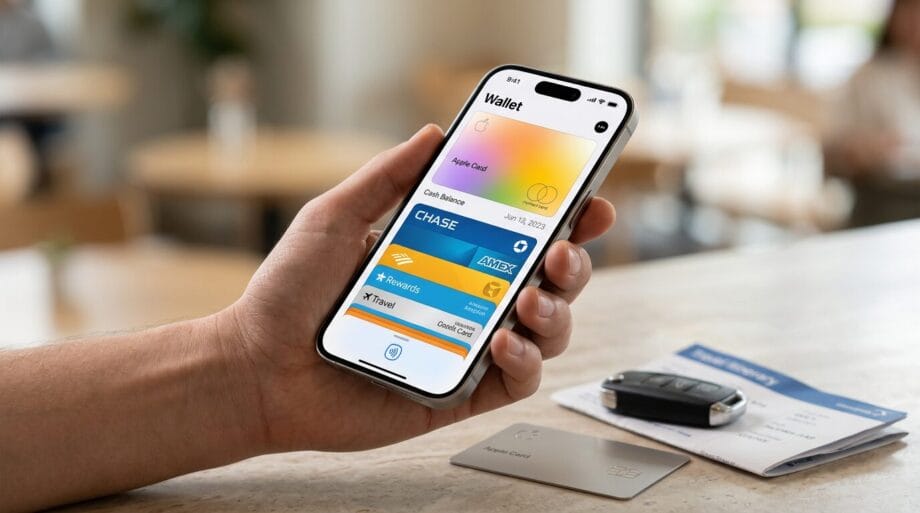
The research highlights the ascendancy of digital wallets as a defining trend in the contemporary customer experience landscape.
In 2022, digital wallets accounted for 54% of global e-commerce transaction value, with projections indicating an increase to 56% by 2025 and 61% by 2027.
Furthermore, at the point of sale, the wallet share is expected to rise from 32% in 2022 to 46% by 2027, according to data from Worldpay referenced in the report.
Wallets such as Apple Pay, Alipay, and PayPal facilitate transactions via cards, bank transfers, buy-now-pay-later schemes, or stored value, preserving simplicity for consumers, regardless of the varying funding mechanisms across markets.
Diverse Payment Frameworks Without a Universal Template
The report’s analysis organizes 28 pivotal economies into five distinct structural categories:
- Card-led markets: nations such as the UK, Japan, Canada, and Australia, where contactless adoption enhances card usage.
- Digital-wallet-led markets: exemplified by China, where Alipay and WeChat Pay dominate online payments, and South Korea, where KakaoPay competes in an estimated $44.4 billion sector.
- Bank-transfer markets: regions like the Netherlands, Belgium, and the Nordics, where platforms like iDEAL and Sweden’s Swish prevail.
- Government-built instant payment systems: including India’s UPI, which processed over 50% of the country’s e-commerce transactions in 2024, along with Brazil’s Pix.
- Mobile-money-centric markets: particularly in Kenya, where M-PESA commands a staggering 90.8% of the mobile money landscape, reaching 86.6% of the population by early 2025.
The Importance of Localization in Payment Experiences
Abhijith Nair, Senior Research Manager at Epignosis Insights and the report’s lead author, remarked, “A merchant or financial institution designing a payment experience for India needs to prioritize UPI’s instant, fee-free rail; the same experience in the Netherlands requires iDEAL front and center; in Kenya, M-PESA integration is not optional but foundational.”
He underscored that payment providers adopting a localization-focused approach, rather than a monolithic global rollout, consistently demonstrate higher checkout conversion and repeat-use rates across the monitored markets.
According to McKinsey’s Global Payments Report, cited within the study, industry revenue is projected to grow at an average annual rate of approximately 4% through 2029, with an increasing emphasis on lower-fee digital wallets and account-to-account methods rather than traditional card interchange.
The outlook from Epignosis Insights suggests a continuation of fragmentation in global payment methodologies: wallets are anticipated to emerge as the closest approximation to a universal customer experience layer, even as each wallet transaction’s underlying funding mechanism—be it a card in the United States, a bank account in the Netherlands, or Alipay’s closed-loop balance in China—remains deeply rooted in local contexts.
Source link: Openpr.com.