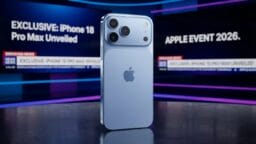
The iPhone 18 Pro and Xiaomi 18 Pro present two distinct interpretations of a premium smartphone. Apple’s allure is rooted in its seamless iOS integration, advanced Face ID technology, and purportedly professional-grade video capabilities.
In stark contrast, Xiaomi boasts an innovative rear display, dual 200MP camera systems, and a significantly larger battery.
While on paper, Xiaomi appears to deliver a superior hardware profile at a more palatable price point, it remains to be seen if this translates to improved photographic performance, extended battery life in real-world scenarios, or an enhanced user experience for all consumers.
iPhone 18 Pro vs Xiaomi 18 Pro: Specifications
The figures presented derive from the provided comparison. It’s imperative to note that pricing and certain specifications may differ by region; thus, dollar and rupee figures should not be considered as directly analogous offers in local markets.
Design and Displays
Both devices are constructed with aluminum frames and boast an IP68 rating for water resistance. Apple’s design incorporates Ceramic Shield 2, coupled with cutting-edge Face ID technology.
Conversely, Xiaomi integrates Dragon Crystal Glass 3 along with an under-display ultrasonic fingerprint sensor. However, one cannot ascertain superior durability simply from the material nomenclature.
In terms of display dimensions, both smartphones are similarly sized and each supports a fluid 120Hz refresh rate.
Xiaomi claims to achieve superior peak brightness levels; yet, such peak specifications do little to affirm which display remains more luminous outdoors during prolonged operations. Apple’s anti-reflective coating is also cited, potentially influencing visibility.
A stark contrast is evident with Xiaomi’s dual-screen layout, which enables users to access information or compose photos without the need to flip the device.
Meanwhile, Apple adheres to a traditional one-display approach, focused solely on the front.
Cameras and Video
On paper, Xiaomi boasts a formidable camera configuration: a 200MP primary sensor, complemented by a 200MP periscope telephoto and a 50MP ultrawide lens.
The iPhone, on the other hand, is equipped with three 48MP rear cameras, one of which provides a 4× optical zoom capability, plus a LiDAR depth sensor. Notably, Xiaomi advertises a higher-resolution front-facing camera.
While these specifications elucidate on the hardware, they do not decisively indicate which device excels in photography.
Merely resting on resolution fails to address crucial attributes such as detail integrity, low-light performance, color accuracy, and the handling of dynamic subjects.
With regard to video capabilities, the iPhone showcases features such as 4K recording at up to 120fps, alongside Dolby Vision, ProRes RAW, and Apple Log 2.
Xiaomi, meanwhile, boasts 8K recording at 30fps, 4K at 120fps, along with Dolby Vision and 10-bit Log formats.
While Apple’s offerings may better align with established professional editing workflows, Xiaomi provides creators with alternative recording formats.
An authentic assessment would necessitate a side-by-side analysis of footage generated by both devices.
Performance and Battery
Both smartphones feature processors characterized as 2nm chips. Xiaomi touts a greater maximum RAM capacity, while Apple provides increased maximum storage options.
However, neither disparity, nor assertions regarding software optimization, can definitively illustrate which device performs superiorly without comparable empirical analysis.
Battery specifications present a notable divergence. The Xiaomi 18 Pro is equipped with a formidable 7,000mAh battery—significantly larger than that of the iPhone 18 Pro.
Furthermore, Xiaomi claims superior wired and wireless charging capabilities, positioning it as a more formidable contender in terms of charging specifications.
However, to ascertain the real-world disparities, battery-life and charging-time assessments are crucial.
An essential aspect in the previously issued article merits scrutiny: it refers to Xiaomi’s 27W reverse charging as wireless in various instances.
This detail necessitates verification prior to dissemination, ensuring it is not presented as an unequivocal feature without confirmation.
Price and Buying Decision
According to the prices delineated in the initial article, Xiaomi seemingly provides a greater battery capacity, enhanced camera resolutions, and superior display hardware at a lower cost.
However, the cited USD and INR prices must be validated against actual offers within identical markets and corresponding storage configurations.
Opt for Xiaomi if its battery longevity, accelerated stated charging, and innovative rear display align with your priorities.

Alternatively, choose the iPhone if you favor the iOS platform, appreciate Face ID’s conveniences, or prefer Apple’s holistic ecosystem, alongside its touted professional video standards.
Rather than concluding with an arbitrary winner based solely on specifications, the most justified selection hinges on local pricing, paired with independent evaluations of camera output, performance metrics, and battery longevity.
Source link: Nokiamob.net.