Apple Shifts Focus to AI-Powered Smart Glasses, Abandoning Vision Pro Plans
In a strategic pivot, Apple is reportedly redirecting its efforts in wearable technology, prioritizing AI-infused smart glasses over the Vision Pro headset series.
Esteemed analyst Ming-Chi Kuo reveals that, under the imminent leadership of CEO John Ternus, the company has undergone significant alterations in its augmented reality (AR) trajectory.
Kuo, in a recent update on X, articulated that Apple’s previous ambitions concerning the Vision Pro are now obsolete, attributable to profound strategic recalibrations over the preceding year.
He disclosed that merely two smart glasses initiatives have retained prominence in Apple’s forthcoming agenda.
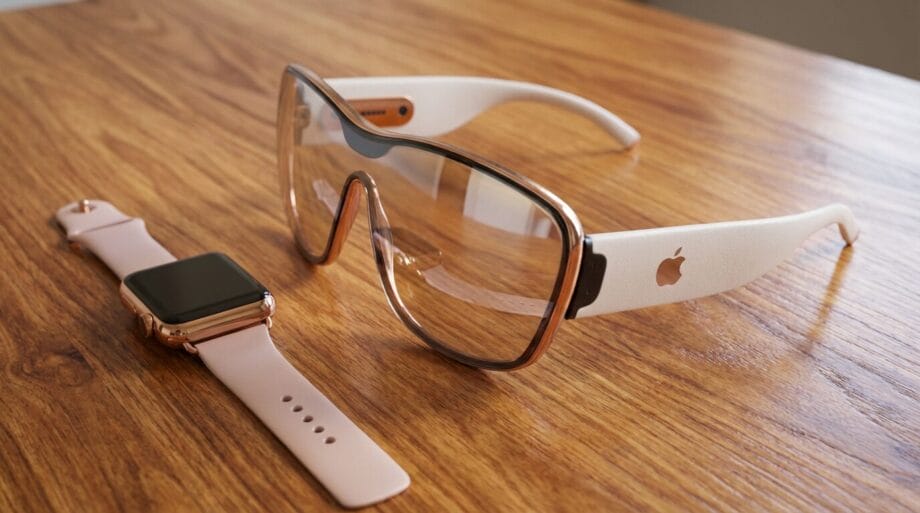
The initial product is anticipated to be a display-less model of AI smart glasses, envisioned for mass production by 2027.
The second, a sophisticated variant of AR glasses equipped with displays, has, however, encountered delays, pushing its anticipated launch to 2029.
Kuo asserted, “Dismissing the Vision Pro series was prudent, as Apple reallocates resources towards smart glasses with broader market appeal.”
He added that the display-enabled AR/XR glasses, powered by optical waveguides, have now been postponed to 2029, while the display-less AI glasses are projected to be available in 2027, akin to Ray-Ban’s Meta.
Aligning with Kuo’s assertions, Bloomberg’s Mark Gurman has signaled that Apple is increasingly placing its bets on smart glasses as the next focal point in its hardware lineup.
Gurman mentioned that the launch of Apple’s AI-forward glasses is set for late 2027, albeit facing developmental hurdles.
Further revelations indicate that Apple has curtailed several projects associated with Vision, including the Vision Air headset and a glasses product designed for integration with Mac devices.
Nonetheless, a rift exists regarding the future of the Vision Pro lineup. While Kuo asserts that development on a successor to the Vision Pro has ceased, Gurman contends that a second-generation headset is still undergoing internal testing.
He noted that Apple is also contemplating a lighter, more economically viable Vision headset, though it is unlikely to materialize before 2028 or 2029.
Despite the disparities in perspectives on the Vision Pro’s future, both reports converge on a unified strategic vision—Apple perceives smart glasses as a far more scalable and commercially viable endeavor compared to its high-priced mixed-reality headsets.
Industry expectations for this category are rapidly escalating. Kuo previously prognosticated that Apple’s Ray-Ban Meta-style smart glasses could achieve shipments ranging from 3 million to 5 million units by 2027, potentially propelling the global smart glasses market to surpass 10 million annual shipments.
The inaugural AI smart glasses from Apple are expected to concentrate on utilitarian features rather than comprehensive augmented reality functionalities.
Reports suggest that the device could integrate cameras, voice interaction, audio playback, video recording capabilities, and AI-enhanced environmental awareness.
More sophisticated AR glasses leveraging optical waveguide technology are expected to emerge subsequently, contingent on advancements in the technology and a reduction in production costs.
As John Ternus is poised to officially assume the role of CEO in September 2026, it is increasingly apparent that the future of Apple’s wearable technology will coalesce around smart glasses, while the long-term trajectory of the Vision Pro series remains nebulous.
Source link: Thehansindia.com.