- 0-20%: Unlikely – Lacks credible sources
- 21-40%: Questionable – Some concerns remain
- 41-60%: Plausible – Reasonable evidence
- 61-80%: Probable – Strong evidence
- 81-100%: Highly Likely – Multiple reliable sources
Apple’s stringent criteria for its anticipated foldable device, the iPhone Ultra, face substantial hurdles as the complexities of large-scale production loom large. Recent revelations suggest that difficulties surrounding the Printed Circuit Board (PCB) have emerged as a significant production-related obstacle.
Ongoing Concerns Over PCB Component Mounting Could Delay Launch of iPhone Ultra
The well-regarded Weibo insider, Fixed Focus Digital, recently shared insights via a new post, indicating:
“Exclusive insights into Apple’s foldable devices reveal that manufacturing challenges are not at the forefront as previously speculated.
Rather, they are grappling with difficulties in surface-mount technology (SMT), a critical pre-assembly operation, resulting in constrained production capabilities. This does not bode well for the timeline…”
Surface-Mount Technology (SMT) facilitates the direct installation of electronic components onto the PCB’s surface.
Instead of relying on slender wires to establish connections, SMT employs connection pads on the board where a solder paste creates both mechanical and electrical bonds upon heating.
According to the latest disclosures, Apple is experiencing complications with the SMT application on the iPhone Ultra’s PCB.
In a fortuitous development, Fixed Focus Digital has dismissed earlier speculations regarding the complex hinge mechanism of the foldable phone, which allegedly emitted troubling “rattling” noises during operation.
Current Developments
To address the notorious crease dilemma, Apple is reportedly contemplating a design that encases the display layer between dual sheets of Ultra-Thin Glass (UTG) and Ultra-Thin Flexible Glass (UFG).
This innovative approach aims to mitigate mechanical degradation from consistent hinge interactions while effectively redistributing stress throughout the folding process.
Notably, the Ultra-Thin Glass will likely feature variable thickness, with reduced thickness at the folding juncture to alleviate concentrated stress.
Furthermore, to fortify the display’s central layer and avert potential misalignments, Apple is considering the implementation of an Optically Clear Adhesive (OCA).
This specialized adhesive retains flexibility during gradual bending, diminishing stress while boasting properties that fill microscopic defects within the display.
Additionally, a color filter known as the CoE (Color Filter on Encapsulation) may be applied to the protective encapsulation of the iPhone Ultra’s OLED panel. This will render the displays lighter, thinner, and markedly more efficient.
Under the auspices of a CoE system, the conventional, bulky circular polarizer layer is supplanted by a streamlined, directly deposited color filter layer.
In conjunction with a black pixel definition layer (PDL), this configuration significantly enhances light transmittance while curtailing power consumption.
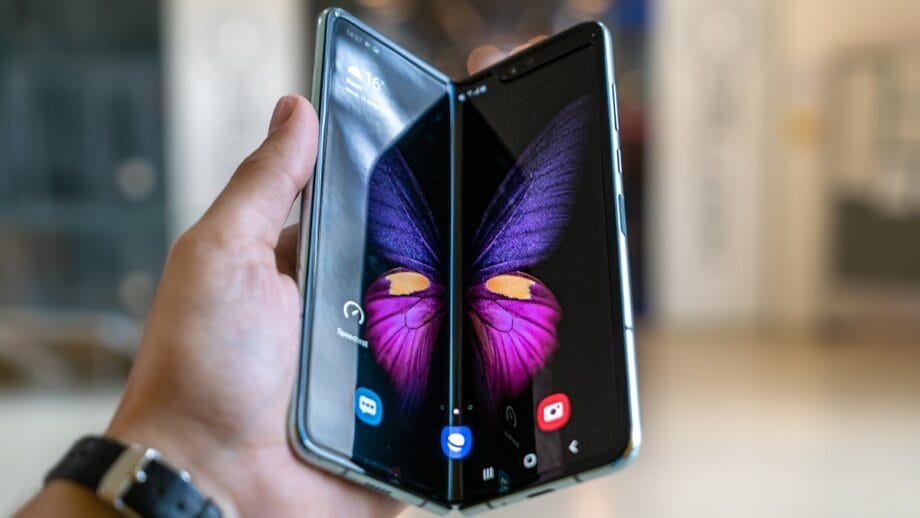
For a foldable device, minimizing thickness is paramount, as it alleviates stress and permits a reduced folding radius. Collectively, these advancements may curtail the crease depth on the iPhone Ultra to a mere 0.15mm.
Source link: Wccftech.com.


