Innovative AI Breakthrough in Hypertension Detection via Smartwatches
Researchers at Google have pioneered an artificial intelligence system capable of identifying indicators of elevated blood pressure utilizing the pulse and motion sensors typical of regular smartwatches, all without the necessity for traditional cuff calibration.
Spearheaded by Paolo Di Achille and Ming-Zher Poh, the project is detailed on the Google Research blog and substantiated in a study published in Nature.
Conventional cuffless blood pressure devices typically require periodic cuff measurements, limiting their ability to monitor fluctuating readings.
In contrast, Google’s innovation circumvents this hurdle. Rather than providing a standardized systolic or diastolic measurement, the system analyzes several days’ worth of data to assess whether an individual is consistently hypertensive.
It addresses a significant public health concern, as Google reports that more than one billion individuals are affected by hypertension globally, with the majority remaining unaware of their condition.
This system can passively detect signs of high blood pressure using a consumer smartwatch, without necessitating any cuff calibration.
Paolo Di Achille and Ming-Zher Poh, Google Research
The AI model, designated AI-PPG-ACC-HTN, employs dual sensors for its readings. The photoplethysmogram (PPG) sensor captures pulse data through optical means, while the accelerometer gauges motion, including the minuscule wrist vibrations accompanying each heartbeat.
The training dataset comprised 492,347 hours of sensor data from 2,109 participants, devoid of explicit medical labels. This data was subsequently merged with the user’s height to generate a relevant probability score.
To validate the effectiveness of this system, Google conducted a study across five locations in the United States involving 196 subjects, juxtaposed against the gold standard of 24-hour ambulatory blood pressure monitoring.
In its initial screening, the smartwatch identified 65.8% of hypertension cases, significantly outperforming the 55.3% detection rate derived from a conventional single office reading.
Furthermore, it accurately excluded 90.0% of participants without hypertension. Among those flagged for potential hypertension, the accuracy stood at 80.6%, compared to 77.8% for traditional office assessments.
Additionally, the AI system was evaluated as a follow-up tool for 48 individuals whose initial office readings were elevated.
The smartwatch surpassed the efficacy of repeat office visits; however, multi-day home monitoring still detected additional cases.
| Follow-up Method | Sensitivity | Specificity | Positive Predictive Value |
|---|---|---|---|
| Smartwatch AI | 78.4% | 90.9% | 96.7% |
| Repeat Office Reading | 67.6% | 63.6% | 86.2% |
| Multi-Day Home Monitoring | 89.2% | 81.8% | 94.3% |
However, these findings come with caveats. As an initial screen, the smartwatch failed to detect nearly a third of the hypertension cases.
It is essential to note that all study participants resided in the United States, had no known cardiovascular diseases, and were not on antihypertensive medication.
Uncertainties remain regarding which smartwatch models can implement this technology and whether it has achieved regulatory approval.
The insights gleaned from this research have already contributed to the development of a feature within the Google Health app, known as the blood pressure trends Health Guardian.
It should be noted that, as emphasized by The Decoder, this remains a research initiative rather than a definitive diagnostic tool; its primary aim is to encourage individuals to pursue further medical evaluations.
Notably, Apple’s Apple Watch has also implemented hypertension notifications in regions such as the UAE and Saudi Arabia.
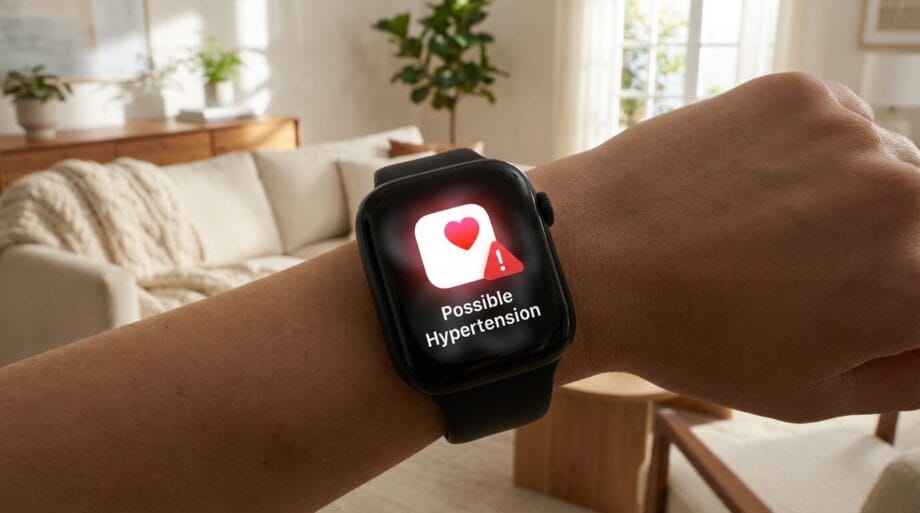
For the substantial population, exceeding half of those with hypertension who remain unaware of their condition, a smartwatch that encourages timely medical check-ups could represent a vital advancement.
Yet, the fact that nearly a third of cases might still be overlooked underscores the necessity for continued vigilance in hypertensive detection.
Source link: Tbreak.com.