Quick Summary:
Manual attendance systems are no longer viable for manufacturing in 2025. Complex shift structures, large blue-collar workforces, dispersed facilities, and strict compliance demands make traditional registers inaccurate, inefficient, and risky. Manual tracking leads to time fraud, scheduling chaos, compliance failures, payroll disputes, and zero real-time visibility – directly impacting production output.
Digital attendance systems solve these challenges through biometric accuracy, automated shift scheduling, built-in compliance, seamless payroll integration, real-time analytics, and multi-location/mobile support. Manufacturers see 5-10% labour cost savings, 70-80% faster payroll processing, higher compliance readiness, and improved workforce optimisation.
The future of manufacturing attendance is fully digital – and choosing an industry-ready platform ensures scalability, accuracy, and operational resilience.
Introduction
Visit any IT company with 10+ employees, and you’ll find digital attendance systems or, at worst, a shared spreadsheet. Even if the latter is the case, it is easy, since everyone works on computers. But the manufacturing sector is quite different from IT. Workers there spend their shifts operating machines. They rarely sit at desks.
If you examine manufacturing businesses, while all large companies have transitioned to digital attendance systems, small to medium-sized enterprises still rely on manual methods like physical registers. As we discuss attendance management in 2025, it seems almost archaic to depend on outdated systems that inevitably lead to errors and inefficiency, especially when superior alternatives are readily available to address these challenges.
Why Attendance Tracking in Manufacturing is Different?
Manufacturing operates differently. There are fundamental challenges like round-the-clock shifts, massive workforces, scattered facilities, and compliance pressures that render generic attendance systems completely inadequate for factory floors. Here are some key differentiating factors we can often notice in these setups:
- Multi-shift operations (24/7 production cycles, rotating shifts, night differentials).
- Large workforce volumes across factory floors.
- Geographically dispersed facilities (multiple plants, GIDC zones, remote sites).
- Blue-collar workforce with limited desk access.
- Real-time production dependency (attendance directly impacts output).
- Strict regulatory environment (Factory Act, labour laws, audit requirements).
5 Critical Challenges Caused by Manual Attendance in Manufacturing
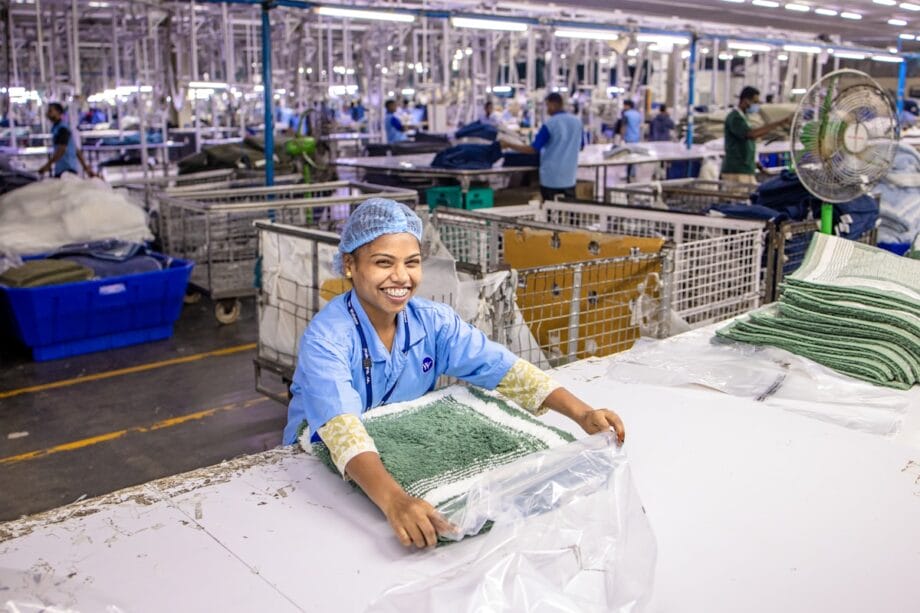
Every industry has different challenges when it comes to employee management. If you were to rely on manual methods for time-tracking in a manufacturing business environment, the following challenges can become a very common affair to deal with.
Challenge 1: You’re Running Blind Without Real-Time Visibility
Suppose you have 100 staff to work in a shift in the 9-6 time slot. Unless you have a modern cloud-based attendance management software with real-time visibility and analytics, you will suffer from the following consequences:
- Cannot track who’s present on the shop floor.
- Production planning is done without headcount accuracy.
- Safety and emergency response complications.
- Inability to optimise workforce deployment.
Challenge 2: You’re Paying for Time Fraud Without Realising It
Time fraud or buddy punching used to be a big concern in most workplaces until quite recently. Although this has become quite rare in modern workplaces with sophisticated attendance monitoring systems, it is still costing 2-8% of gross payroll in places in manufacturing units. It is nearly impossible to verify the attendance signs of all employees in register-based systems.
Challenge 3: Confusions Frequently Throw Your Schedule Off Track
There’s a saying in manufacturing circles. Shift schedules that look perfect on Monday rarely survive till Friday. The more complex the floor, the faster things will start falling apart. Some challenges faced by shift-in-charges in manufacturing are:
- Coordinating rotating shifts manually.
- Last-minute shift swaps are creating confusion.
- Overtime calculation errors.
- Shifts not matching the production schedule.
Challenge 4: Compliance Becomes a Threat
The manufacturing sector has to deal with the most stringent labour compliance. There are frequent inspections from labour departments to verify employee working conditions, statutory registers, and shift documentation.
If they ask you to suddenly produce the last six months’ employee attendance records, you can’t afford to fumble through paper registers or make excuses about missing pages. Such delays don’t just look unprofessional; they could trigger deeper audits, invite penalties, and signal to inspectors that your entire compliance framework might be compromised.
Challenge 5: Payroll Errors Go Unnoticed
If you have attendance errors in the register, they will reflect when you process payroll, too. This happens even if you delegate payroll processing to a third-party service, because the fundamental element in payroll comes from attendance records.
Plus, if you have to add components like night shift allowances, production incentives, or overtime to the base pay, the calculations become even more complex. Delayed salary processing and employee disputes over pay discrepancies further make the environment more prone to conflicts and back-and-forths.
How Digital Attendance Management Systems Solve These Problems?

With the emergence and widespread adoption of modern cloud-based attendance systems, attendance tracking, management, and integration challenges in the manufacturing industry have significantly decreased. It is interesting to note how these improvements have been made possible. Let’s examine each factor that has contributed to this shift or will reflect a similar shift if you were to adopt these systems.
Biometric Authentication & IoT Integration
When we speak about a modern attendance solution, it is a combination of both software and hardware. To bring maximum accuracy to the records, these systems incorporate advanced mechanisms like facial recognition and fingerprints. Facial recognition-enabled biometric attendance machines have gained traction in harsh factory environments as they avoid the inconvenience of dust or grease interference that fingerprint-based systems often face.
Automated Shift Scheduling
Digital attendance systems, while fundamentally designed to allow employees to mark attendance when they clock in or clock out, are integrally integrated with leave and shift modules to simplify operations. These components are inseparable from attendance management. If an employee takes unexpected leave on a given day, their shift slot becomes vacant and needs to be filled by someone else, requiring a shift change that can create a gap elsewhere.
To prevent such a domino effect, an integrated system will orchestrate these adjustments in real-time, with specific shift management capabilities such as:
- Pre-configure complex shift patterns.
- Automatic rotation management.
- Real-time shift change notifications.
- Overtime auto-calculation.
Built-In Compliance
Manufacturing facilities operate under stringent regulatory frameworks. All workforce data and processes must inherently adhere to legal standards from the moment they are recorded. Manual methods fall short in proactively preventing compliance breaches and the associated penalties. Modern digital attendance systems address this challenge by embedding compliance mechanisms directly into their core functionality, with specific compliance features such as:
- Auto-generates statutory registers.
- Factory Act-compliant reports on demand.
- Audit-ready documentation.
- Regulatory alert system.
Straightforward Payroll Integration
Conventional time-tracking methods would require you to manually transfer attendance records to payroll software, which is a tedious process that can be more susceptible to errors. Payroll disputes occur at a rate of 1,139 errors per 1,000 employees per year in companies that rely on manual processes, according to a survey report by EY. An integrated system will automate the entire payroll lifecycle, with synchronisation capabilities such as:
- Direct attendance-to-payroll data flow.
- Automatic allowance calculations.
- Zero manual intervention requirements.
- Error-free one-click salary processing.
Live Analytics
If you don’t have live and constant visibility into people working in the production units, you will face occasional to frequent issues with schedules and delivery commitments. This has been a key drawback with traditional attendance systems for many years. In many factories, attendance reports arrive after lunch. By then, production delays would have already begun.
If managers can instantly view workforce availability, identify absenteeism patterns, and make decisions based on these cues, they can make the best use of their existing staffing levels. Specific analytical capabilities that make sense in this regard are:
- Real-time attendance visibility across all locations.
- Absenteeism pattern analysis.
- Department-wise headcount tracking.
- Predictive workforce planning insights.
Mobile and Multi-Location Support
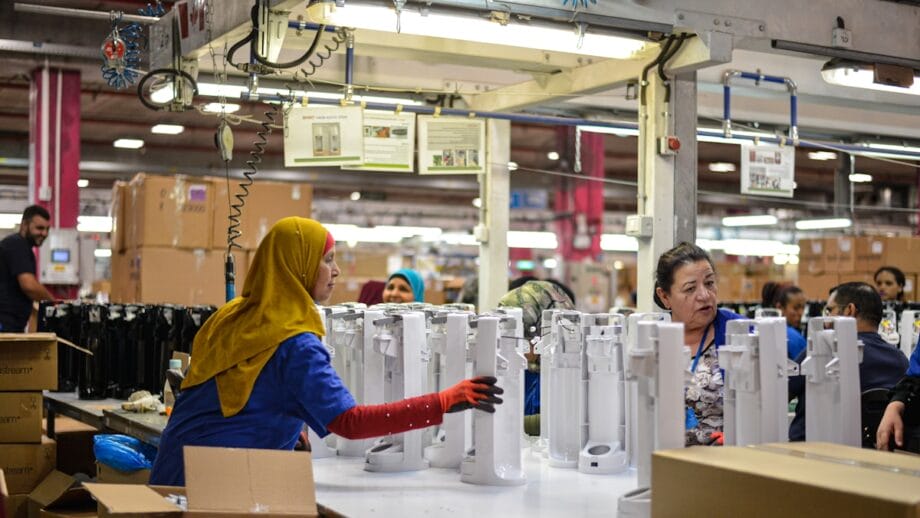
Large manufacturing enterprises often operate across multiple plants, warehouses, and field locations. Without a modern system, maintaining centralised attendance management becomes a significant challenge. Two key digital workforce management capabilities that make workplaces more agile and connected are mobile access and multi-location support.
Today’s attendance systems are far more advanced – built for a mobile-first world and compatible with both iOS and Android. They come packed with features such as:
- GPS tracking for field and on-site teams.
- Unified dashboards to manage attendance across multiple plants.
- Flexible access via web, mobile app, or biometric device.
How Digital Attendance Delivers: ROI in Tangible and Intangible Terms
Tangible Gains:
- 5-10% reduction in labour costs resulting from time theft.
- 70-80% decrease in payroll processing time.
- 90%+ improvement in compliance readiness.
- 50%+ reduction in HR administrative workload.
- Real-time decision-making capability.
Intangible Gains:
- Employee satisfaction (transparent, fair system).
- Scalability without admin burden.
- Data-driven workforce optimisation.
- Competitive operational advantage.
Choosing the Right Digital Attendance Management System
Under the broader category of HR software, attendance management tools are the most searched solution. So, if you look on the internet for the right system for your manufacturing unit, you will come across a lot of them, literally confusing you and making the selection process harder.
So before you search, it is better to assess your needs: locations where you want to deploy the system, number of employees, type of shift arrangement you want to have in place, etc, and then compare how much of these unique needs of yours are addressed by a desired/shortlisted solution.
Unlike typical IT-focused HR tools, industry-specific platforms are designed for real shop floors and production setups. Their extended free trial lets you test how well the solution fits your operations, and you only need to upgrade to a paid plan once you’re fully convinced.
Bottom Line

Amidst the high stakes of manufacturing processes and the constant focus on production targets and delivery timelines, the idea of fixing attendance challenges may seem almost trivial. But when it goes wrong, the impact stretches far beyond what its apparent simplicity suggests.
That’s why companies that once brushed off attendance as mere record-keeping are now realising that digital attendance systems can be their true operational backbone. Once you get past the initial setup, the system begins to pay back in ways you didn’t expect.