Challenges in Smartphone Chipset Evolution: Heat Dissipation and 3D Packaging
The foremost obstacle impeding smartphone chipsets from realizing their full capabilities is the critical issue of heat dissipation.
Despite anticipated efficiencies from TSMC’s forthcoming 2nm process, the increasing complexity and size of system-on-chips (SoCs) necessitate the adoption of innovative packaging solutions to surmount existing performance limitations.
A reliable informant indicates that discussions within the industry have centered on entities such as TSMC and Huawei contemplating the use of 3D packaging for smartphones.
However, the feasibility of this technology is hampered by significant drawbacks, which make its adoption in this particular sector improbable. Consequently, these companies seem to be concentrating their efforts on enhancing existing manufacturing methodologies.
Apple appears poised to be a pioneer in the integration of 3D packaging within its portable device line-up, leveraging TSMC’s 2.5D technology for its forthcoming M5 Pro and M5 Max models.
In stark contrast to the high-performance servers or desktop processors—like AMD’s Ryzen 7 9800X3D—that benefit from robust cooling systems, smartphone chipsets operate within tighter confines, often relying solely on vapor chambers and occasionally compact fans to manage thermal output.
To elucidate, 3D packaging consists of vertically stacking individual chips, resulting in a configuration that produces significant heat, with lower layers impeding effective dissipation.
Recently, Samsung unveiled its Heat Pass Block (HPB) solution in the Exynos 2600, featuring a copper heatsink atop the silicon die to mitigate thermal challenges. Regrettably, this solution falls short for 3D packaging due to the aforementioned constraints.
Commentary on Weibo from Fixed-focus digital cameras reflects skepticism regarding the industry’s speculations about TSMC and Huawei pivoting toward this packaging format, as both firms will likely prioritize enhancements in manufacturing techniques.
Additionally, a more formidable barrier exists for companies hoping that node improvements will captivate mainstream consumer interest.
An earlier analysis suggested that cutting-edge fabrication processes no longer significantly sway consumer preferences, prompting industry leaders like Apple, Qualcomm, and MediaTek to consider architectural refinements instead.
Nonetheless, if any company could adeptly navigate the complexities of 3D packaging, it is likely to be Apple. However, such technology may predominantly remain confined to its M-series of SoCs and not extend to the A-series due to thermal considerations.
Given that the M5 Pro and M5 Max are slated to utilize 2.5D packaging rather than Integrated Fan-Out (InFO), Apple might contemplate exploring 3D technology.
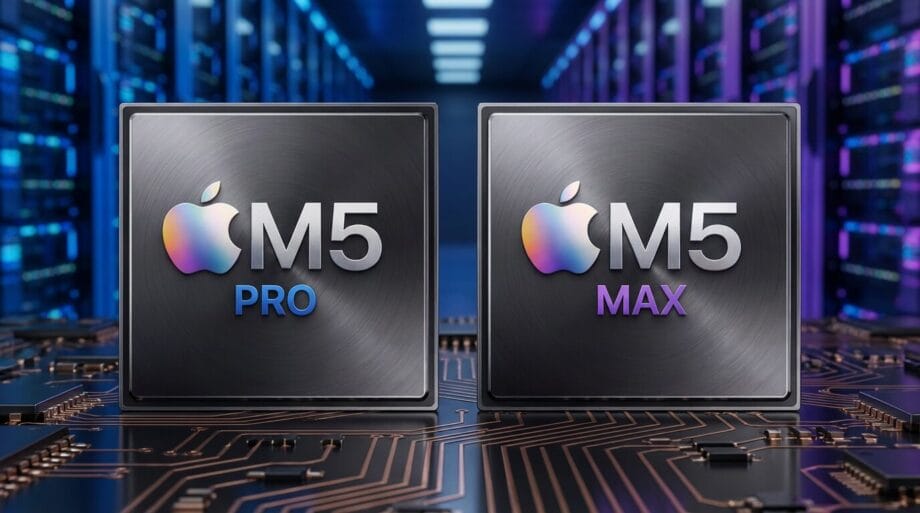
Nonetheless, one should temper expectations—this marks the company’s inaugural foray into 2.5D packaging for the M5 Pro and M5 Max, suggesting that any transition to 3D could span several years.
In summary, while smartphone chipsets may continue to rely on conventional packaging methods, companies will persistently seek innovative avenues to expand their operational horizons, even if that does not encompass 3D packaging.
Source link: Wccftech.com.