Quick Summary
Image-to-video AI is rapidly gaining popularity because it makes high-quality video creation faster, cheaper, and accessible to everyone. What once required expensive equipment and technical expertise can now be done in minutes using simple browser-based tools. Improved AI quality, ease of use, and the growing demand for video content have driven adoption among creators, businesses, educators, and artists.
As the technology becomes more realistic and widely integrated into everyday workflows, Image-to-video AI transforms static images into dynamic content at scale, making professional video production available to virtually anyone.
Introduction
If you’ve scrolled through social media lately, you’ve probably noticed something wild: static images are coming to life. What used to require a film crew, expensive equipment, and weeks of post-production work can now happen in minutes. Image-to-video AI has gone from a niche tech curiosity to something regular people actually use – and honestly, it’s changing everything.
The Perfect Storm of Timing

“Innovation isn’t loud; it’s sudden competence. Image-to-video AI crossed from curiosity to craft the instant simplicity met quality.”WIRED
Technology adoption rarely happens overnight. But when the right conditions align, things accelerate fast. We’re seeing that exact moment with image-to-video AI right now.
A few years ago, AI videos looked janky – weird artifacts, unnatural movement, that uncanny valley feeling. Now? The quality is genuinely impressive. The jump from “interesting experiment” to “actually usable tool” happened quietly, and most people didn’t notice until they tried it themselves.
Second, the barrier to entry has practically disappeared. You don’t need technical skills, expensive software licenses, or a powerful computer anymore. A lot of these tools work directly in your browser. You upload an image, tweak a few settings, and boom – you’ve got a video. That simplicity is everything.
Why Everyone’s Suddenly Interested
Content creators were the first to jump on this. Imagine you’re a YouTuber, TikTok creator, or social media manager drowning in deadlines. Video content gets engagement, but producing it is exhausting. Image-to-video AI solves a real problem: it lets you transform a single piece of artwork, a photograph, or a design into dynamic video content without having to start from scratch.
But it’s not just the professionals anymore. Small business owners are using it to create product demos. Teachers are animating educational materials. Artists are bringing their static work to life in ways they never could before. Even people just making content for fun have discovered it’s genuinely entertaining to see what happens when you feed an image into one of these tools.
The ripple effect is real. As more people use it, more platforms integrate it, and more use cases emerge. What started as a cool demo has become part of people’s actual workflows.
Quality That Actually Holds Up
“When a single photo can breathe, blink, and obey physics, the line between capture and creation dissolves. The magic isn’t that it’s AI – it’s that you can’t tell.”Pollo AI
Here’s where it gets interesting: the quality has reached a point where it’s genuinely hard to tell what’s AI-generated and what’s not. Modern image-to-video tools can handle subtle movements, realistic physics, and natural transitions. They understand context and can extrapolate what should happen next in a scene.
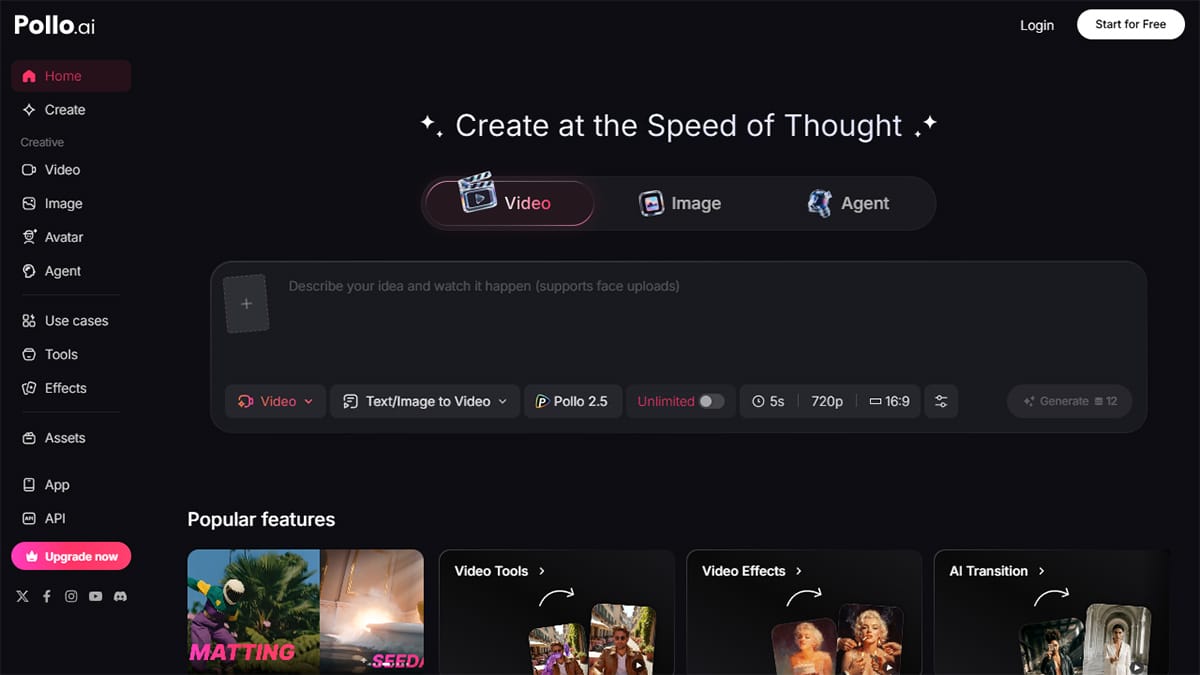
Image-to-video tools exemplify this shift toward accessibility without sacrificing quality. It’s designed to be intuitive – you don’t need to be a video editor or AI expert to get impressive results. You feed it an image, maybe add some text prompts about what kind of motion you want, and it handles the heavy lifting. That combination of power and simplicity is exactly what’s driving adoption right now.
The Practical Appeal
Let’s talk about why this matters beyond the hype. Traditional video production is expensive and time-consuming. You need equipment, lighting, locations, actors or subjects, and someone who knows how to piece it all together. For many people and small businesses, that’s simply out of reach financially.
Image-to-video AI democratizes content creation in a meaningful way. A small e-commerce shop can now create professional-looking product videos. A solopreneur can produce animated explainers without hiring an agency. A nonprofit can bring its mission to life visually without a massive budget.
That’s not just convenient – it’s genuinely transformative for people who’ve been priced out of video production.
The Network Effect is Kicking in
“Adoption begets content, content begets curiosity, curiosity begets tools. That loop is the engine, and it just hit turbo.”MDPI Journals
Here’s the thing about technology adoption: once it crosses a certain threshold, it accelerates exponentially. More creators use it, which creates more content, which inspires more people to try it, which in turn drives more tool development, making it even more accessible.
We’re definitely in that acceleration phase. Every week seems to bring new features, integrations, or competitors entering the space. That competition drives innovation and keeps prices reasonable, attracting even more users.
What This Means Going Forward
The explosion of image-to-video AI isn’t just a trend – it’s a fundamental change in how content gets created. We’re moving into a world where the barrier between static and dynamic content is blurring, where a single asset can become multiple pieces of content. Creating professional-quality video is something anyone can do.
That has real implications. For creators, it means more time for strategy and less time on technical grunt work. For businesses, it means video becomes accessible at every scale. For audiences, it means more content, hopefully better content, and content that’s more authentic because creators can focus on ideas rather than logistics.
The Bottom Line

Image-to-video AI is exploding because it solves real problems at the exact moment when people are ready for the solution. The technology works, it’s accessible, and the use cases keep multiplying. Whether you’re a content creator looking for efficiency, a business owner trying to compete online, or just someone curious about what’s possible, there’s never been a better time to explore what image-to-video tools can do.
The static image era isn’t over – but it’s definitely becoming the starting point for something bigger.


