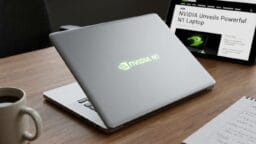
The Surface Laptop Ultra: A Competitor to Apple’s MacBook Pro M5
In a significant unveiling, Microsoft announced its latest flagship laptop, the Surface Laptop Ultra, during a noteworthy event in San Francisco.
This device, powered by Nvidia technology, allegedly surpasses its Apple counterpart on various artificial intelligence tasks.
According to Microsoft executives, the Surface Laptop Ultra can expedite prompt responses from local AI models, achieving speeds twice as fast as the MacBook Pro M5.
Furthermore, the device boasts the remarkable capability to generate videos at a rate six times quicker than its Apple equivalent.
A “Reinvented” Personal Computer
The upcoming Ultra will enter the market with a starting price of US$2,599, making it approximately US$400 more affordable than the entry-level 16-inch MacBook Pro.
Amidst the burgeoning AI landscape, Microsoft is striving to uphold the supremacy of its Windows operating system. Consequently, Apple’s desktop offerings have experienced a surge in interest, attributed to their prowess in executing AI models.
Engineered with Nvidia’s chips, the new Surface device is poised to enhance both general-purpose and AI computations, establishing a novel competitive dynamic between Nvidia and leading traditional PC processor manufacturers such as Intel and Advanced Micro Devices.
At the launch event, Nvidia’s CEO Jensen Huang joined Microsoft’s Satya Nadella on stage to deliberate the advancements of the novel PC chip. Huang proclaimed, “We’ve completely reinvented the personal computer.”
Other PC manufacturers, including Dell Technologies and HP, have also embraced this new Nvidia chip for their Windows-powered devices.
During the presentation, executives articulated the advantages of utilizing Windows for AI-driven tasks. They emphasized that developers could economize and enhance security by harnessing the device’s local computing capabilities instead of incurring costs from cloud services.
Additionally, they highlighted Windows’ security features designed to monitor and supervise AI agent behavior.
AI-Optimised PCs
Looking ahead, Nadella noted that developers and users would increasingly demand AI functionalities that leverage both local hardware and cloud resources.
In the summer of 2024, Microsoft initiated an ambitious promotional campaign in collaboration with partners like Qualcomm, focusing on AI-optimised PCs.

The initiative promised to integrate AI features directly onto devices, powered by advanced chips inspired by Arm Holdings’ designs.
However, the launch faced criticism surrounding privacy issues linked to one of its essential features, designed to record user actions effectively.
Industry analysts from Gartner projected earlier this year that escalating memory costs might hinder the widespread adoption of AI PCs, delaying their prevalence in shipments until 2028.
Source link: Businesstimes.com.sg.