Nvidia Introduces Groundbreaking AI Capabilities in New Laptop
Nvidia has recently revolutionized the laptop landscape by embedding a petaflop of AI computing power into a commercially available device, set to launch next week.
This innovation enables the execution of 120-billion-parameter models entirely offline, challenging the prior assumption that such capacities would require cloud-based infrastructure.
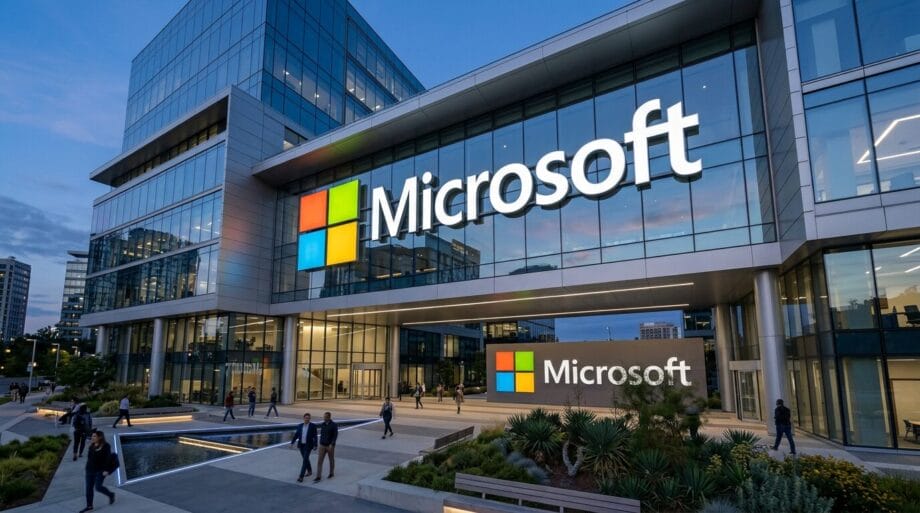
On October 7, during an event in San Francisco, Microsoft CEO Satya Nadella, alongside Nvidia CEO Jensen Huang, officially announced the commencement of preorders for the Surface Laptop Ultra.
This premium notebook is engineered around Nvidia’s newly unveiled RTX Spark superchip, with pricing for the entry-level model commencing at $2,599 and shipping scheduled for October 16.
This announcement marks the transition from prototype to a tangible product, complete with a definitive price and impending release date.
Notably, the Surface Laptop Ultra is available in two configurations of the RTX Spark chip: an 18-core variant featuring 5,120 GPU cores, and a more powerful 20-core model boasting 6,144 GPU cores, designed for more intensive tasks.
Nvidia’s RTX Spark integrates a 20-core Grace CPU with a Blackwell GPU in a singular module, augmented by a unified memory pool capable of scaling up to 128GB, delivering approximately one petaflop of FP4 AI performance.
Nvidia’s approach in introducing RTX Spark was unambiguous. “The PC is undergoing a reinvention,” declared Huang during the announcement.
“For four decades, users engaged with applications by clicking and typing. With RTX Spark and Microsoft Windows, you simply ask, and the PC performs the task.”
He elaborated, asserting that RTX Spark consolidates Nvidia’s innovations—CUDA, RTX, and our AI platform—into one formidable superchip.
This encompasses local agents, frontier models, creative workflows, and RTX gaming, all accommodated within a laptop.
The majority of AI chips presently on laptops are typically designed for smaller assistant models, such as those that produce email summaries or generate photo captions.
In stark contrast, a 120-billion-parameter model represents a significant leap forward, aligning more closely with what businesses traditionally run by leasing GPU time via cloud services.
Should such functionality reside within a $2,599 device—sans API dependency and ongoing charges—the financial dynamics shift dramatically for those whose business models relied on customer fees for inference, previously dependent on data centers.
This underpins a formidable challenge embedded in the specifications. A considerable volume of contemporary AI startups largely functions as superficial interfaces over cloud-based models, profiting from a markup on inference costs charged to their clientele.
If users can execute a 120-billion-parameter model on their laptops without incurring additional fees, it significantly diminishes the rationale for such intermediary services.
Notably, Nvidia does not aim to undermine this sector intentionally; however, its strategic enhancement of consumer hardware inadvertently jeopardizes it.
Nvidia is not navigating this landscape alone, as several industry leaders—Asus, Dell, HP, Lenovo, and MSI—have also unveiled RTX Spark-powered systems, including the ProArt P16 and ProArt P14, the XPS 16 Creator Edition, and others.
Some devices commenced pre-orders alongside the Surface Laptop Ultra, while availability may differ by manufacturer and region.
This collective effort underscores the confidence shared by five PC manufacturers and Microsoft in the potential of the RTX Spark platform to sustain an entire line of laptops.
For developers in search of higher computational power than what a laptop can offer, Microsoft has also launched preorders for the Surface RTX Spark Dev Box, a stationary counterpart of the same technology, beginning at $5,999.
The stark price difference—$2,599 for a portable device versus $5,999 for a desktop model—highlights what Nvidia and Microsoft perceive as the mass-market product in contrast to a workstation aimed at advanced users.
It is imperative to note that developments are still in a nascent phase. The RTX Spark was first presented in prototype form on May 31 during Computex in Taipei, and throughout the summer, Microsoft refrained from confirming pricing or release timings.
However, October 7 heralded a new era with tangible figures, confirmed launch dates, and direct competition from five additional manufacturers.
The question of whether 128GB of unified memory and a petaflop of local computation will significantly replace cloud inference at scale remains unanswered, though the reality of the chip, the established price, and impending laptop availability is indisputable.
Source link: Startupfortune.com.