Global Smartwatch Shipments Experience Year-Over-Year Decline in Q2
In a notable turn of events, global shipments of smartwatches witnessed a 4% decrease year-over-year in the second quarter, marking the first contraction of the market in one year.
This downturn can be attributed to faltering demand for budget offerings paired with prolonged replacement cycles within the premium segment.
Leading the pack, Huawei retained its position as the market leader with a commanding 21.8% share, while Apple showcased the most robust shipment growth among the top five brands, effectively narrowing its gap with the frontrunner.
As per the data published by Counterpoint Research on the 8th, the decline in smartwatch shipments for Q2 signifies the first significant decrease in the previous 12 months.
Analysts have identified that budget-conscious consumers, utilizing devices with minimal monitoring capabilities, are postponing their upgrades. Simultaneously, premium users are also opting to delay purchases, hoping for forthcoming product launches.
Huawei’s overall shipments experienced a marginal uptick of 1%, pushing its market share from 20.8% to a historic high of 21.8%. This growth dynamic was predominantly fueled by the Chinese market, which represented nearly 80% of Huawei’s total shipments.
Apple, occupying second place, achieved a 20.1% market share, reflecting an increase of 3.1 percentage points from 17.0% in the same quarter last year.
In terms of shipment volume, Apple realized a 14% year-over-year increase, the highest growth rate among the top five brands, largely propelled by the enduring popularity of its latest product offerings across all regions.
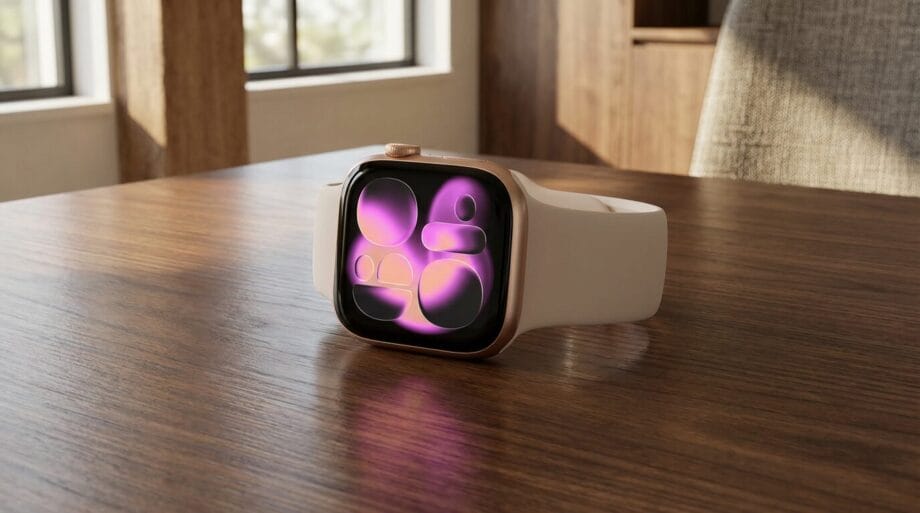
The Apple Watch Series 11 and SE 3 collectively represented more than 80% of Apple’s worldwide shipments.
Nonetheless, it is noteworthy that Apple’s quarterly market share has historically fluctuated significantly due to new product release cycles.
In a similar evaluation period, its share soared to 32% in Q4 of the previous year, only to decline to 23% in Q1 and further to 20% by Q2 of this year.
Brand Performance Overview for Q2
The results for Q2 reflect the lowest point in this cycle. While the current share of 20% is lower than the preceding quarter, it surpasses the 17% figure recorded in Q2 of the previous year, marking an improvement over the earlier cycle.
| Brand | Share | Shipment Change YoY |
|---|---|---|
| Huawei | 21.8% | +1% |
| Apple | 20.1% | +14% |
| imoo | 7.8% | -3% |
| Xiaomi | 6.1% | -38% |
| Garmin | 5.6% | +11% |
Note: Data derived from Q2 shipments.
Xiaomi’s performance was particularly alarming, as its shipments plummeted by 38%, resulting in a market share reduction from 9.5% to 6.1%.
The company’s focus on entry-level devices seems to have exacerbated its struggles amid this broader market contraction.
Conversely, Garmin exhibited solid momentum, achieving an 11% increase in shipments due to its strong appeal among runners, thereby securing a 5.6% market share.
Despite a 3% decline in shipments, imoo maintained its third-place standing with a 7.8% share. Brands outside the top five collectively experienced an 8% drop in shipments, with their combined share decreasing to 38.5%.
Regionally, China emerged as a dominant force, capturing a record 38% share of global shipments, thus solidifying its status as the largest market worldwide.
Furthermore, a year-over-year growth rate of 7% positioned China second only to North America. Analysts attribute this growth to a strong inclination toward local brands like Huawei and imoo, as well as favorable government consumer subsidy initiatives.
North America recorded the highest year-over-year growth rate at 8%. In this region, shipments of smartwatches utilizing high-level operating systems (HLOS) grew by 4%, with Apple increasing by 13% and Garmin by 6%.
In contrast, Samsung Electronics experienced a decline of 13%. Notably, North America was the only region to achieve nearly double-digit growth during a quarter when the overall market contracted.
Mohit Agrawal, Research Director at Counterpoint Research, remarked, “While premium users are retaining their devices for extended periods and the budget segment continues to dwindle, our projections suggest limited shipment growth of around 1% by 2026.”
Nonetheless, he highlighted that advancements in edge AI, blood pressure tracking, and non-invasive blood glucose measurement present potential replacement incentives for consumers, underpinning a forecasted 3% compound annual growth rate through 2030.
Prospective Growth in Health-Monitoring Features
The consensus indicates that stagnation is anticipated in the short term; however, the key to mid-to-long-term advancement lies in the progression of health-monitoring capabilities.
Notably, the successful commercialization of non-invasive blood glucose measurement could prompt a substantial surge in replacement demand among diabetes patients and health-conscious users.
For these innovations to evolve into tangible replacement demand, they must navigate the intricate landscape of country-specific medical device regulations.
These health features cannot be universally deployed through software updates; each nation requires distinct regulatory approvals.
An illustrative example of this complexity is Apple’s hypertension pattern notification feature, unveiled last September.
While it received FDA clearance and launched in over 150 countries, including the U.S. and the European Union in late September, it only became accessible in Japan by December 4 and in South Korea by January of this year, with Taiwan following on May 13.
| Region | Launch Date | Regulatory Process |
|---|---|---|
| U.S., EU, and 150+ countries | Late September 2025 | Initiated with watchOS 26 post-FDA clearance |
| Japan | December 4, 2025 | Medical device program under Ministry of Health, Labour and Welfare |
| South Korea | January 2026 | Approval from the Ministry of Food and Drug Safety |
| Taiwan | May 13, 2026 | Obtained Class II medical device approval from Ministry of Health and Welfare on February 26 |
Based on Apple announcements and public records from respective regulatory agencies. Eligible devices comprise Apple Watch Series 9 and subsequent models, as well as Ultra 2 and newer.
Some health features have encountered even more significant rollout disparities. The electrocardiogram (ECG) application and irregular heart rhythm notifications only became available in Japan in late January 2021, after the Ministry of Health, Labour and Welfare identified them as home medical devices in September 2020—over two years post their initial launch in the U.S.
Moreover, the actual functionality of these features may diverge notably from their namesakes. The hypertension pattern notification mechanism does not directly measure blood pressure; instead, it utilizes an optical heart rate sensor to scrutinize blood vessel responses to heartbeats over a 30-day duration, alerting users when consistent signs of hypertension are detected.
Apple asserts that it trained its algorithm on extensive data gathered from a multitude of studies involving over 100,000 participants, duly validated through clinical research encompassing more than 2,000 subjects.
Eligibility is restricted for individuals under 22 years of age, those with a prior diagnosis of hypertension, and pregnant women.
Users receiving a notification are guided to track their blood pressure with a conventional cuff for a week and to consult a healthcare provider.
In stark contrast, non-invasive blood glucose measurement faces an even more formidable regulatory challenge.
The FDA released a safety communication in February 2024, cautioning consumers against using smartwatches or smart rings alleging to measure blood glucose levels without skin puncturing.
The agency stressed that no device—regardless of the manufacturing entity—has received authorization or approval to measure or estimate blood glucose independently.
This misrepresentation could lead to erroneous dosing with insulin or other glucose-lowering medications, potentially resulting in severe health consequences.
Notably, devices that project data from a continuous glucose monitor (CGM) inserted under the skin are exempt from this warning.
This indicates that the much-anticipated next evolution in technology remains far from fruition within the regulatory approval framework.
Source link: Finance.biggo.com.