Anticipated Enhancements in the iPhone 18 Pro Ahead of September 2026 Release
JAKARTA – Apple is poised to introduce a series of advancements in the iPhone 18 Pro, set for launch in September 2026.
Speculation suggests that this iteration will incorporate an A20 Pro chip, fabricated using a 2-nanometer process, along with Apple’s proprietary C2 modem, a camera featuring a variable aperture, and Face ID technology integrated beneath the display.
As reported by AppleInsider, the design modifications for the iPhone 18 Pro are anticipated to be relatively modest compared to its predecessor, the iPhone 17 Pro.
The company is likely to retain much of the former design, with significant alterations primarily evident on the front, particularly through a diminutive Dynamic Island.
The iPhone 18 Pro is expected to debut in September 2026, with speculations emanating from August 2026 indicating an in-person launch event scheduled for Wednesday, September 9, 2026. Previous reports from February 2026 hinted at the device entering the testing production phase.
In contrast to the standard iPhone 18, which is rumored to be available only in early 2027, the Pro variant seems to adhere to Apple’s annual release pattern for its premium lineup.
Regarding design, the iPhone 18 Pro is projected to maintain the aesthetic appeal of the iPhone 17 Pro. However, various rumors indicate that Apple aims to create a more cohesive appearance for the rear, minimizing the color disparity between the glass and metal components.
There has also been considerable fluctuation in the rumored color options, previously suggesting hues like coffee brown, purple, and burgundy, followed by various shades of red.
The latest information points to four potential color choices: Dark Cherry, Light Blue, Dark Gray, and Silver.
Circulating images of dummy units reportedly depict these four color variants, with dark red, light blue, silver, and dark gray being the most prominent. However, official confirmation of these colors remains pending.
Apple appears to be continuing its use of aluminum material for the iPhone 18 Pro’s body. Contrastingly, other rumors hint at a possible switch to titanium, leaving the material composition of the device uncertain.
Additionally, the camera protrusion is expected to experience a slight increase, with one rumor suggesting that the camera housing may be approximately 2 millimeters thicker than that of the iPhone 17 Pro.
Weight considerations for the device have surfaced as well, with the iPhone 18 Pro Max speculated to weigh around 243 grams, making it 10 grams heavier than the iPhone 17 Pro Max. If accurate, this would place it above the iPhone 14 Pro Max, which has a weight of 240 grams.
The fate of the Camera Control feature remains contentious, as one rumor indicates Apple may streamline this function to decrease production costs.
Other reports suggest that the feature could be entirely removed, implying that Apple might be testing various configurations amid these discrepancies.
One of the most intriguing enhancements pertains to the front-facing features. Several rumors circulating in recent years allege that Apple is working on advancing the Face ID technology to reside beneath the screen.
These rumors have previously encompassed a range of projected launch timelines from 2023, 2025, 2026, to 2027, with delays attributed to sensor-related complications.
For the iPhone 18 Pro, numerous sources suggest that Face ID will indeed be positioned under the display, alongside a more compact Dynamic Island.
Analyst Jeff Pu has earlier estimated that the device will maintain Face ID functionality, a 6.3-inch display, and an 18-megapixel front-facing camera.
Moreover, additional rumors propose that the size of the Dynamic Island on the iPhone 18 Pro Max could decrease by approximately 35 percent, from 20.76 millimeters to 13.49 millimeters.
Current images and CAD designs indicate that the Dynamic Island will remain centrally situated at the top of the screen, rather than shifting to the left.
If these design adjustments are realized, the effective screen area could approach a remarkable 98 percent. The iPhone 18 Pro is expected to continue featuring a 6.3-inch LTPO OLED display with ProMotion support, while speculation suggests it will not adopt an OLED tandem panel.
In the realm of photography, the iPhone 18 Pro is rumored to incorporate a variable aperture system. Initially expected for the iPhone 17, this technology appears set to make its debut in the iPhone 18 series.
This variable aperture feature would enable adjustments to the lens opening size based on shooting requirements, facilitating greater light intake and producing a shallower depth of field. Conversely, a smaller aperture would enhance overall focus across the image.
Such technology is anticipated to boost low-light photography capabilities while mitigating overly vibrant colors in daylight shots. Currently, Apple utilizes a combination of hardware and computational photography to create bokeh effects, limited by a fixed aperture.
Further speculation indicates the potential of a 48-megapixel telephoto camera equipped with a periscope system, possibly boasting a larger aperture. There is also discussion surrounding the use of a DSLR-style teleconverter to enhance focal length and zoom functionality.
Notably, reports claim that the variable aperture component entered production in April 2026. However, it is crucial to recognize that all information is derived from supply chain leaks rather than official Apple endorsements.
Concerning the primary camera sensor, rumors have suggested that Samsung might supply image sensors for the iPhone 18. Conversely, other reports indicate that Sony is likely to continue its partnership for this component.
Analysis of internal documents from Apple suppliers suggests a potential transition of the main camera sensor from Sony IMX-903 to IMX-905 for the iPhone 18 Pro.
The front camera is rumored to feature a 24-megapixel sensor, although it is expected that photo outputs will retain an 18-megapixel resolution through pixel binning technology.
Performance-wise, the iPhone 18 Pro is anticipated to be among the first to leverage the A20 Pro chip, manufactured via a 2-nanometer process.
Initial conjectures hinted that only the Pro model would employ the 2nm chip. However, later information indicates that the entire iPhone 18 lineup may utilize this advanced technology.
The A20 Pro chip is expected to deliver performance enhancements in the range of 10 to 15 percent over its predecessor, the iPhone 17 series.
Other claims suggest that components with reduced die sizes could yield speed upgrades of approximately 15 percent, while also lowering power consumption by around 30 percent.
Additionally, the A20 Pro may incorporate an innovative chip packaging methodology known as Wafer-level Multi-Chip Module (WMCM), supplanting the InFo method previous generations utilized.
WMCM would allow for the arrangement of multiple dies, such as CPUs and GPUs, within a compact package. This technological leap is expected to provide Apple with enhanced flexibility in chip configuration design and diminish reliance on chip binning processes for product differentiation.
Other reports indicate that the iPhone 18 could employ six-channel LPDDR5X memory to amplify memory bandwidth. A 12 GB variant is also rumored to be in the offing, with Samsung mentioned as a potential memory supplier.
Notable changes in the component layout are reportedly visible in the schematics for the iPhone 18 Pro’s board. Speculation indicates that the system-on-chip may be repositioned nearer to the outer edge of the two-layer board, while storage could be situated deeper within the layers.
The dimensions of the Neural Processing Unit (Neural Engine) are reportedly larger than in previous iterations, suggesting an increased focus by Apple on direct processing capabilities for Apple Intelligence and Siri.
In terms of connectivity, Apple is rumored to be developing two distinct logic board configurations for the iPhone 18 Pro.
One configuration is expected to integrate a Qualcomm modem with mmWave support, while the other would feature Apple’s C2 modem.
This information hints at possible region-specific modem configurations, with models sold in the United States likely to come equipped with Qualcomm’s modem, while those in other markets may utilize the C2 variant.
Analyst Jeff Pu has previously mentioned the anticipated inclusion of the C2 modem in the iPhone 18 Pro, further noting that its identity was identified in early iterations of iOS 18.
Battery capacity augmentation is not expected to be significant, with rumors suggesting a 4,288 mAh battery for the United States model and 4,056 mAh for the Chinese variant.
For context, the anticipated capacity for the iPhone 17 Pro stands at 4,252 mAh in the U.S. and 3,988 mAh in China. If substantiated, the increase is a mere 0.85 percent for the U.S. variant and 1.71 percent for the Chinese model.
Both MagSafe and USB-C are expected to persist in the upcoming model. Contrary to previous rumors suggesting a complete MagSafe takeover of USB-C, evidence from circulating dummy units and accessories does not support this notion.
On the pricing front, the adoption of 2nm technology is likely to exacerbate production costs. One supply chain rumor estimates that the A20 Pro chip’s production cost could reach $280 per unit, an approximate 80 percent increase compared to its predecessor.
Another rumor indicates that TSMC’s base production costs have risen by about 10 percent, leading to predictions of increased pricing for the iPhone 18 Pro.
In July 2026, Jeff Pu estimated that the iPhone 18 Pro’s price could surge by $250 to $300 compared to the iPhone 17 Pro, a marked revision from his February 2026 assertion that there would be no price hikes. Counterpoint Research has similarly projected an increase of around $200 for the iPhone 18 Pro Max.
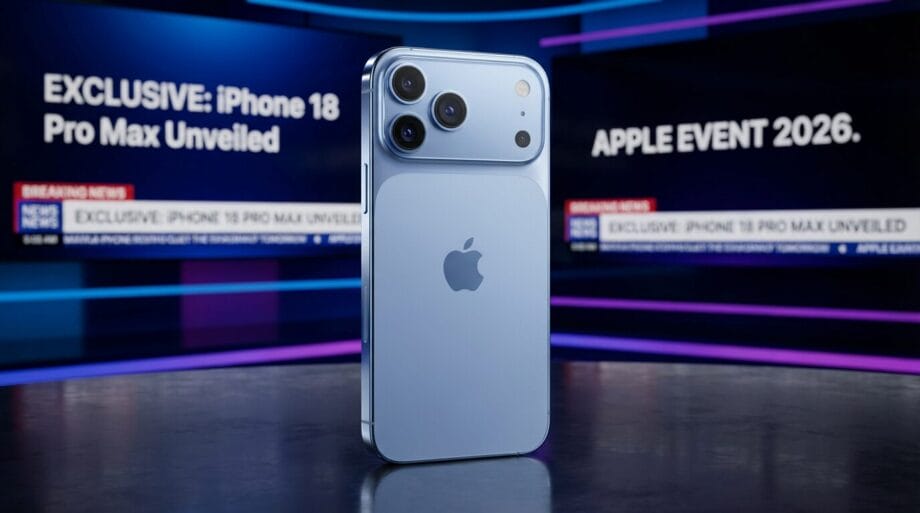
In light of this information, the iPhone 18 Pro is expected to deliver substantial enhancements, particularly in processing power, camera capabilities, front display designs, and modem technology.
However, much of this information remains speculative and is subject to change before Apple’s official announcement.
Source link: Voi.id.