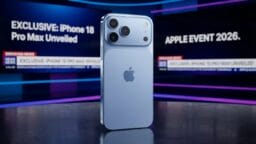
The introduction of eSIM iPhone models is transforming one of the most entrenched dynamics in mobile technology: the interplay between device manufacturers and network carriers.
By eliminating the physical SIM tray in various iPhone iterations, Apple is ushering in a more digital, software-centric approach to cellular activation, intimately woven into the iPhone setup process.
This paradigm shift commenced in the United States with the iPhone 14, which marked the debut of the eSIM-only format for American models.
Following this, eSIM compatibility has broadened, encompassing an increasing number of carriers and regions. Apple’s support documentation now lists eSIM plans offered by global service providers across more than 190 countries and territories.
Furthermore, GSMA Intelligence forecasts that eSIM smartphone penetration will double in 2026, with a subsequent doubling anticipated in 2027.
The significance of this adoption trajectory is profound; eSIM transforms the consumer journey. Carriers can no longer rely solely on distributing physical SIM cards to secure customers, controlling in-store visits, or creating a dependency on tangible SIM technology for activation.
Instead, they must integrate seamlessly into Apple’s digital setup flow, facilitate speedy transfers, simplify roaming, and contend with international eSIM providers who can market their services prior to a traveler’s arrival.
For Apple, the eSIM revolution transcends mere spatial economies within the iPhone. It embodies a vision of transforming cellular connectivity into a more streamlined, software-driven experience.
eSIM iPhone Models Minimize Carrier Obstacles
eSIM activation on iPhones effectively eliminates one of the more cumbersome elements of phone ownership.
Users are no longer required to insert a conventional, removable card; they can now activate their service digitally through carrier activation, eSIM Quick Transfer, QR codes, or designated carrier apps, depending on provisioning capabilities.
Apple’s setup guides present eSIM as a seamless method for initiating cellular service without a physical SIM.
While this might seem merely convenient, it casts a wider net over the relationships between users and carriers. The carrier’s role is now interjected into the iPhone setup, diminishing the significance of physical interactions.
If activation occurs without a hitch, users may bypass store visits or any direct handling of a SIM card altogether.
This development benefits Apple as it enhances the sense of a cohesive iPhone ecosystem. A user can purchase an iPhone, power it up, transfer their number, and activate the service all within the device itself.
Hence, the phone appears ready more quickly, allowing Apple to exert greater influence over the initial user experience.
The advantages also extend to well-performing carriers. An effective eSIM framework can mitigate shipping costs, streamline remote upgrades, ease the transition for replacement devices, and facilitate online sales.
Carriers adept at eSIM activation can serve their customers more rapidly than those reliant on brick-and-mortar interactions or mailed SIM cards.
However, not all carriers navigate this new landscape effectively. When eSIM activation falters, users often direct their frustrations at either the iPhone or the carrier, or both.
While physical SIM cards were rudimentary, they were also straightforward. The eSIM, by contrast, hinges on a confluence of software, account systems, identity verifications, carrier databases, Apple’s activation servers, and customer support frameworks that must function in harmony.
This consolidation of technology hints at a future where the relationship between carriers and Apple becomes increasingly unforgiving.
The eSIM initiative preferentially rewards those carriers that can operate with the agility and efficiency typical of software enterprises.
Enhanced Competition in Roaming Services
The most significant consumer benefit offered by eSIM may be its implications for travel. Apple asserts that unlocked iPhones can integrate eSIM plans from global service providers, allowing travelers to install plans either prior to or during their journeys. This advancement renders international roaming markedly more competitive.
Traditionally, travelers bore the brunt of exorbitant roaming charges or were faced with the cumbersome task of purchasing a local SIM card upon arrival or seeking out a carrier store.
With eSIM technology, this process evolves into a straightforward digital transaction, enabling users to maintain their primary number while simultaneously integrating a data plan tailored to their destination, all without the need for physical intervention.
This innovation disrupts one of the longstanding advantages held by the carrier industry—friction. Travelers were often compelled to pay inflated fees due to the hassle of switching providers.
However, with eSIM, a competing travel provider can enter the conversation precisely when the user requires service, frequently via an app or QR code.
Apple’s involvement in this arena is formidable. iPhones accommodate multiple eSIMs, enabling users to categorize plans, select default lines, manage cellular data, and toggle between lines effortlessly in Settings. This capability renders carriers more interchangeable within the software ecosystem.
To manage cellular plans on an iPhone:
Settings > Cellular
To add an eSIM:
Settings > Cellular > Add eSIM
This evolution facilitates travel for users but engenders price pressures for carriers. While a domestic provider may still offer roaming packages, it must now contend with specialized eSIM vendors who can propose more economical data options in specific locales.
Diminished Control for Carrier Stores
The existence of physical SIM cards afforded carriers a significant degree of oversight. Users often visited stores, engaged with sales personnel, entertained upselling attempts, completed paperwork, or even purchased accessories during the activation process. The eSIM model repositions much of this engagement onto the device itself.
This shift does not fully obviate the necessity of carrier stores. Many customers still seek assistance with trade-ins, financing options, family plans, repairs, insurance, and various account-related issues. Nevertheless, eSIM considerably lessens the frequency of physical interactions required for activation.
This transition could reshape the economics of customer acquisition. Carriers will increasingly have to compete through digital onboarding, app efficiencies, transparent planning, device financing options, network reliability, and customer service excellence. The SIM card has lost its stature as a physical cornerstone.
Consequently, Apple’s influence grows during the activation phase. The iPhone can adeptly guide users through transferring, setting up, and selecting plans.
Additionally, Apple’s retail environments can market unlocked iPhones compatible with various carriers, thereby making the switching process seem less daunting.
This shift may not sit well with carriers; nonetheless, they benefit from reduced operational frictions when eSIM functions optimally.
The relationship now hinges more heavily on the quality of integration. Carriers that support eSIM Carrier Activation and eSIM Quick Transfer earn a more streamlined position within Apple’s ecosystem, while lagging counterparts risk obsolescence.
Testing Grounds in Prepaid and Emerging Markets
The justification for eSIM-only iPhones carries more weight in markets exhibiting robust carrier support, dependable identity verification systems, and established postpaid plans.
Conversely, they present a greater challenge in prepaid-dominant regions, areas with underdeveloped carrier frameworks, or countries where physical SIM cards continue to prevail.
This nuanced approach explains Apple’s cautious trajectory. Certain markets still receive iPhones that incorporate physical SIM trays, while the U.S. and select others advance further into eSIM-exclusive models.
The situation in China highlights the complexity, as iPhone eSIM support is constrained by various carrier and regulatory impediments.
A truly global eSIM-only iPhone future relies on more than Apple’s hardware inclinations. Significant carrier and regulatory backing is imperative for achieving scalable digital provisioning.
Prepaid users require straightforward activation processes. Travelers need localized options. Individuals lacking robust digital identities or credit histories necessitate viable pathways. Additionally, repair and replacement processes must remain uncomplicated.
This underscores the friction in Apple’s strategy. While eliminating the SIM tray enhances internal space, strengthens water resistance, simplifies componentry, and facilitates slimmer devices, a lack of readiness within the market can complicate the acceptance of an eSIM-only iPhone.
The iPhone Air exemplifies this pressure point. The allure of ultra-thin hardware is stifled by the potential launch challenges posed in regions where regulatory or carrier systems are yet to modernize effectively.
Although Apple can design the device, it cannot accelerate reforms within every nation’s telecommunications system at will.
Advancements in Security and Theft Prevention
Apple frequently posits eSIM technology as a more secure alternative to physical SIMs. A removable SIM card can be extracted from a stolen device, thereby facilitating cellular tracking disruption.
In contrast, the inseparable nature of an eSIM ensures that a device remains connected for features such as Find My, activation lock, and recovery functionalities.
Moreover, the risk of misplacing a minuscule SIM card during travel or device transfers diminishes. Users can transition their service digitally, assuming that the carrier supports such capabilities, and multiple plans may reside on the device without the need to carry spare cards.
However, the security inherent in eSIMs hinges on robust account protection. Should a malicious individual manage to manipulate a carrier into transferring a number, the threat morphs into a digital realm. SIM-swap fraud remains a concern; it simply takes on a different guise.
Carriers are thus faced with the imperative of implementing stronger identity verification, enhanced fraud detection, and more secure support protocols.
Apple is adept at fortifying device security; however, the phone number is still intrinsically linked to carrier infrastructures.
Financial institutions, messaging platforms, two-factor authentication codes, and account recovery mechanisms typically pivot around this number. As eSIM technology proliferates, it accentuates the need for heightened security at the carrier level.
This underscores the evolving nature of carrier relationships, as Apple’s robust hardware security now intersects more directly with the carrier’s account security during the activation process.
Apple Enhances Leverage Without Diminishing Carriers’ Role
eSIM technology augments Apple’s leverage, though it does not render carriers obsolete. The iPhone continues to rely on mobile networks, spectrum resources, billing agreements, number portability, emergency services, roaming contracts, and compliance with governmental regulations. Apple cannot usurp this infrastructure through software alone.
What Apple can achieve is a reduction in the carrier’s influence over the user experience. The SIM tray, though merely a small piece of metal and plastic, symbolized carrier dominance within the hardware.
Its removal fosters a perception of the iPhone as a holistic Apple product, rather than a device awaiting a carrier component.
This structural change may also bolster Apple’s long-term design ambitions. Erasing the SIM tray allows the company to allocate internal space for battery enhancements, antennas, cooling systems, or slimmer profiles.
It facilitates a reduction in chassis apertures, ensuring simpler manufacturing across varied markets when eSIM capabilities are fully established.
Nonetheless, a trade-off exists regarding user adaptability. Certain consumers still favor physical SIMs for their ease of interchangeability, usefulness in remote areas, prevalence in prepaid sectors, and independence from carrier software systems.
For these users, an eSIM-only model may present itself as an advancement fraught with caveats.
Apple’s challenge lies in rendering eSIM more accessible than its physical predecessor. When activation is instantaneous, travel is uncomplicated, and transitions are seamless, users will be less inclined to mourn the absence of the SIM tray.
However, should activation issues arise, the missing tray may become an immediate point of contention.
A Software-Centric Future for Carrier Relationships
The rise of eSIM iPhones signifies a trajectory toward a future where carrier dynamics are increasingly software-oriented.
Carriers will compete based on activation speed, the quality of their applications, flexibility in roaming, fraud deterrence, plan transparency, and their degree of integration into Apple’s setup process.
This evolution advantages users by introducing greater choices but risks falling short if it generates activation challenges, sidelines prepaid users, or complicates carrier support.
The same technology could simplify transitions in some markets while exacerbating difficulties in others.
Apple’s strategic direction is unmistakable. The physical SIM tray is gradually losing its significance within the iPhone ecosystem.
The company has already demonstrated its capability to effectively sell eSIM-only models in prominent markets where adoption is surging.
Consequently, carriers now face the necessity to adapt to an environment where service is integrated as smoothly as software.

Historically, a SIM card was essential for an iPhone to feel complete. Apple is advancing towards a model wherein the carrier is merely one more component of an intricate digital setup, marking potentially the most transformative evolution in carrier relationships since the App Store reshaped mobile software.
Source link: Applemagazine.com.