A recent leak regarding the iPhone 18 Pro battery has captured considerable interest, suggesting that Apple might yet again differentiate battery capacities across various markets.
Reports stemming from insights shared by Digital Chat Station on Weibo indicate that the iPhone 18 Pro’s Chinese model is under evaluation with a battery capacity around 4056mAh, whereas the U.S. counterpart may sport a more substantial 4288mAh battery.
At first blush, that discrepancy appears notable.
Nonetheless, raw battery capacity figures seldom encapsulate the entire narrative. Crucial questions arise regarding the rationale behind these variations, the real-world battery endurance of the larger battery, and the practicality of this leak for prospective buyers of the iPhone 18 Pro.
Concise Evaluation: Is This Leak Significant?
While the leak is fascinating, it doesn’t necessarily signify a remarkable advancement in battery life.
If accurate, the U.S. variant of the iPhone 18 Pro could possess a battery approximately 232mAh larger than its Chinese counterpart, translating to a 5.7% capacity difference.
The underlying reason is likely Apple’s ongoing preference for eSIM-only technology in the United States, while Chinese models continue to incorporate physical SIM card support.
For the majority of users, this leak should be perceived as a minor hardware alteration rather than an indication of a groundbreaking battery enhancement.
What the Leak Reveals
Current intel hints at the following battery capacities:
| Model | Alleged Battery Capacity |
|---|---|
| iPhone 18 Pro (China) | Approximately 4056mAh |
| iPhone 18 Pro (U.S.) | Approximately 4288mAh |
| Difference | Approximately 232mAh |
Apple has yet to validate these specifications.
These figures reportedly stem from prototype evaluations, suggesting that actual retail versions may still evolve prior to the launch.
Nonetheless, the leak holds intrigue as it harmonizes with Apple’s present strategy of implementing different internal architectures for eSIM and physical-SIM models.
Why the U.S. Version Might Feature a Larger Battery
The probable explanation centers around the elimination of the physical SIM tray.
Since the iPhone 14 series, Apple has marketed U.S. iPhones devoid of physical SIM card slots, transitioning users to activate mobile services via eSIM.
China, conversely, remains one of Apple’s premier markets and still predominantly relies on physical SIM cards.
Although the SIM tray may seem diminutive externally, it occupies valuable internal space. By omitting this hardware, Apple gains slight leeway to reconfigure components and potentially augment battery size.
If this leak holds water, the purported 4288mAh battery may merely stem from Apple utilizing the additional space afforded by the eSIM-only model.
This situation does not imply that Apple is deliberately offering one market a superior device; rather, it likely reflects varying hardware obligations.
Comparing the Rumored Battery to Prior Pro Models
Examining past iterations aids in contextualizing these claims.
| Model | Battery Capacity |
|---|---|
| iPhone 14 Pro | 3200mAh |
| iPhone 15 Pro | 3274mAh |
| iPhone 16 Pro | 3582mAh |
| iPhone 17 Pro | 3988mAh–4252mAh |
| iPhone 18 Pro (China, rumored) | 4056mAh |
| iPhone 18 Pro (U.S., rumored) | 4288mAh |
The indicated iPhone 18 Pro battery sizes appear less striking when contrasted with previous Pro models.
When compared to the iPhone 17 Pro, the rumored China variant would yield a modest increase, while the U.S. version would involve a slight augmentation.
This suggests Apple may be perpetuating its recent trajectory of battery expansion rather than unveiling a monumental battery innovation.
Potential Impact of an Extra 232mAh
The tangible difference between 4056mAh and 4288mAh is roughly 232mAh.
In percentage terms, this equates to about 5.7%.
Theoretically, a battery that is 5% to 6% larger might provide an additional 30 to 45 minutes of mixed usage under optimal conditions.
However, practical outcomes rarely align neatly with battery capacity increases.
Battery longevity is contingent upon various factors, including:
- Processor efficiency
- Display brightness
- Refresh rate
- Cellular modem performance
- Camera usage
- Background activities
- Gaming and video playback
Consequently, most users may perceive only a marginal difference between the two battery capacities.
Understanding Battery Capacity vs. Battery Life
This key distinction is often overlooked in discussions surrounding battery specifications.
A larger battery may assist, yet battery life is dictated by the entire system’s parameters.
The iPhone 18 Pro is anticipated to leverage Apple’s forthcoming A20 Pro chip, rumored to adopt a more sophisticated manufacturing method.
If Apple enhances power efficiency, battery longevity could potentially improve even if the battery capacity experiences only a slight increment.
Conversely, if new features demand additional energy, battery life could remain unchanged.
For prospective buyers, battery capacity should be regarded as one facet of a much broader equation.
Historical Precedent
Should Apple adopt varying battery capacities across markets, it would not represent an unprecedented strategy.
The company has consistently shipped distinct hardware configurations in diverse regions, influenced by regulatory compliance, network compatibility, and SIM support.
The advent of eSIM-only models in the United States has created avenues for Apple to innovate internal layouts, particularly with regard to battery positioning.
This is why this latest rumor resonates as credible to many industry experts.
Assessing the Reliability of This Leak
The source of the report is Digital Chat Station, a reputable Chinese technology informant.
Throughout the years, this account has accurately revealed a plethora of smartphone specifications prior to their launch, including details pertinent to Apple devices.
Nevertheless, even trustworthy sources can occasionally be mistaken.
Moreover, prototype specifications are subject to change during the developmental phase.
Given that Apple has not officially announced the iPhone 18 Pro, these battery numbers should be regarded as preliminary data rather than confirmed specifications.
In Anticipation of the iPhone 18 Pro
While battery capacity is critical, numerous users prioritize the ease of maintaining a charged device throughout the day.
Be it a 4056mAh or 4288mAh battery, the majority will continue to charge their phones at desks, in vehicles, bedside, or during travel.
A dependable MagSafe charging setup can substantially enhance the daily user experience, often surpassing the benefits of a minor battery-capacity upgrade.
Accessories like the ZEERA MagSafe Charging Series can alleviate charging inconveniences now and remain beneficial across future iPhone iterations that retain MagSafe support.
Should You Hold Out for the iPhone 18 Pro?
If battery life is your sole motivation for awaiting the new model, this leak alone may lack sufficient weight.
The rumored battery capacities hint at incremental advancements rather than groundbreaking improvements.
Transitioning from an iPhone 14 Pro or older device can still yield meaningful benefits from the holistic package of updates, including a new processor, enhanced efficiency, camera refinements, and battery optimizations.
For users already equipped with a recent Pro model, the debate between a 4056mAh versus a 4288mAh battery is unlikely to be a decisive factor.
If battery life is your paramount concern, it would also be prudent to compare the iPhone 18 Pro with the larger iPhone 18 Pro Max, which is anticipated to offer significantly prolonged endurance.
The most pragmatic takeaway emphasizes that battery capacity metrics should be scrutinized judiciously.
The disparity between 4056mAh and 4288mAh may appear substantial in headlines, yet its actual impact in real-world usage could prove to be relatively small.
For most individuals, day-to-day battery performance hinges on various factors transcending battery capacity alone.
An efficient chipset, superior thermal management, software refinement, and accessible charging options often dictate real-world performance more robustly than a modest capacity enhancement.
Until Apple formally unveils the iPhone 18 Pro, the speculated battery figures should be considered intriguing indicators of the company’s design trajectory, rather than definitive reasons for an upgrade.
Concluding Reflections
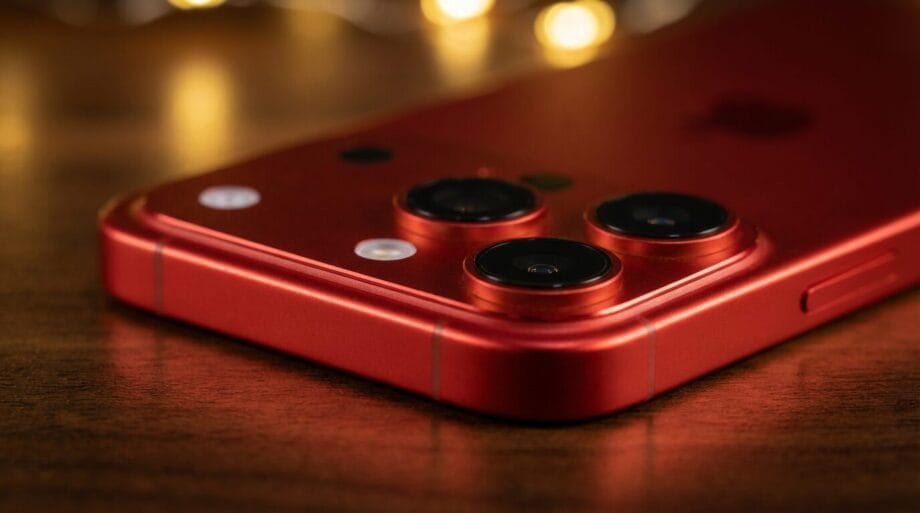
The indicated battery leak for the iPhone 18 Pro suggests that Apple could maintain differing battery capacities across various regions, with the U.S. version potentially achieving 4288mAh and the Chinese model undergoing testing around 4056mAh.
If verified, this variance is likely tied to Apple’s eSIM-centric design rather than a deliberate advantage for one market over another.
Furthermore, battery capacity is not synonymous with battery life.
The true narrative of the iPhone 18 Pro will rest on how Apple reconciles battery size, A20 Pro efficiency, display advancements, thermal management, and software optimization.
For now, the leak merits monitoring; however, it remains premature to draw substantial conclusions regarding battery performance in real-world usage.
Source link: Zeerawireless.com.