Picture this: you’ve finally nestled into your economy-class seat on an interminable, overnight flight. After a restless battle for the perfect slumber position, you manage to drift off into a tranquil sleep—only to be abruptly awakened by your seatmate’s booming TikTok videos resonating throughout the cabin.
With the advent of Starlink Wi-Fi and accelerated onboard internet connectivity, airplanes have transformed from isolated bastions of distraction into hubs of connectivity.
Passengers can now scroll through social media, stream movies, or enjoy music without the limitations of pre-flight entertainment systems.
Yet, this newfound connectivity has birthed an entirely different nuisance: individuals broadcasting their media to unintended audiences.
In response, airlines are proactively instituting measures to discourage—or in some cases, categorically prohibit—the use of unaccompanied devices without headphones.
While many regard this as a laudable development, United Airlines has imposed a surprisingly stringent penalty that flies under the radar for most travelers.
As ticket prices soar and new policies become obscured within convoluted contracts of carriage, the potential for inadvertent breaches of airline rules has never been greater.
Unwittingly infringing upon United Airlines’ latest headphone policy could lead to a staggering six-figure financial repercussion. So, what intricacies envelop this new rule, and what should passengers be aware of? Let us delve deeper.
United Airlines’ New Headphone Rule Also Includes a Hidden Financial Penalty
On February 27, 2026, United Airlines discreetly revised its Contract of Carriage, stipulating that passengers who neglect to use headphones for audio or video playback may face permanent expulsion from flights.
This update is compounded by a substantial financial penalty outlined under Rule 21: Refusal of Transport, of which many are largely unaware.
“UA reserves the right to refuse transport, on a permanent basis, to any passenger engaging in activities as described in this Rule,” states United Airlines’ Contract of Carriage.
As reported by CBS, this updated policy empowers United to dismiss noncompliant passengers from the aircraft, possibly leading to delayed departures or mid-flight diversions. The financial ramifications can be significant.
United’s revised Rule 21 articulates: “Passengers who cause loss, damage, or expenses of any kind to the airline may be held financially responsible for reimbursing United.”
This implies that if a passenger triggers a flight delay, necessitates a diversion, disrupts airport scheduling, or compels crew members to incur overtime costs, these expenses could be charged back to the offending traveler, with penalties swiftly reaching six-figure sums.
Thus, for the mere seconds it takes to connect your headphones, entertaining an entire row seems utterly imprudent.
How Does United Airlines’ Ban Compare With Other Airlines?
In this landscape of stringent policies, how does United Airlines’ approach stack up against its competitors?
Delta Air Lines has taken a gentler approach, politely requesting that passengers use earbuds “for the comfort of everyone”, while also enhancing their onboard Bluetooth capabilities to facilitate this request.
Similarly, Southwest Airlines mentions that “headphones are required, yet without framing it as a matter of transport refusal.
Lastly, American Airlines maintains a general “quiet cabin” policy, akin to those in quiet coach train compartments. The expectation is one of mutual respect, although actual ejectments are rare without significant provocation.
This delineation is noteworthy. Most other U.S. carriers address headphone use as a cordial request aimed at fostering comfort rather than imposing an absolute ban coupled with financial liabilities.
United Airlines has adopted a no-nonsense approach. This unambiguous stance reduces any potential for dispute or escalation.
Given the plethora of videos showcasing disruptive passenger behaviors on social media, it is scarcely surprising that United has chosen this path.
However, the severity of the ruling can seem disproportionate, particularly since it pertains solely to the use of headphones. While disruptive for fellow travelers, it does not invariably jeopardize onboard safety.
Enhanced Onboard Wi-Fi Is Prompting Airlines to Enforce Headphone Use
The impetus behind this stringent ban predominantly revolves around the rollout of Starlink Wi-Fi across multiple airlines. Despite the existence of onboard internet for years, it has often been prohibitively expensive and unreliable.
Now, numerous airlines are proffering complimentary, high-speed Wi-Fi to members of their loyalty programs, thus enhancing in-flight connectivity.
Consequently, passengers are increasingly dedicating their flights to scrolling through social media, streaming content, or watching videos on their devices.
On long-haul flights, entertainment systems typically require headphones, alleviating much of this issue. However, personal devices, equipped with speakers, often do not remind users to maintain a moderate volume.
To foster harmony in these increasingly interconnected spaces, airlines are advocating for (and, in several instances, strictly enforcing) headphone usage as a basic courtesy to fellow travelers. After all, not everyone is keen to experience another passenger’s playlist or TikTok feed.
Moreover, many simply wish to catch some sleep during flights, and an environment dominated by loud media makes this goal elusive.
Can Violating a Headphone Policy Truly Result in a Diversion?
In circumstances of onboard disturbances, a diversion remains a last resort for airline crews. Such actions incur endearingly elevated costs and inconvenience and are reserved for scenarios where genuine safety hazards exist, such as medical emergencies or serious threats to the integrity of the aircraft.
Nonetheless, even minor infractions can escalate. Should infractions like continued loud media playback persist despite staff requests, cabin crew may resort to stronger measures.
In severe cases, airline officials are authorized to confiscate devices from noncompliant passengers.
The involvement of personal property can amplify tensions rapidly, potentially igniting hostility among passengers in response to device confiscation. This escalation may give rise to safety concerns and could necessitate a diversion.
Nevertheless, airline staff will follow numerous de-escalation procedures before reaching such drastic measures. Even if they opt not to divert, failure to comply with warnings could still result in a permanent ban from the airline.
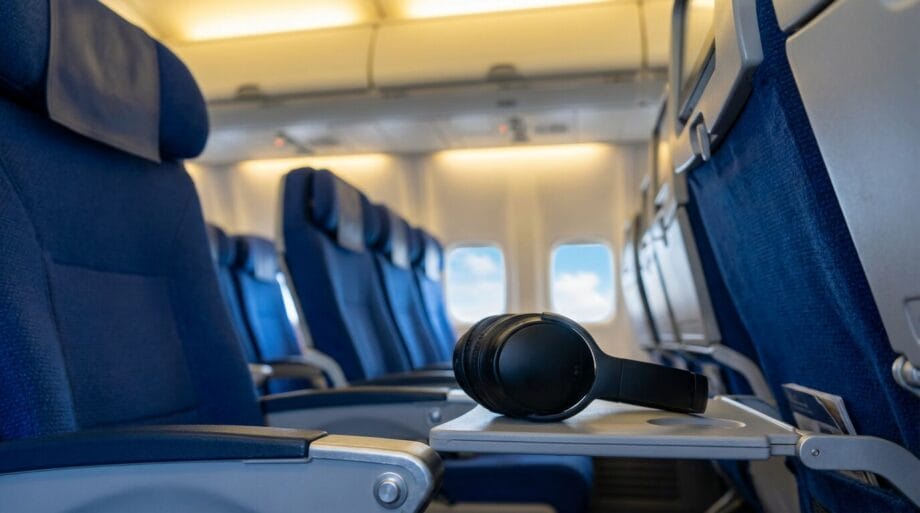
Ultimately, regardless of whether one perceives United’s penalty for diversion and damage as justified or overly harsh, it is firmly established within the airline’s Contract of Carriage.
Before embarking on your journey, ensure that your headphones are charged and prepared, guaranteeing a smooth and uneventful flight.
Source link: Thetravel.com.