India’s Smartphone Shipments Experience Decline Amid Economic Pressures
India’s smartphone market is undergoing significant strain, evidenced by a 3% year-on-year decline in shipments during the first quarter of 2026.
According to Counterpoint Research’s Monthly India Smartphone Tracker, this marks the weakest performance recorded in the past six years.
Research Director Tarun Pathak highlighted the current challenges facing the industry. He anticipates that the smartphone market will continue to face pressure in the immediate future, with predictions of a potential double-digit downturn in Q2 2026.
This is largely attributed to soaring memory prices and a lackluster demand for entry-level devices, factors that jeopardize overall shipment volumes.
“For the entirety of 2026, we project a 10% year-on-year contraction in the market. The ongoing inflation of component costs, particularly in memory, which has surged fourfold over the last three quarters, is significantly affecting affordability and extending replacement cycles,” Pathak elaborated.
Brands are expected to maintain a disciplined approach, concentrating on premium-led growth, meticulous portfolio management, and enhanced channel efficiency.
While the premium sector is likely to show resilience, ongoing weaknesses in the mass market will likely hinder a swift recovery, making it both gradual and sporadic.
As stated in the report, the decline in shipments stems from a complex interplay of cost issues on the supply side, price increases implemented by Original Equipment Manufacturers (OEMs), and subdued consumer appetite, which have collectively impeded retail conversions across various sales channels despite a surge in new product launches.
Counterpoint’s latest tracker indicates that nearly one-third of new model launches were expedited to the first quarter, aiming to counterbalance rising component costs. OEMs are striving to mitigate escalating Bill of Materials (BOM) inflation, particularly in light of heightened memory costs and currency volatility.
Senior Analyst Prachir Singh described the market’s affordability crisis, highlighting “a distinct squeeze driven by substantial memory-related cost inflation and currency fluctuations, resulting in OEMs increasing prices across key models.”
Average price hikes now exceed ₹1,500, with the sub-₹15,000 category bearing the brunt due to its pronounced sensitivity to price changes.
Rising energy costs, exacerbated by persistent geopolitical tensions in the Middle East, further strain household budgets, compelling consumers to prioritize essential needs over discretionary items such as smartphones.
Consequently, upgrade cycles are elongating, and a robust recovery in the mass segment is anticipated to be slow and uneven.
Apple, meanwhile, experienced a notable uptick in its shipment share, reaching 9% in Q1 2026. This growth can be attributed to robust demand for the iPhone 17 series, bolstered by compelling offers, including extended EMI schemes and exchange initiatives.
Apple, with its premium product lineup and adept supply chain management, is better equipped to navigate the challenges posed by rising memory costs.
In the competitive landscape, Vivo (excluding iQOO) emerged as the market leader in terms of volume share, commanding a 21% stake in Q1 2026.
This success is largely due to its expanded product portfolio, featuring multiple launches and effective channel discipline, particularly within the mid-premium segment.
Samsung follows closely in second place, buoyed by a strong mass-market portfolio, complemented by enticing offers on popular A-series models (A07, A36, and A56) and a favorable initial reception to the Galaxy S26 series.
The quarter also showcased a phased rollout of flagship models and ongoing portfolio optimization across various price segments, with Samsung achieving its highest shipment contribution from the ₹15,000-₹20,000 tier.
OPPO (excluding OnePlus) maintained its third position with a 14% market share, achieving an 8% year-on-year growth, thereby emerging as the fastest-growing brand in the top five.
Xiaomi (including POCO) occupied the fourth spot in Q1 2026, with its ₹10,000-₹20,000 segment witnessing double-digit year-on-year growth, attributed to improved channel strategies and a focused portfolio on successful models.
In terms of market dynamics, realme captured strong traction in the ₹10,000-₹20,000 segment through online channels, positioning itself among the top two brands.
Meanwhile, the brand Nothing (including CMF) sustained its impressive momentum, emerging as the fastest-growing entity with a remarkable 47% growth in Q1 2026.
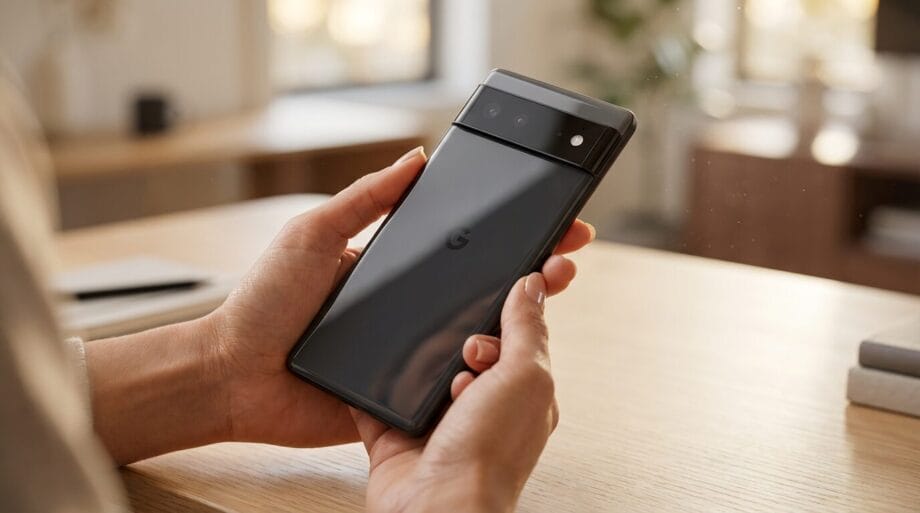
Google distinguished itself as the fastest-growing name in the premium sector (above ₹45,000), showcasing a 39% growth, predominantly fueled by its emphasis on AI-driven features.
Lastly, OnePlus solidified its status as the leading brand in the affordable premium segment (₹30,000-₹45,000) on Amazon, with its Nord series drawing consistent consumer interest, as detailed in the report.
Source link: Communicationstoday.co.in.


