Microsoft’s Chief Executive Officer, Satya Nadella, heralds the emergence of a “new form factor” in computing through innovative devices.
Microsoft has unveiled nascent wearable technology concepts aimed at empowering office employees with seamless access to artificial intelligence tools.
During its annual developer conference, Microsoft executive Steven Bathiche introduced two prototype devices.
One features a compact, portable cube with a touchscreen interface and voice-command capability, optimized for desktop environments.
The other is a wearable badge, designed to be affixed to a belt or worn around the neck, providing instantaneous access to AI-enhanced workplace support.
CEO Satya Nadella characterized these devices as indicative of a transformative shift in computing paradigms.
While Microsoft has yet to reveal plans for commercializing these devices, the company is currently conducting pilot programs involving several hundred employees to inform future development initiatives.
These concepts belong to what Nadella referred to as Project Solara. Demonstrations showcased office workers engaging with AI agents—software tools proficient in executing tasks with substantial autonomy.
Such agents are increasingly prevalent in the tech industry, particularly for tasks associated with software development and other routine responsibilities.
The wearable badge and desktop cube are crafted to interface seamlessly with Microsoft software and personal computers, allowing users to communicate with AI agents independent of traditional laptops or desktops.
Bathiche noted that the lightweight badge is engineered to facilitate “agent interactions on the go.” In a live demonstration, he activated the device with a fingerprint scan and utilized its integrated camera to capture images of attendees, subsequently forwarding them for review.
As Bathiche explained, the camera enhances AI agents’ contextual awareness, empowering them to make informed decisions based on their surroundings.
Microsoft’s previous ventures into wearable technology include the HoloLens mixed-reality headset, developed over nearly a decade and initially intended for a multibillion-dollar contract with the U.S. military.
However, following technical setbacks and testing challenges, Microsoft declared in 2024 its decision to cease production of the HoloLens.
This latest endeavor arrives amid a burgeoning interest in AI-centric wearable devices across the tech landscape.
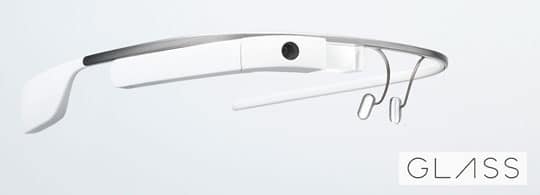
Notably, Google has recently announced its intention to revisit smart glasses technology, more than a decade after the lackluster launch of Google Glass.
The inclusion of cameras in AI-enabled devices continues to provoke concerns regarding privacy. Similar innovations, such as AI-infused smart glasses from Meta, have attracted scrutiny regarding their data collection, storage, and usage practices.
Source link: Tbsnews.net.