Apple’s Ambitious Leap into Variable Aperture for iPhone Camera
Apple appears poised to revolutionize its iPhone camera lineup by potentially incorporating a variable aperture system, a first for the brand.
According to a recent report from Korea’s ETNews, the company has begun enhancing its supply chain in anticipation of this feature debuting in the upcoming iPhone 18 Pro and iPhone 18 Pro Max later this year. If substantiated, this development signifies a pivotal shift in Apple’s mobile photography strategy.
This move holds significant importance, as the primary camera of the iPhone has exhibited remarkable uniformity across numerous iterations. From the iPhone 14 Pro to the current iPhone 17 Pro, Apple has consistently utilized a fixed ƒ/1.78 aperture in its main wide camera.
Although advancements have been made in areas such as sensor size, image processing, video capabilities, stabilization, and computational photography, the aperture itself has remained unaltered.
Essentially, this means that the main camera lens has consistently operated at a single fixed opening during image capture.
The introduction of a variable aperture fundamentally alters this dynamic. Rather than a constant opening, the camera can adaptively control the amount of light entering the sensor. While this may sound technical, the tangible advantages are straightforward.
When capturing images in darker environments, the aperture can expand to allow greater light intake. Conversely, in luminous settings, it can constrict to provide enhanced focus depth, sharpness, and exposure control.
For Apple, this advancement paves the way for a more camera-centric experience without compromising the intuitiveness that has made iPhone photography remarkably user-friendly.
Users may find themselves with the capability to produce more genuine portraits, improved control in bright conditions, and a camera system that leans less on digital enhancements.
A Transformative Enhancement for Everyday Photography
While many innovations in smartphone cameras tend to underwhelm, the promise of a variable aperture stands out due to its impact on the lens’s operational mechanics.
Typically, smartphone cameras adopt a fixed aperture design due to its simplicity, compactness, and ease of integration into slim devices. Apple has excelled at making fixed-aperture setups appear more versatile through sophisticated software solutions.
Techniques like Portrait mode, Smart HDR, Night mode, and advanced processing have enabled the iPhone to create images that often surpass what the hardware would suggest.
Nonetheless, software remains just software. The introduction of a variable aperture manifests a tangible change within the camera system itself, equipping it with new capabilities prior to the image entering Apple’s processing pipeline.
This advancement could manifest its benefits in several practical applications. A wider aperture is invaluable in low-light environments, maximizing light intake for clearer pictures.
Conversely, a narrower aperture becomes advantageous in well-lit scenarios, where excess illumination is not the issue and greater depth of field and control become paramount.
Additionally, this could help mitigate some undesired softness or over-exposure that fixed wide apertures can produce in excessively bright conditions.
This is precisely why traditional photographers value aperture settings—it’s not only about brightness, but also about attaining more refined control.
Apple’s Timely Strategic Shift
Apple’s ongoing camera strategy has gradually aimed toward enhanced hardware flexibility. The company’s relentless improvements in sensor quality, stabilization, video functionalities, and lens excellence have been noteworthy.
Yet, the iPhone has continued to rely predominantly on computational techniques to generate the signature image style that has become its hallmark.
In this regard, a variable aperture would serve to enhance, rather than supplant, the computational methodology.
This distinction is crucial. Apple is unlikely to transition the iPhone into a fully manual camera designed for intricate adjustments. More plausibly, the outcome will be a camera system capable of making more intelligent decisions, benefiting from an expanded physical range of operations.
In certain contexts, Apple might enable automatic aperture adjustments; in others—particularly for Pro models—it could bestow users with heightened manual control.
This aligns seamlessly with the trajectory of the iPhone Pro series. Apple has systematically positioned Pro iPhones as indispensable tools for photography and video enthusiasts.
ProRAW, ProRes, Log video, and advanced zoom functions have all contributed to this narrative. The variable aperture feature would naturally integrate into this evolution, adding another layer of control to the camera’s most critical component: the main lens.
From a timing perspective, it also makes logical sense. Apple has already mined substantial potential from the existing fixed-aperture paradigm.
To truly revitalize the Pro camera experience, the company must unveil something genuinely significant that resonates in both form and performance. A variable aperture fulfills both of these criteria.
Implications for Portraits, Daylight, and Low Light Scenarios
Understanding the advantages becomes most accessible when considering everyday photography scenarios.
In dim environments, the priority of a wider aperture cannot be overstated. Allowing more light to reach the sensor enhances performance, improves detail, and reduces noise—an arena where Apple already excels with its Night mode and sensor-level processes.
Conversely, in bright sunlight, a narrower aperture takes on importance. It can enhance depth of field, ensuring more elements of a scene remain in focus—especially beneficial for landscape and travel photography, as well as group shots in which isolation of a single subject is not the objective.
Portrait photography presents an even more intricate dialogue. Currently, much of the iPhone’s portrait signature arises from software depth mapping. Apple excels in this area, but it often results in simulated blur effects.
While a variable aperture may not transform the iPhone into a full-fledged portrait camera, it could impart a more authentic optical behavior for the system to leverage, crafting more natural backgrounds and smoother subject transitions.
While the impact may not be immediately dramatic in every image, in the realm of camera systems, the most valuable enhancements often manifest during routine usage.
What Lies Ahead for Apple in this Innovative Shift
If Apple integrates variable aperture technology into the iPhone 18 Pro, the hardware will represent only a portion of the narrative. The company must carefully calibrate the degree of user control available.
Excess complexity could undermine the iPhone’s inherent strengths, as most users prefer simplicity when accessing the Camera app. However, Apple is presented with a considerable opportunity to cater to more discerning users.
A balanced strategy would likely yield the most success: allowing the camera to autonomously make thoughtful aperture decisions for routine use while also granting Pro users a straightforward mechanism to influence those settings when desired.
This approach would epitomize the Apple philosophy—offering utility by default while allowing for deeper engagement as needed.
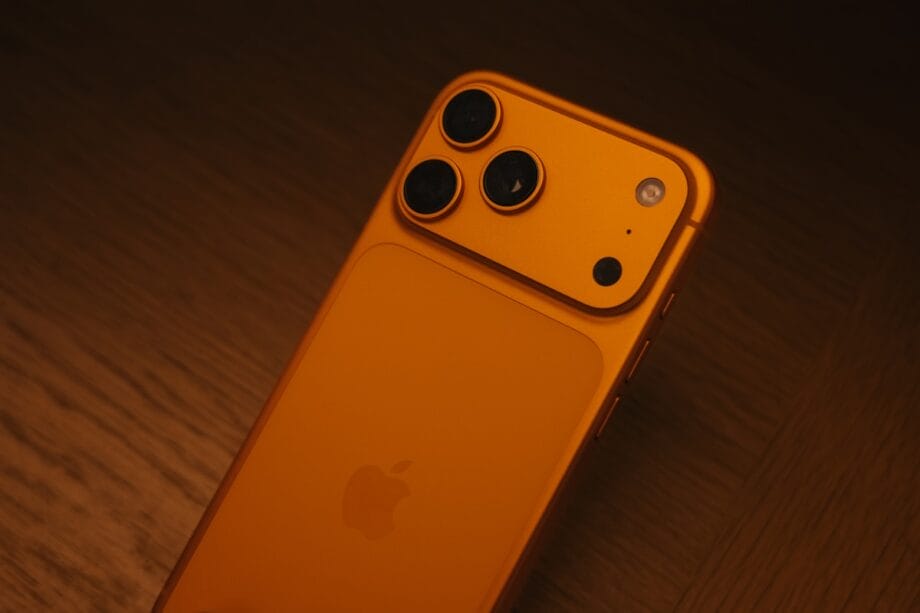
If ETNews’ assertions hold true, Apple is transitioning away from a camera system that perceives the world through a singular aperture.
Although this may appear as a minor engineering adjustment, it could evolve into one of the most significant advancements in iPhone photography in years—not merely by amplifying the camera’s capabilities, but by enriching the very lens that lays the foundation for all subsequent image processing.
Source link: Applemagazine.com.