Everywhere you look, industries are getting a boost from smart tools – design is no exception. Web creators are now relying on AI Web Design to save time and generate new ideas. The market for AI-powered website builders is growing fast. It is expected to reach over $31 billion by 2033.
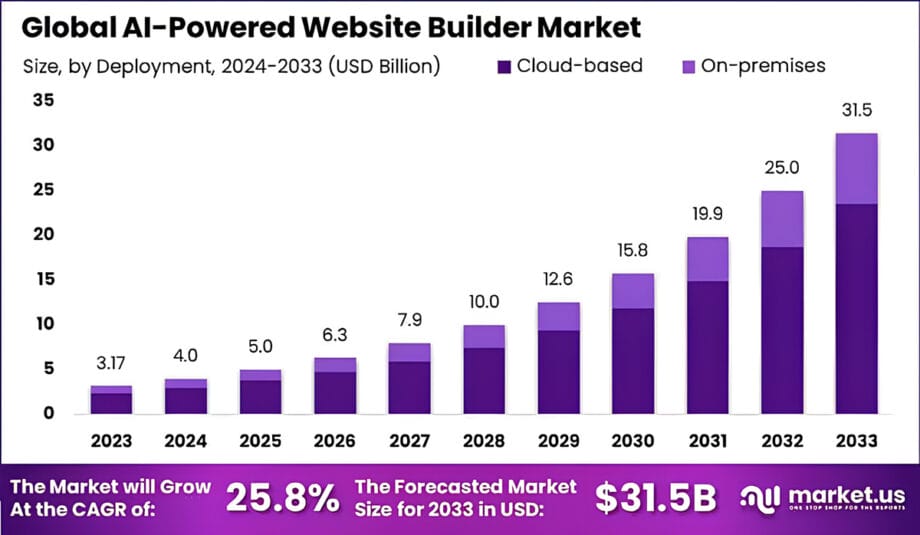
This highlights easy access to more tools, templates, and layout choices for content suggestions and image creation.
However, many are concerned about cost or complexity. These tools are built to help you and not to replace you. They’re easy to use and can be picked up by anyone without any coding skills required.
In fact, nearly 93% of web designers are already using AI tools in their workflow. And 81% say these tools boost their productivity.
Hence, AI web design is the key to getting quick results, making smart decisions, and getting assistance throughout the creative process. In fact, it acts as a helpful partner who takes care of routine tasks and saves you time to focus on making your site unique.
What is AI Web Design?
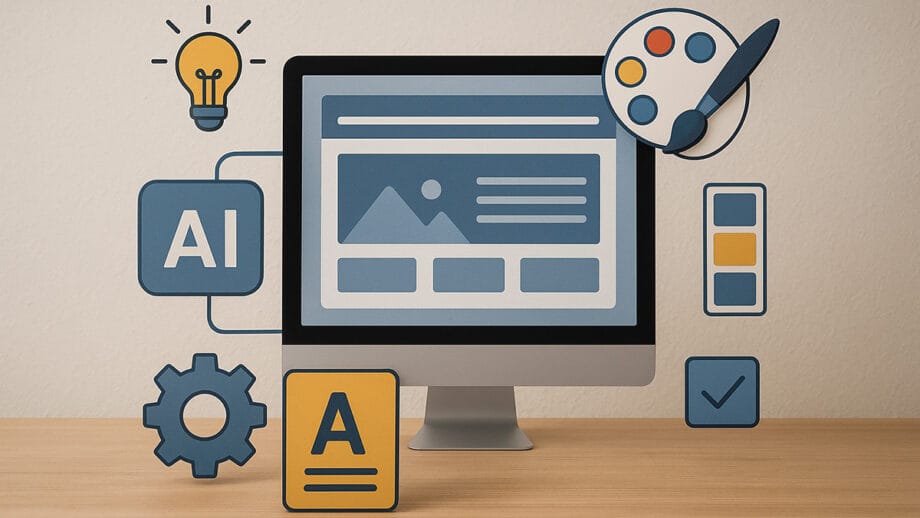
AI Web Design is referred to as using artificial intelligence tools to plan, build, and improve websites. It eliminates the need for manual coding and design work. Also, AI web design tools help automate tasks such as creating layouts, selecting images, and providing content suggestions.
AI for web design is different from traditional methods. It saves time and reduces repetitive work. A designer no longer has to start from scratch every time. AI tools analyze data, suggest designs, and assess what works best for users.
For example, AI tools for web design can:
- Create a website layout in minutes.
- Provide color scheme suggestions and fonts based on brand guidelines.
- Test different page versions to see which design improves conversions.
As a result, web designing becomes quicker, creative, and more user-centric than manual web designing.
The Evolution of Web Design with AI
Web design has come a long way. Traditional websites were built with fixed templates. This gave every site a similar look and very little flexibility.
Then came drag-and-drop tools. These made web design easier for non-developers. Anyone could move elements around, choose layouts, and publish a site without writing code.
Now, in 2025, AI website builders are changing the game again. AI for web design provides you with smart recommendations based on your industry, audience, and goals.
Machine learning in design also plays a big role. It studies user behavior and makes websites more personal. For example, it can suggest content, adjust layouts for better conversions, or even change navigation based on what users click most.
Today’s AI website builders do more than speed up the process. They create websites that are smarter, more user-focused, and easier to maintain.
How Creative Automation Works in Web Design?
Creative automation in web design is related to the use of innovative tools that eliminate the hassles of repetitive tasks. Furthermore, AI web design tools accelerate the design process.
An AI web design generator here comes to help. It can assist in building auto-layouts, ready-to-use themes, or quick prototypes in just a few clicks. Moreover, these tools provide a consistent and easy-to-customize beginning for your project.
Additionally, modern AI design tools help with small tasks that are repetitive and time-consuming. It includes resizing images, creating design variations, or adjusting color schemes. Such web design automation saves time, reduces errors, and delivers professional results.
Real-World Example: Shopify’s AI Store Builder
Shopify’s AI Store Builder, which launched in May 2025, is a great example of creative automation in action. It generates up to three complete store layouts based on keywords. It includes images and text, and no manual design is required. This feature dramatically reduces setup time and makes professional designs accessible to anyone.
Shopify also offers Shopify Magic. It is a suite of AI tools that automates tasks like theme personalization, image editing, and content generation (product descriptions, blog content, and more). It helps store owners work quickly and efficiently.
Benefits of AI Web Design for Businesses & Designers
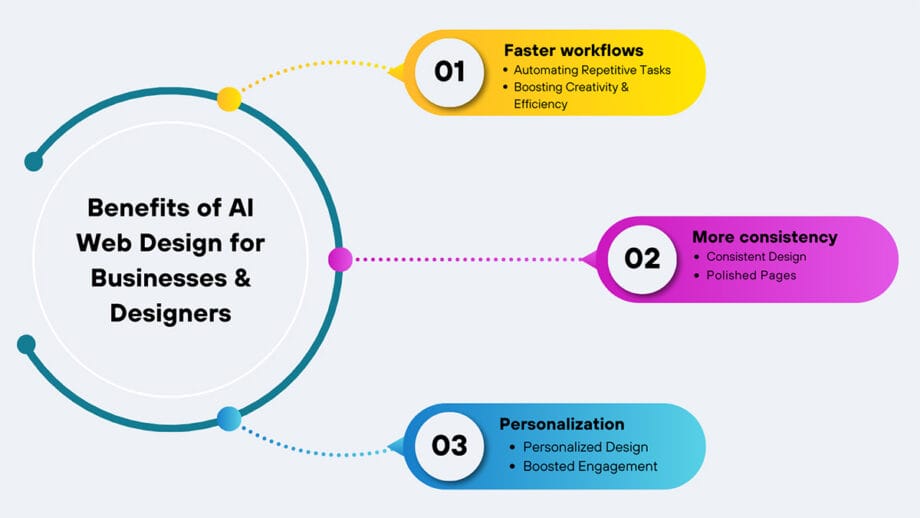
AI is quickly proving its value in building smarter websites. Here’s how both businesses and designers benefit:
1. Faster workflows with web design automation
Repetitive tasks like resizing images or tweaking layouts take valuable time. Web design automation lets AI handle these tasks in minutes. Designers can focus on ideas, and businesses can complete projects timely and efficiently.
2. More consistency with AI tools for web design
Manual design often leads to inconsistencies in style across a site. AI tools for web design keep fonts, colors, and layouts uniform. The result? Clean, professional pages that feel cohesive and polished.
3. Personalization powered by machine learning in design
AI uses real user behavior to tailor designs and content. This machine learning in design creates personalized layouts or suggestions in real time, making users feel seen — and boosting engagement and conversions.
Real-World Snapshot: Webflow’s AI Assistant
Webflow’s AI assistant helps design professionals in real time. It suggests layouts, generates copy, and optimizes experiences without leaving the editor.
It’s built right into Webflow and is powered by machine learning. Thus, enabling teams to work efficiently.
Overall, AI web design delivers faster workflows, cleaner layouts, and smarter user experiences without much human assistance.
Challenges & Limitations of AI in Web Design
AI brings speed and automation. However, it comes with limits. Let’s discuss below what designers and businesses need to consider.
Limitations of AI Website Builders
AI website builders can quickly generate layouts and content. But they often lack uniqueness and feel generic. Custom features and advanced workflows usually need manual work.
A broader review adds that these platforms often have limited flexibility, SEO challenges, and design bias.
Why Do AI Design Tools Still Need Human Creativity?
AI tools are great at tasks like resizing or formatting. However, they don’t understand brand values, storytelling, or emotion. Human designers remain essential for creating memorable, human-centered experiences.
Ethical and Copyright Concerns
AI often pulls from pre-existing designs or imagery. This poses risks around originality, bias, and ownership. A designer’s oversight ensures content remains ethical, unique, and legally safe.
All this means AI tools can speed up design. However, human vision will remain significant if brands need originality, engagement, and ethical integrity.
Future Trends: Where AI Web Design is Headed
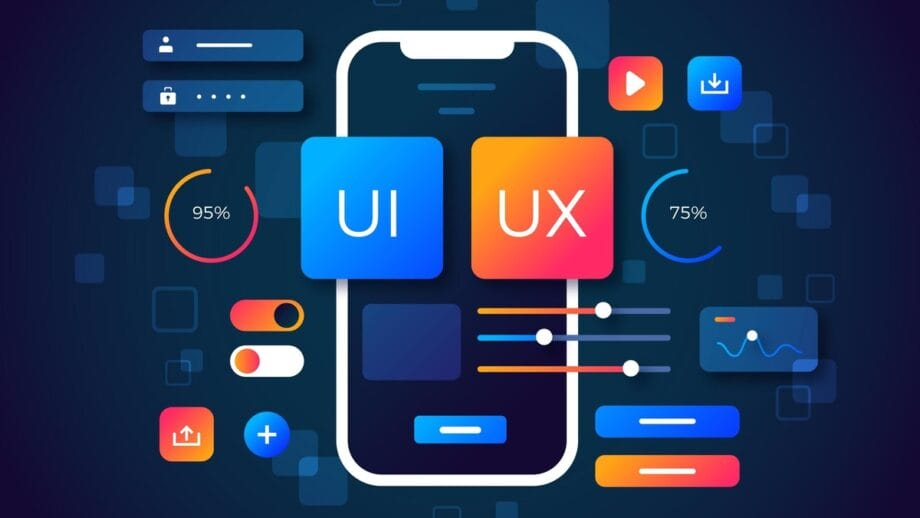
AI is becoming a true co-pilot for designers. It is simplifying and accelerating workflows.
1. AI as a Co-Pilot for Designers
AI tools will keep helping with tasks like layout suggestions, image edits, and UI tweaks. Designers will guide the process, adding creativity and brand voice.
As Microsoft’s design chief explains, design roles are shifting from creators to curators—editing with AI, not starting from scratch.
2. Deeper Machine Learning in Design for Personalization
AI will use machine learning in design to tailor experiences in real time. You can expect websites to adapt content, layout, or images based on user behavior. AI-driven personalization will become the norm.
3. Smarter AI Web Design Generators in 2025 and Beyond
AI web design generators are evolving rapidly. They’ll create cleaner code, be more SEO-friendly, and suggest performance-based tweaks. Tools like Webflow, Framer, and Squarespace are already raising the bar.
There are also emerging platforms like Div-idy, where you can describe a site in plain language and get full front-end code, design, and assets without requiring coding skills.
How Businesses Can Leverage AI Web Design?
AI Web Design is already helping businesses create smarter websites. The key is knowing how to start small and scale with the right tools.
1. Start with Free AI Website Builders
Small businesses and startups can test ideas quickly with AI website builders like:
- Wix ADI: It helps build a site for you after answering a few questions.
- Framer AI: It is used to turn text prompts into fully designed web pages.
- Squarespace AI: It offers automated layouts and better content suggestions.
These tools create layouts, themes, and content in minutes. Therefore, it saves time and setup costs.
2. Scale with AI Tools for Web Design
You’ll need more flexibility as your business continues to evolve. AI tools for web design come as a help.
- Uizard: It converts sketches into digital wireframes.
- Figma AI: This tool speeds up design tasks like layouts and variations.
- Adobe Firefly: It generates design elements and graphics quickly.
These tools automate repetitive work like prototyping and color variations. Thus, helping teams deliver projects faster without losing quality.
3. Combine Human Knowledge With AI Web Design
AI handles the heavy lifting. It decides layouts, color palettes, and quick content. But it is human knowledge and creativity that make the design stand out. The expert designers with AI Web Design tools together can help businesses build unique, appealing, and well-performing sites.
The best approach is balance. Use AI to save time while allowing your team to focus on ideas that connect with your audience.
Frequently Asked Questions
1. What is AI web design, and how does it work?
AI web design uses artificial intelligence to automate tasks like creating layouts, suggesting color schemes, generating content, and personalizing websites. It analyzes user data and design trends to deliver professional, user-friendly sites quickly.
2. How is AI web design different from traditional website design?
Unlike traditional methods that require manual coding and design from scratch, AI web design tools automate repetitive tasks. They provide instant templates, smart recommendations, and personalization features, making the process faster and more efficient.
3. Can AI web design replace human designers?
No. AI acts as an assistant, not a replacement. While it speeds up workflows and handles repetitive tasks, human designers bring creativity, storytelling, and brand identity to projects – things AI alone cannot replicate.
4. What are the benefits of using AI web design for businesses?
AI web design helps businesses save time, reduce costs, ensure design consistency, and personalize user experiences. It allows startups, eCommerce stores, and enterprises to launch professional websites faster and improve engagement.
5. What are the future trends of AI in web design?
Future trends include AI acting as a co-pilot for designers, real-time personalization powered by machine learning, smarter AI web design generators with cleaner code and SEO optimization, and platforms where users can create entire websites with plain text prompts.
Final Thoughts

AI is changing how websites are built. However, we need to remember that it works best as an assistant and not as a human replacement. A lot of AI web design tools can speed up layouts, improve user experience, and suggest creative ideas. But expert assistance from web designers is necessary to bring strategy, branding, and originality.
The future of web design will combine the power of AI web design with human creativity. This balance will allow businesses to create more innovative and engaging websites.
So, begin utilizing AI design tools to cut down repetitive work, explore new ideas, and invest more time in creative thinking.