The atmosphere was charged with exhilaration on Wednesday as rockets thundered, cameras documented the spectacle, and a historic chapter unfolded anew.
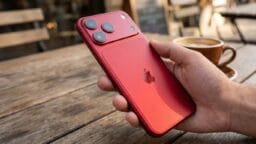
After a hiatus of over fifty years, humanity is once again embarking on a journey around the Moon. This time, they are equipped with a quintessential companion of the 2020s: the iPhone.
At the storied Kennedy Space Center in Florida, anticipation reached a fever pitch as NASA orchestrated the launch of the highly awaited Artemis 2 mission.
Four astronauts donned their gear, bid farewell, and ascended into a colossal rocket, embarking on a mission that had remained dormant for half a century—a crewed flyby of the lunar surface. Notably, they also had iPhones nestled within their flight suits.
Smartphones in Space? Indeed
Prior to the mission, NASA personnel discreetly integrated iPhones into the astronauts’ striking orange suits accented with blue trim. A brief video circulated online captured this novel event, marking a historic first: NASA permitting smartphones on a crewed vessel.
New iPhones are being packed into the suits of the Artemis II Crew!
There is something very familiar about the iPhone look that will make the Moon feel accessible, we are literally going to see the lunar surface through the same lens we use to capture our own lives every day. pic.twitter.com/sDDM5NSRMX
— Owen Sparks (@OwenSparks) April 1, 2026
The crew comprises Americans Reid Wiseman, Victor Glover, Christina Koch, and Canadian astronaut Jeremy Hansen from the Canadian Space Agency.
The inclusion of smartphones enables them to document moments through photographs, videos, and behind-the-scenes glimpses throughout their lunar circumnavigation.
NASA Administrator Jared Isaacman articulated this innovative approach, emphasizing the importance of allowing the crew to capture cherished memories for their families and share illustrious photographs with the global audience.
Adding to this sentiment, NASA spokesperson Bethany Stevens noted that while this policy is novel for NASA, commercial space missions have been incorporating smartphones for nearly a decade. Thus, in essence, NASA is merely aligning itself with contemporary practices in the cosmos.
The Countdown: Cheers Resound and History is Made
As the rocket ascended, an eruption of cheers filled the air. However, the most poignant moment emerged immediately post-launch.
Artemis launch director Charlie Blackwell-Thompson addressed the crew, delivering a message that felt cinematic in its gravity: they were representations of a hopeful new generation, embodying the adventurous spirit of individuals around the world. The expressions “Good luck” and “Godspeed” reverberated as the spacecraft soared skyward.
The Astronauts’ Objectives
This nearly ten-day mission harks back to testing protocols, yet is anything but monotonic. The astronauts will navigate a circular pass around the Moon without setting foot on its surface.
Initially, they will conduct safety assessments to guarantee flawless spacecraft performance. Following this, they will engage in manual piloting drills through docking simulations, effectively rehearsing for future lunar landing missions.
If conditions permit, the crew will journey further from Earth than any humans have ventured in over half a century. This milestone alone underscores the mission’s significance, as every system will undergo rigorous testing, and data collection will inform future lunar expeditions.
The Significance of Artemis 2 for Astronauts
This undertaking marks the inaugural crewed test flight of NASA’s Artemis program, an endeavor reminiscent of the legendary Apollo missions. It also signifies the first foray into lunar circuitry by astronauts in 53 years.
In layman’s terms, this mission serves as NASA’s dry run ahead of future manned lunar landing operations.
This time, however, astronauts will not solely depend on official cameras. They will also embrace personal technology to capture, perhaps selfies with Earth in the backdrop or intimate videos of the Moon gliding past.
Source link: Thestatesman.com.