Google Unveils Ambitious Expansion of AI-Powered Search and Intelligent Eyewear
On Tuesday, Google declared its intention to enhance its search bar, the linchpin of the globe’s most frequented website, with an infusion of advanced artificial intelligence.
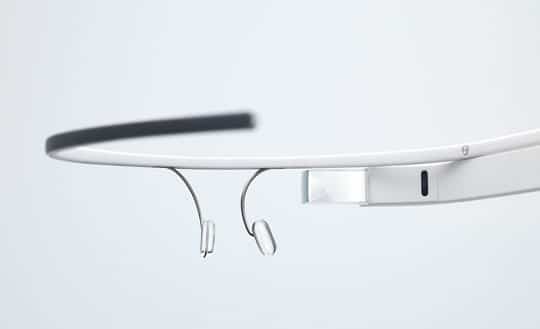
The tech behemoth is also reviving its foray into high-tech eyeglasses, over a decade after the debut of its initial eyewear, which led to users being derisively labeled as “glassholes” in San Francisco.
During the company’s annual software developers’ gala, Google I/O, executives announced that the revamped search interface would support longer and more nuanced inquiries, echoing the conversational manner in which individuals communicate, rather than adhering to the search engine’s traditional syntax.
This transformation encourages users to interact directly with Google’s chatbot. The alterations are fundamentally supported by the newly introduced artificial intelligence framework, Gemini 3.5, revealed on the same day.
Executives revealed that Gemini would facilitate lengthier text predictions based on user input, surpassing current capabilities.
A typical Google search is poised to yield more visual elements and offer suggestions for user engagement, such as creating calendar invitations or formulating plans in spreadsheets within Google’s array of applications.
“Google Search is AI search,” stated Elizabeth Reid, the product overseer, designating these modifications as the most significant in nearly 30 years of Google Search’s existence.
The updates commenced their global rollout for both desktop and mobile versions on Tuesday. Promotional materials showcased results that resemble visually enriched iterations of AI Overviews—bulleted summary responses delivered by Google Search—rather than a mere compilation of links. Users can still opt for the traditional search by selecting a tab labeled “Web.”
Reid reported a record high in Google Search queries last month. Since the introduction of the “AI Mode” a year prior, which enables users to converse with a Gemini-powered bot rather than sifting through an array of links, queries directed to this specific interface have doubled each quarter.
If users incorporate images, videos, or documents into the Chrome browser’s search bar, the Search automatically transitions into AI mode.
Josh Woodward, who oversees the development of this flagship AI, articulated that the objective of Google Gemini is to create “a universal assistant that’s personal, proactive, and persistent.”
Notably, the Gemini application boasts 900 million monthly users—still trailing behind ChatGPT’s staggering 900 million weekly engagement.
The integration of agents into Google’s principal search product, already utilized by billions daily, signifies an evolution of this specialized AI into the broader consumer market.
For subscribers to Google’s AI Pro and Ultra plans, Search will feature the capability to establish “information agents,” autonomous AI bots adept at conducting comprehensive research and delivering summarized insights or actionable plans.
An innovative “generative user interface” will empower users to request customized visuals and interactive elements, such as dashboards.
The newly introduced agent, Gemini Spark, will leverage access to users’ Gmail, Google Calendar, and other services to facilitate research, shopping, and the organization of trips, appointments, or recurring tasks.
In partnership with Samsung and eyewear manufacturers Warby Parker and Gentle Monster, Google unveiled “intelligent eyewear,” a collection of sunglasses and eyeglasses anticipated to launch this fall.
These glasses will respond to voice commands directed at Gemini and possess embedded cameras for capturing photos or videos.
In a similar vein, tech titan Meta has collaborated with optical giant EssilorLuxottica to produce comparable voice-activated, camera-enabled glasses since 2021, branded as the Ray-Ban Meta.
The journey of Google Glass began in 2014 when it was marketed as an optical computer for $1,500, leading to widespread mockery and its discontinuation the following year.
In light of evolving perceptions, Meta envisions augmented-reality glasses as a pivotal growth avenue for its future, while Google is developing a second iteration of smart glasses featuring an in-lens display, codenamed Project Aura.
Additional announcements made during I/O encompassed AI-powered coding tools within Gemini and advancements in cybersecurity-oriented AI.
Source link: Theguardian.com.