US Nuclear Energy Landscape Faces Scrutiny Amidst Restart Initiatives
The once-unbridled optimism surrounding the nuclear energy revival, amplified by advancements in artificial intelligence and the burgeoning demands of data centers, appears to have markedly diminished.
This sentiment was evident when Joe Dominguez, the Chief Executive Officer of Constellation Energy, addressed attendees at last week’s CERAWeek in Houston, Texas—a gathering recognized as a pivotal forum in American energy discourse.
During the session, Dominguez was queried regarding the company’s ambitions to reactivate a decommissioned nuclear facility. He conveyed that while progress appeared to align with the Nuclear Regulatory Commission’s safety protocols, an unsettling update soon followed.
“The integration of the grid as a capacity resource is advancing at a pace slower than anticipated,” he remarked, drawing an analogy to Charles Dickens’s A Tale of Two Cities, characterizing the situation as both the best of times and the worst of times.
In a subsequent interview with Reuters, another Constellation executive indicated that, per PJM Interconnection—an agency responsible for electricity transmission across significant portions of the U.S.—the reconnection of the plant to the grid may be unfeasible until 2031, necessitating substantial transmission upgrades.
The skepticism surrounding these restart efforts is compounded by the fact that the reactor in question, Three Mile Island Unit 1 (TMI 1), holds a notorious legacy.
In 2024, Constellation, which owns and operates TMI 1 in Pennsylvania—inactive since 2019—unveiled ambitions to restart the facility following a power purchase agreement established with Microsoft, driven primarily by the tech giant’s extensive requirements for data center operations.
Constellation has rebranded TMI 1 as the Crane Clean Energy Centre, a prudent move, considering the adjacent Unit 2 reactor was the site of one of the most significant nuclear mishaps in U.S. history.
In March 1979, a partial core exposure at the plant prompted a temporary evacuation and an extensive cleanup operation around Middletown.
Contrary to its troubling past, TMI 1 continued to operate for several decades until its financial viability diminished.
Initially, Constellation projected that following the agreement with Microsoft, TMI 1 could achieve operational status by 2027. However, Dominguez’s recent assertions, along with Reuters’ findings, have cast a shadow over this timeline, although the company maintains its commitment to that goal.
Dissenters in the nuclear sector remain unconvinced. Eric Epstein, director of Three Mile Island Alert—a grassroots safety organization founded in 1977—asserted, “This development significantly undermines the prospects of TMI’s restart within this decade.”
He further referenced a recent commentary by Neil Chatterjee, a former Federal Energy Regulatory Commission member during President Trump’s administration, who articulated a bleak outlook for the project in The Hill.
“The prospects are dim,” Chatterjee posited earlier this year. “No fully shut-down nuclear plant has ever been successfully restarted in the U.S. due to excessive regulatory, material, and logistical challenges.”
He articulated concerns that the reactor vessel within TMI 1 “may be fragile and fatigued,” emphasizing that perennially restarting a nuclear reactor is a far more intricate process than merely re-engaging a light switch.
Such apprehensions echo those raised by Epstein and the alert group, further exacerbated by recent allegations concerning the integrity of the Nuclear Regulatory Commission (NRC).
In a recent exposé, the non-profit news outlet ProPublica accused the White House of transforming the NRC into a political tool aligned with President Trump’s objectives.
- ProPublica’s analysis of NRC and Office of Personnel Management staffing data indicated a substantial exodus, with over 400 employees departing the agency since Trump’s inauguration.
- The report also alleged the unjust dismissal of NRC Commissioner Christopher Hanson, who endeavored to preserve the agency’s autonomy.
Epstein expressed growing unease regarding the NRC’s capacity for impartiality amidst these revelations.
He asserted, “The NRC has been compromised and diminished by the Department of Government Efficiency, comprising an ensemble of politically inexperienced operatives lacking substantial nuclear credentials.”
In response, Scott Burnell, a public affairs official at the NRC, countered by asserting that the commission has continued to appoint accomplished senior leaders and has achieved an unprecedented number of successes in the past year.
Burnell highlighted assertions by NRC Chairman Ho Nieh affirming that safety remains the commission’s foremost priority, stating, “The NRC does not serve as a rubber stamp. Our independence is both steadfast and unyielding.”
TMI 1 is not an isolated case; other nuclear reactors are also gearing up for restarts. For instance, Holtec, the owner of the decommissioned Palisades nuclear reactor in Michigan, celebrated a recent achievement, marking a crucial step towards its restart.
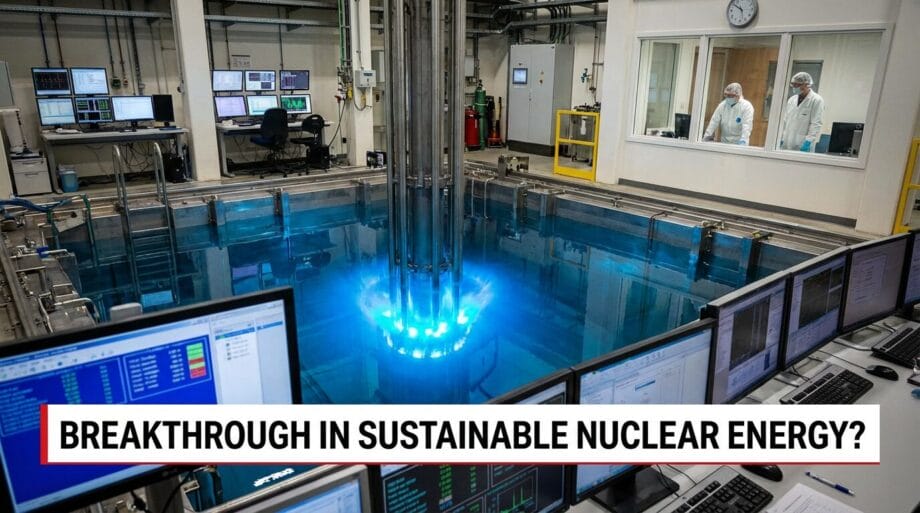
Holtec has previously indicated aspirations to bring Palisades back online by 2026.
Regarding TMI 1, Dominguez conveyed optimism at CERAWeek, maintaining that “all inspections have indicated that the equipment is, for the most part, in as favorable a condition as we could have envisioned.”
Source link: Thenationalnews.com.