Impact of Huang Spy Scandal on American Tech Firms
Strained relations between the United States and China are looming ominously over American technology enterprises, particularly titans such as Apple and Nvidia.
With anticipation mounting for an upcoming meeting between Trump and Xi, these companies remain vigilant as scrutiny intensifies. US-China tech tensions place Nvidia and Apple’s business operations and global supply chains in jeopardy.
Following the unexpected resignation of Jensen Huang as CEO of Nvidia, linked to allegations regarding a possible relationship with a woman believed by US intelligence to have espionage ties to China, American tech firms are now grappling with speculation of an impending AI bubble burst alongside erratic stock market movements.
Huang has advocated for American tech conglomerates to persist in marketing their wares within China, asserting that this would be pivotal for maintaining US leadership in the global technology domain, as reported by CNBC.
Conversely, a segment of US officials and policy advisors is advocating for enhanced restrictions on the export of sophisticated American technologies to China.
In a significant move, the Trump administration has fortified restrictions on Chinese entities seeking access to advanced US chip technology remotely.
This initiative aims to curtail Chinese corporations from leveraging data centres situated in other nations to circumvent American export regulations.
Nvidia’s predicament has morphed a national intelligence controversy into a sweeping economic and geopolitical dilemma for American technology enterprises: how to navigate their business dealings with China amid escalating political discord.
Companies express concern that deteriorating relations could encumber their access to Chinese markets, investments, and crucial supply chains.
US and China Apply Pressure on Corporations
American enterprises operating within China encounter pressure from both Washington and Beijing as the two governments adopt contrasting stances on technology and trade issues.
A client report from New York-based consulting firm Strategy Risks indicates that firms engaging in commerce in China are facing dueling pressures from both governments.
The firm cautioned that actions intended to appease one government could precipitate significant ramifications with the other, jeopardizing businesses’ access to markets, investment opportunities, and reputational standing.
Furthermore, Strategy Risks emphasizes the necessity for executives to meticulously evaluate the implications and hazards associated with significant business decisions before proceeding.
Investors and analysts are not anticipating substantial advancements in trade negotiations subsequent to the impending meeting between Trump and Xi, with both nations currently relying on a tenuous trade accord established the previous autumn.
Apple’s Strategic Decisions Regarding the Chinese Market
While several American technology firms are actively seeking to dilute their reliance on China, Nvidia and Apple remain notable exceptions.
Kyle Chan, a fellow at The Brookings Institution, remarked that numerous American tech firms are diversifying their operations away from the Chinese market.
Despite this trend, Nvidia and Apple maintain robust commercial relationships with China, complicating their efforts to pivot away.
Additionally, Apple faces scrutiny concerning how it will navigate its Chinese operations under the stewardship of its newly appointed CEO, John Ternus, after Tim Cook’s departure in October.
Market analysts are keenly observing whether Ternus will expedite Apple’s initiatives to curb its dependence on China.
Chan posits that Ternus could accelerate the diversification initiatives that Cook had commenced during his tenure. However, completely extricating operations from China poses significant challenges, as the country remains integral to Apple’s manufacturing ecosystem.
China’s factories and suppliers play a crucial role in the production of Apple devices, complicating the company’s efforts to transition all manufacturing activities to alternative locations.
Notably, Apple continues to produce a majority of its iPhones in China, despite attempts to extend its manufacturing footprint to other nations, including India, as per CNBC.
China also constitutes a vital market for Apple, with its Greater China segment—including mainland China, Hong Kong, and Taiwan—accounting for approximately 15% of overall sales.
Consequently, any escalation in tensions could substantially impact Apple’s customer access and operational stability.
Isaac Stone Fish, CEO of Strategy Risks, has asserted that Apple necessitates a more defined long-term strategy to alleviate its reliance on China.
In a recent article published in American Affairs, Stone Fish advocated for a strategy of managed decoupling, recommending that Apple commit earnestly to developing a business model that can sustain reduced access to China while preserving its advanced manufacturing capabilities.
China’s Control Over Rare Earth Elements: A Growing Concern for US Firms
China’s dominant position within the global economy signifies that any retaliatory measures from Beijing could pose challenges for American corporations.
The country exerts significant leverage over the distribution of critical minerals and materials essential for industries worldwide.
Beijing has previously leveraged its control over rare earth elements as a bargaining chip in trade negotiations with the US and the European Union.
These minerals are indispensable for the manufacturing of products utilized in technology, defense, automobiles, and numerous other sectors.
Furthermore, Chinese factories have emerged as pivotal players in global trade, responsible for approximately 40% of worldwide container exports during the summer months, underscoring the nation’s significance in international supply chains.
The establishment of American AI data centres heavily relies on components manufactured in China, rendering the US tech industry vulnerable to potential supply disruptions, as highlighted by CNBC.
Potential Shortages of Rare Earth Elements: Implications for Global Industries
China’s continued dominance in supplying critical minerals persists, while other nations endeavor to bolster their own production capabilities to mitigate reliance on Chinese sources.
Notably, initiatives to construct rare earth supply chains outside of China have yet to sufficiently satisfy global demand.
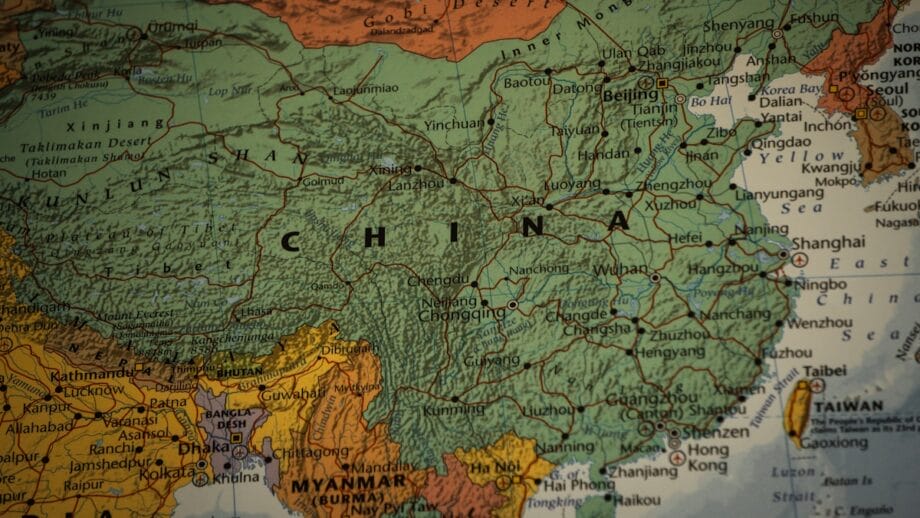
Cameron Johnson, a senior partner at the business consultancy Tidalwave Solutions in Shanghai, asserts that other countries are struggling to meet the global industry’s needs for these essential materials.
He cautioned that any shortages could significantly impede manufacturing processes and stymie growth across various sectors.
Johnson further noted that companies lack a coherent strategy for addressing potential shortages of critical minerals, complicating their ability to plan production, manage costs, and secure a consistent supply of necessary materials.
Source link: Hindustantimes.com.