Samsung is reportedly undertaking tests on a groundbreaking 20,000mAh battery for its eagerly awaited Galaxy S27 Ultra.
This innovative development employs cutting-edge silicon-carbon battery technology, presenting an exceptional opportunity for transformation in the smartphone sector.
By tackling the shortcomings of conventional lithium-ion batteries, Samsung aspires to establish a new benchmark in energy storage, delivering devices with prolonged usability and reinforcing its stature as a frontrunner in the fiercely competitive smartphone arena.
Challenges of Current Smartphone Batteries
The longevity of battery life continues to be a paramount concern for smartphone aficionados; however, advancements in battery capacity have been sluggish and painstakingly gradual.
Historically, the Galaxy Ultra series, spanning from the S20 Ultra to the S26 Ultra, has consistently incorporated 5,000mAh batteries.
While this capacity suffices for the majority of users, it now appears rather pedestrian compared to rivals such as Xiaomi and Realme, who offer devices boasting batteries that surpass 10,000mAh.
These larger batteries address consumer desires for prolonged usage periods, minimizing the frequency of recharges.
Nevertheless, traditional lithium-ion batteries are beset by intrinsic limitations:
- Physical Size Constraints: Amplifying battery capacity frequently necessitates larger dimensions, which conflicts with the sleek and minimalistic designs favored in contemporary smartphones.
- Performance Degradation: Lithium-ion batteries tend to lose efficiency after a finite number of charge cycles, resulting in diminished performance and shortened longevity.
These deficiencies have catalyzed the pursuit of alternative battery technologies capable of delivering higher energy density, enhanced resilience, and improved overall performance while preserving design aesthetics.
Silicon-Carbon Batteries: An Exciting Alternative
Silicon-carbon battery technology presents a compelling alternative to conventional lithium-ion solutions.
By substituting graphite anodes with silicon-carbon composites, these batteries can store markedly greater energy without expanding their physical dimensions.
This advancement enables manufacturers to produce batteries of higher capacity while retaining the slender and lightweight profiles that consumers demand.
The potential advantages for consumers using silicon-carbon batteries are significant:
- Prolonged Battery Life: A formidable 20,000mAh battery could sustain a smartphone for several days on a single charge, thereby abolishing the necessity for daily recharging.
- Accelerated Charging: Silicon-carbon batteries facilitate faster charging times, effectively reducing downtime and enhancing user convenience.
- Enhanced Efficiency: Improved energy density translates to superior performance for power-intensive activities such as gaming, streaming, and multitasking.
While these advantages are notable, silicon-carbon batteries are not without their own set of challenges.
They are more susceptible to expansion and degradation, which can jeopardize safety and longevity. Addressing these concerns necessitates sophisticated engineering and rigorous testing protocols to ensure reliability and stability.
Samsung’s Ambitious Innovations and Associated Challenges
Samsung’s quest to integrate silicon-carbon batteries into the Galaxy S27 Ultra constitutes an audacious leap forward, laden with substantial technical obstacles.
Prototypes exhibiting capacities ranging from 12,000mAh to 20,000mAh are currently undergoing rigorous evaluations.
Although these prototypes showcase impressive energy density, achieving durability and long-term reliability constitutes an ongoing challenge.
Numerous prototypes have struggled to meet the industry benchmark of 1,500 charge cycles, which is essential for guaranteeing a battery’s utility over time.
To confront these challenges, Samsung’s engineers are concentrating on three pivotal areas:
- Stability of the Battery: Refining the chemical composition to mitigate expansion and degradation, ensuring consistent performance over time.
- Layer Stacking Technology: Optimizing the battery’s internal architecture to maximize energy density while prioritizing safety and durability.
- Software Optimization: Crafting sophisticated battery management systems to enhance charge cycle efficiency and overall functionality.
These initiatives endeavor to create a battery that not only offers unparalleled capacity but also meets the elevated standards of safety, reliability, and performance that discerning consumers expect from premium products.
Implications for the Smartphone Landscape
Should Samsung successfully commercialize a 20,000mAh battery, the ramifications for the smartphone market could be profound.
Presently, brands like Xiaomi and Realme have secured a competitive advantage by offering devices with larger batteries; however, Samsung’s innovations might erode this head start.
Meanwhile, competitors like Apple and Google have focused on optimizing energy efficiency rather than augmenting battery size, thereby creating a niche that Samsung might adeptly fill.
A significant breakthrough in battery technology could also catalyze a reevaluation of consumer priorities.
With extended battery life, users may increasingly prioritize battery performance over other hardware enhancements, such as camera advancements or processor speed.
Thus, battery performance could emerge as a defining feature in the premium smartphone market, revolutionizing how consumers assess and select their devices.
Broader Implications
The potential launch of a 20,000mAh battery in the Galaxy S27 Ultra could signify a watershed moment in smartphone innovation.
For consumers, it heralds a future where battery life ceases to be a daily concern, facilitating unrestricted use of high-demand applications such as gaming, streaming, and productivity tools.
For Samsung, this situation offers a chance to regain its leading position in battery technology and establish a new industry paradigm.
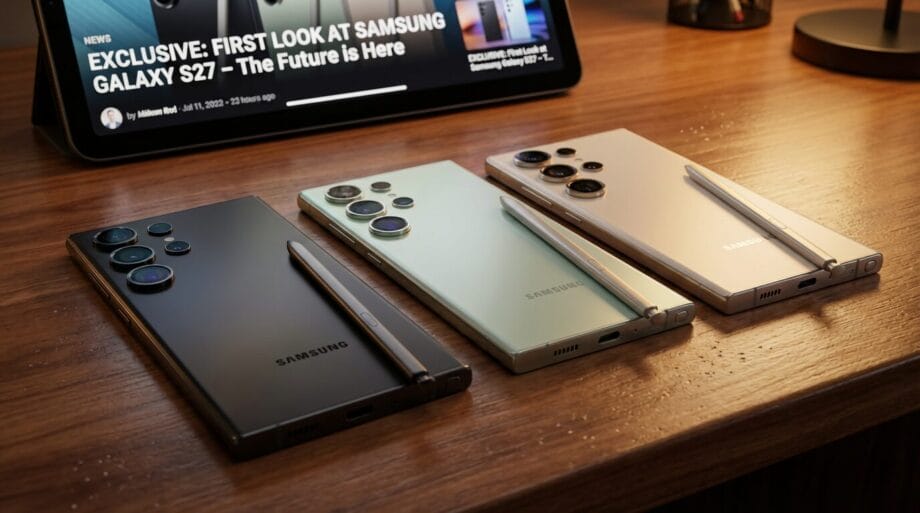
Despite the challenges that loom, the possible benefits are immense. If Samsung can surmount the technical challenges associated with silicon-carbon batteries, the Galaxy S27 Ultra may evolve into a hallmark of next-generation smartphone design.
This breakthrough could not only redefine consumer expectations but also reshape the competitive dynamics of the mobile technology sector, paving the path for a new epoch of innovation.
Source link: Geeky-gadgets.com.