The iPhone 16 Pro is equipped with the same NFC hardware as its predecessors, enabling an array of functionalities that extend beyond traditional payment methods.
Following Apple’s decision to permit third-party developer access to its NFC chip in 2024, applications pertinent to cryptocurrency wallets and stablecoin transactions are now being developed to utilize this technology directly, circumventing the reliance on Apple Pay.
However, it is noteworthy that the actual implementation of crypto-oriented NFC payments remains in its nascent stages, not yet universally accessible for every iPhone 16 Pro user.
This article aims to elucidate the existing capabilities, current limitations, and specific instances of how the iPhone 16 Pro’s NFC chip is being employed in the cryptocurrency space, particularly regarding hardware wallets, which constitute the most advanced application to date.
Key Insights
- The iPhone 16 Pro is outfitted with Apple’s standard NFC chip and Secure Element, the same technology utilized for Apple’s tap-to-pay features.
- Beginning with iOS 18.1 in 2024, Apple opened up NFC access to third-party developers, initially in the European Union due to antitrust pressures, subsequently extending this accessibility to regions including the US, UK, Canada, Australia, Brazil, Japan, and New Zealand.
- This transition permits cryptocurrency and Web3 wallet applications to engage directly with NFC for transactions, distinct from Apple Pay or Apple Wallet, relying on host card emulation (HCE) instead of Apple’s proprietary Secure Element.
- Circle, the entity behind the $USDC stablecoin, has publicly expressed intentions to establish NFC-enabled tap-to-pay transactions, though widespread merchant integration in the United States remains limited as of mid-2026.
- The most established use case of NFC in cryptocurrency currently is not in transactional payments, but rather in hardware wallets like Tangem, which employ a simple tap against the phone for signing transactions, contrasting with Bluetooth-based devices like the Ledger Nano X.
Understanding NFC Functionality in the iPhone 16 Pro
Near Field Communication (NFC) serves as a short-range wireless technology facilitating data exchange between devices situated merely centimeters apart.
This utility is the backbone of contactless payment systems at retail points. Each iPhone 16 Pro houses an NFC chip, coupled with Apple’s Secure Element—a dedicated hardware segment that safely stores payment credentials separately from the device’s core operating system.
Historically, direct access to this chip remained limited to Apple Pay and Apple Wallet, with all other functionalities channeled through Apple’s infrastructure.
The Rationale Behind the 2024 NFC Opening
In response to an antitrust lawsuit in the EU aimed at curtailing restrictive practices within mobile payments, Apple pledged in 2024 to facilitate NFC and Secure Element access for third-party developers, initially across the European Economic Area.
By August 2024, this access was broadened to include developers from the US, UK, Canada, Australia, Brazil, Japan, and New Zealand, accompanying the launch of iOS 18.1.
Significantly, this access allows third-party applications to process their own NFC transactions through host card emulation (HCE), affording cryptocurrency wallet applications the capacity to enable payments devoid of reliance on Apple’s payment systems.
Are Crypto Payments Possible via NFC on the iPhone 16 Pro?
In a pragmatic yet constrained capacity, the answer is affirmative. Circle, the firm behind the $USDC stablecoin, has publicly articulated plans to leverage this newly accessible NFC technology to facilitate direct $USDC transactions through tap-to-pay methodologies.
Under such a framework, a point-of-sale terminal could relay a payment amount to an iPhone for user confirmation via Face ID, with settlement occurring on-chain rather than through conventional card networks.
Furthermore, a variety of smaller Web3 payment applications are beginning to implement NFC-based solutions utilizing this access.
Nonetheless, this feature remains in an embryonic phase; as of 2026, widespread merchant adoption of NFC-enabled cryptocurrency transactions is not yet standard, with most crypto expenditure still routed through crypto debit cards in Apple Wallet, operating through existing Apple Pay infrastructures.
The Current Nexus of NFC and Cryptocurrency: Hardware Wallets
Notably, the most developed integration of iPhone NFC and cryptocurrency functionality lies not in payment systems but in hardware wallet verification processes.
NFC-enabled hardware wallets, such as Tangem, operate by allowing users to tap a physical card or device against their iPhone to authenticate transactions.
This method utilizes the phone’s NFC chip exclusively as a communication conduit, in contrast to Bluetooth-enabled wallets like the Ledger Nano X, which rely on wireless connectivity for interaction.
Both mechanisms securely maintain private keys on dedicated devices rather than the smartphone itself, yet NFC hardware wallets extend advantages by eliminating the need for pairing and battery dependencies associated with Bluetooth technology.
iPhone 16 Pro: Specifications Overview
In terms of specifications, the iPhone 16 Pro remains relevant for those comparing it against both contemporary and legacy models, boasting a 6.3-inch display, the A18 Pro chip, a 48-megapixel primary camera with enhanced telephoto capabilities, and premium titanium construction. It debuted in September 2024, coinciding with the launch of the iPhone 16 Pro Max.
As of 2026, the iPhone 16 Pro is no longer recognized as Apple’s flagship device—this mantle now belongs to the iPhone 17 Pro, which launched in September 2025.
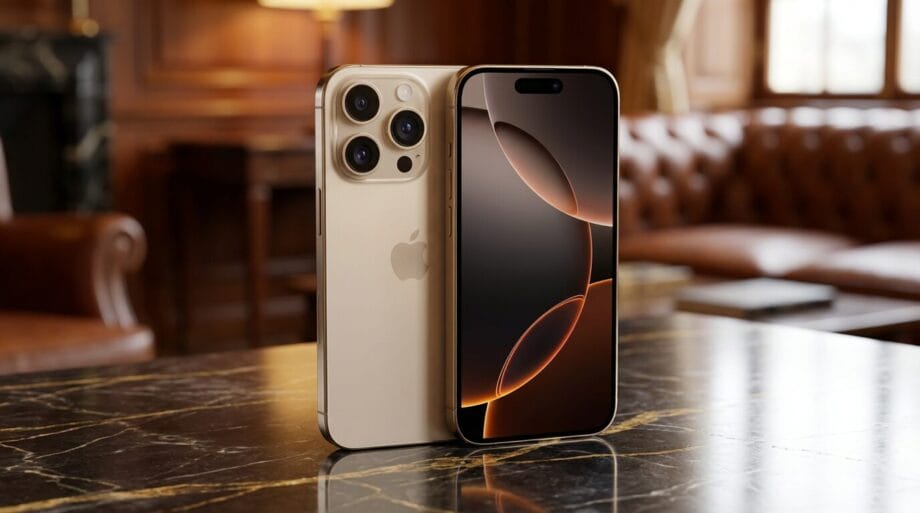
In February 2026, Apple reintroduced the iPhone 16 Pro to its refurbished inventory at reduced prices (for instance, the 512GB model saw a decrease from its original $1,299 to approximately $1,019 refurbished), creating a significant value proposition for consumers seeking access to the aforementioned NFC hardware and compatibility with crypto wallets, without necessitating the latest chip technology.
Source link: Cryptonews.net.


