Anticipated Price Surge of Apple’s iPhone 18 Series Amidst Semiconductor Constraints
Apple’s forthcoming flagship smartphone, the iPhone 18 series, is poised to set unprecedented price records, largely due to an AI-driven escalation in memory semiconductor expenditures.
For the Pro models, anticipated price increases could reach as high as $200 (approximately ₩310,000) relative to their forerunners, potentially pushing the retail price in South Korea well beyond ₩2.3 million (around $1,489).
On the 29th, global market research firm IDC published a report forecasting that the iPhone 18 Pro and Pro Max might be priced up to $200 above the current models.
Nabila Popal, senior director of data and analytics at IDC, remarked, “Initially, we forecast a $100 increase for Pro models and $50 for base variants, but given that certain iPad and Mac models saw price hikes exceeding $300, the rise for iPhones could end up being more substantial than previously envisioned.”
The current iPhone 17 Pro Max starts at $1,199 in the U.S. (approximately ₩1.9 million). A hypothetical $200 increase would elevate the price to $1,399, translating to approximately ₩2.32 million (around $1,502) in South Korea.
This price would surpass the ₩1.99 million (around $1,289) launch price of the iPhone 17 Pro Max by more than ₩300,000 (approximately $194), marking a historical peak.
Meanwhile, the standard Pro model is projected to be priced between $1,249 and $1,299 (around ₩1.9 million to ₩2 million).
The rationale behind this significant price inflation lies in a memory semiconductor supply crunch instigated by escalating investments in AI data centers.
The dramatic increase in spending on AI servers has exponentially heightened demand for DRAM and NAND flash, thereby inflating prices for the memory components integral to consumer devices such as smartphones and PCs.
Analytical insights from MacRumors indicate that, considering Apple’s recent average price hikes of approximately 20% for Macs and iPads, the iPhone 18 Pro—anticipated to include 12GB of RAM—will likely encounter parallel cost pressures.
Amid this context, subtle frictions between the memory sector and Apple have emerged. Sumit Sadana, Chief Business Officer at Micron, recently commented, “During the industry’s period of minimal profitability in 2023, several major clients pressed aggressively for lower prices, ultimately undermining long-term investments in production capacity.”
Observers interpret this as a veiled reference to Apple. The implication here is that Apple, which previously employed its vast purchasing power to drive down prices during supply gluts, now finds itself grappling with the inverse effect of elevated costs in a supply-restricted environment pulsed by the AI renaissance.
Indeed, per estimations from TechInsights, the memory and storage component expense for the iPhone 17 Pro was roughly $50, but this figure is projected to soar to about $200 for the iPhone 18 Pro.
This reflects an increment of nearly $150 in component costs alone. The emerging power dynamic between Apple and its component suppliers like Micron seems to indicate a mutual conclusion: elevated prices for consumers.
With Micron’s most recent quarterly gross margin soaring to 85%, both parties may face scrutiny for merely transferring costs to uphold their profitability.
To mitigate the financial strain, Apple is reportedly contemplating new supply chain diversification strategies.
It is said that the company seeks U.S. government approval to procure DRAM from China’s ChangXin Memory Technologies (CXMT).
This maneuver aims to disrupt the overly concentrated supply chain dominated by Samsung Electronics, SK Hynix, and Micron, thereby enhancing Apple’s negotiating leverage.
As contentious as the price volatility is, the substantive hardware enhancements of the iPhone 18 remain a point of contention.
The Pro lineup, anticipated to launch in fall 2026, is slated to feature the A20 Pro chip, fabricated using TSMC’s 2-nanometer process, and 12GB of RAM.
However, whispers regarding the standard iPhone 18 and iPhone 18e, expected in spring 2027, suggest the adoption of an unconventional 9GB memory configuration comprising six 1.5GB DRAM dies—a decision criticized as a meager upgrade when compared to the 12GB or 16GB found in rival Android devices.
Further compounding the concerns is the geographic disparity in AI functionalities, such as those within the Apple Intelligence framework.
Apple employs a hybrid methodology whereby basic tasks are conducted on-device, while more intricate calculations are relegated to its Private Cloud Compute.
Nevertheless, the full localization of essential AI services remains pending in key markets, leading to consumer dissatisfaction over the potential for an AI premium on hardware without the advantage of being able to fully harness its AI capabilities.
Market responses are already evident in tepid indicators. IDC predicts global smartphone shipments will contract by 13.9% year-over-year in 2026, while average selling prices (ASP) are projected to rise.
This scenario implies that manufacturers’ price escalations could erroneously prolong consumer upgrade cycles.
Nevertheless, IDC estimates that approximately 54% of users with iPhone 15 or older models will have no choice but to upgrade in order to access the new Siri AI features, and predicts that demand among Pro Max consumers—who are less sensitive to price changes—will not significantly diminish.
The intricacy of the South Korean market adds another layer to this narrative. Recently, Apple raised prices across its MacBook and iPad portfolio in South Korea by up to ₩1.3 million (approximately $842), yet notably refrained from increasing the prices of the iPhone 17 series.
This action is interpreted as a reflection of the unique competitive landscape in the South Korean smartphone market, where Apple contends robustly with Samsung Electronics’ Galaxy line.
An industry telecommunications source commented, “Thus far, there have been no separate discussions with Apple regarding iPhone price escalations.”
However, analysts caution that this may simply be a temporary lull in the storm. Lim Soo-jung, a researcher at Counterpoint Research, asserted, “This price stagnation is, in fact, indicative of Apple’s diminishing capacity to absorb rising costs.”
She predicts that “a widespread price adjustment, encompassing both the new iPhone 18 line and existing iPhone 17 models, will be inevitable upon the launch of the new devices in September.”
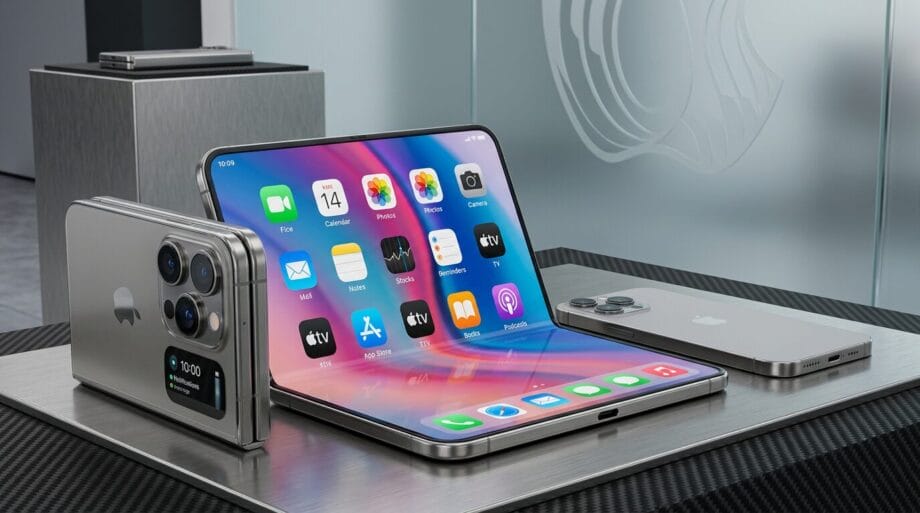
With Samsung gearing up to unveil new Galaxy Z Fold and Flip models in the second half of the year, apprehensions mount that Apple’s price increases could catalyze a migration of South Korean consumers to the Android ecosystem.
Source link: Finance.biggo.com.