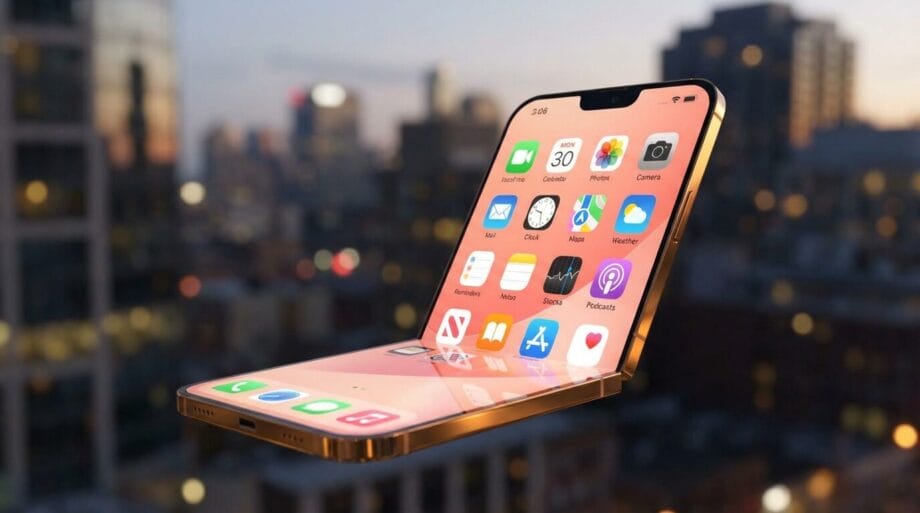
Recently leaked dummy units purportedly showcase the finalized designs for the much-anticipated iPhone Ultra/Fold and iPhone 18 Pro.
While the latter remains largely unchanged, the iPhone Ultra is distinctive, integrating Touch ID and an unusual top-mounted button configuration.
This design has the potential to spark considerable debate among consumers, as Apple emphasizes the “iPad” aspect of the foldable device—a move likely to be met with mixed reactions.
The emergence of these latest “official” dummy units reveals a glimpse into the final iteration of the iPhone Ultra/Fold and the iPhone 18 Pro series. The design choices made by Apple’s team are bound to provoke attention and discussion.
While the iPhone 18 Pro bears a striking resemblance to its predecessor, the iPhone 17 Pro, the foldable version presents a more compelling narrative.
The dummy images corroborate earlier speculation, indicating that Apple has adeptly addressed a critical, yet undervalued, issue associated with foldable technology, managing to do so in a characteristically “Apple” fashion.
Foldable iPhone Ultra reintroduces Touch ID; unorthodox button location raises questions
In a departure from rivals such as the newly launched Huawei Pura X Max, the design team in Cupertino has opted to position the volume buttons atop the iPhone Ultra/Fold rather than on the customary right edge.
Notably, the power button, residing on the right side of the device, is anticipated to function as Touch ID as well.
Although the repositioning of the volume buttons to the top may initially appear counterintuitive, it aligns seamlessly with the device’s short, wide form factor—particularly in its tablet mode.
However, this decision introduces a new ergonomic dilemma; users seeking to adjust the volume in its folded state will find themselves reaching awkwardly with their index fingers.
ⓘ Majin Buo Final dummy units of the iPhone Ultra/Fold and iPhone 18 Pro. Absence of MagSafe rings noted on the foldable model.
ⓘ Majin Buo Volume buttons are situated on the top of the iPhone Ultra/Fold.
Ultimately, it appears that while Apple has addressed one challenge, it has inadvertently introduced another. Unless they implement ingenious software solutions to alleviate the ergonomic woes, such as a tap-on-the-side mechanism to summon the volume slider.
Alternatively, the feature resembling a 5G antenna on the right side could potentially be a volume rocker. The flush design of this element suggests it could be an antenna, but its true function remains to be seen!
By placing an emphasis on landscape/tablet usability over traditional smartphone functionality, Tim Cook and his team signal a clear intention—prioritizing the “iPad mini” experience for the iPhone Ultra/Fold.
This reflects a significant compromise, one which Apple seemed prepared to accept, as creating a multifunctional device will invariably encompass certain trade-offs.
Source link: Notebookcheck.net.