Apple’s anticipated iPhone Fold is positioned to herald a transformative evolution in the company’s smartphone design ethos.
Leaked prototype units indicate a foldable device that leans into innovation yet conspicuously lacks two elements that have become staples for many users: MagSafe and the action button.
The strategic omission, alongside its distinctive passport-style architecture, illustrates a conscious deviation from Apple’s established design tenets.
This audacious maneuver signals Apple’s intent to venture into uncharted territory within the increasingly competitive realm of foldable smartphones. A detailed analysis is provided in the video below from Greggles TV.
A Novel Passport-Style Configuration
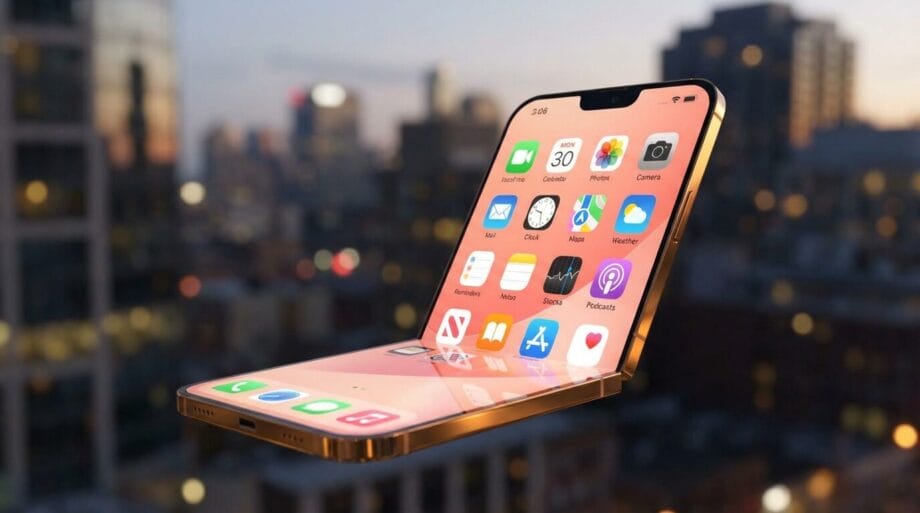
The iPhone Fold unveils a passport-style form factor, presenting a compact device that unfurls to reveal an expansive display.
When secured, it mimics a sleek, pocket-sized smartphone, but upon opening transforms into a substantial 7.8-inch screen, delivering a tablet-like experience.
This design prioritizes expansive usability over the traditional focus on one-handed operation, indicating a shift from Apple’s longstanding emphasis on ergonomic convenience.
With a mere 4.5 mm thickness when unfolded, this device underscores Apple’s resolve to deliver elegant and light designs that harmonize portability with functionality.
This innovative format may attract users in search of a multifunctional device that straddles the divide between smartphones and tablets.
Nonetheless, the compromise on one-handed operability could incite concerns among those who have grown accustomed to the conventional iPhone design.
The Surprising Absence of MagSafe
A particularly unexpected aspect revealed by the leaked dummy units is the exclusion of MagSafe functionality.
The device does away with the magnetic ring that enables MagSafe charging and the attachment of accessories—features that Apple has ardently championed in recent times.
Although wireless charging may still be a component, the lack of magnetic accessory compatibility raises inquiries regarding Apple’s current design priorities.
This omission might be linked to the necessity of minimizing weight or upholding the device’s ultra-slim profile. Alternatively, it may signify a tactical choice to distinguish the iPhone Fold from the broader iPhone collection.
Regardless of the underlying reasoning, the absence of MagSafe marks a significant pivot that could adversely affect users deeply integrated into the ecosystem of MagSafe-compatible accessories.
Reimagined Button Configuration and Touch ID Integration
The iPhone Fold unveils a reconfigured button layout, setting it apart from traditional iPhone iterations.
Notably, the action button—a recent addition to Apple’s product line—is conspicuously absent. Instead, the volume controls have been repositioned to the upper edge, likely enhancing usability in landscape mode, anticipated to be a primary orientation for this device.
This adjustment denotes Apple’s commitment to optimizing the device for its foldable architecture and expansive display.
Moreover, the power button has been relocated to the side and is now equipped with a Touch ID sensor, replacing the Face ID system featured in current models.
This transition to Touch ID may serve to mitigate challenges posed by the foldable display, such as obstacles encountered with Face ID when the device is partly folded or lying flat.
By embedding Touch ID into the power button, Apple aims to furnish a streamlined and pragmatic solution that aligns seamlessly with the iPhone Fold’s unique design.
Redefining Design Principles
The exclusion of MagSafe and Face ID, in conjunction with the passport-style configuration, signifies a profound reevaluation of Apple’s design priorities for its inaugural foldable device.
The focus on slenderness, portability, and enhanced usability underscores Apple’s commitment to innovation and user experience over maintaining continuity with its existing iPhone lineage.
These modifications illuminate Apple’s readiness to embrace risks and explore novel prospects within the foldable smartphone arena.
Nonetheless, these design decisions compel reflection on how users will react to the absence of well-known features. Will the pioneering form factor and foldable functionality outbalance the loss of MagSafe and Face ID?
Alternatively, might these omissions alienate devoted Apple users who cherish feature consistency? The resolution to these inquiries will significantly influence the reception of the iPhone Fold.
Speculated Specifications for the iPhone Ultra Fold
| Feature | Specifications |
| Main Display (Inner) | ~7.8-inch Foldable OLED (4:3 aspect ratio, 2,713 x 1,920) |
| Cover Display (Outer) | ~5.5-inch OLED (2,088 x 1,422) |
| Processor | A20 Chip (fabricated on TSMC 2nm process) |
| RAM | 12GB (integrated via Wafer-Level Multi-Chip Module) |
| Storage | 256GB, 512GB, 1TB |
| Rear Cameras | Dual 48MP System (Wide and Ultra-Wide) |
| Front Cameras | 24MP Under-display (Inner) & Punch-hole (Outer) |
| Battery | 5,000 mAh to 5,500 mAh (Apple’s largest iPhone battery) |
| Build Material | Titanium and Aluminum frame with a liquid metal hinge |
| Biometrics | Touch ID (integrated into the power button) |
| Connectivity | Apple-designed C2 Modem (5G, Wi-Fi 7) |
| Thickness | ~4.5mm (Unfolded) / ~9.5mm (Folded) |
Implications for Apple’s Foldable Endeavors
The iPhone Fold signifies a daring foray into the foldable market for Apple, indicating a proclivity to challenge established norms and redefine its aesthetic approach to smartphone design.
By forgoing MagSafe and Face ID, Apple appears to be prioritizing innovation and practicality over retaining familiar attributes.
Such choices may provoke discourse among users, yet they concurrently underscore Apple’s commitment to pushing the boundaries of possibility.
As Apple embarks on its journey into the foldable age, several pivotal questions arise:
- Will the absence of MagSafe and Face ID diminish the device’s allure for loyal Apple aficionados?
- Can the passport-style design and foldable capacity offset the absence of these well-recognized features?
- How will Apple navigate the tension between innovation and consumer expectations in its forthcoming devices?
The success of the iPhone Fold will hinge upon its resonance with users and whether its avant-garde design principles align with their needs and inclinations.
As the foldable market evolves, Apple’s trajectory within this nascent category is poised to impact its future endeavors profoundly. The iPhone Fold represents not merely a product but a declaration of Apple’s vision for the future of mobile technology.
Source link: Geeky-gadgets.com.