Introduction
Last year, we proclaimed that the iPhone 17 Pro Max, along with the iPhone Air, which debuted at the time, epitomized Apple’s “best upgrade cycle.” However, it may be time to reevaluate that declaration.
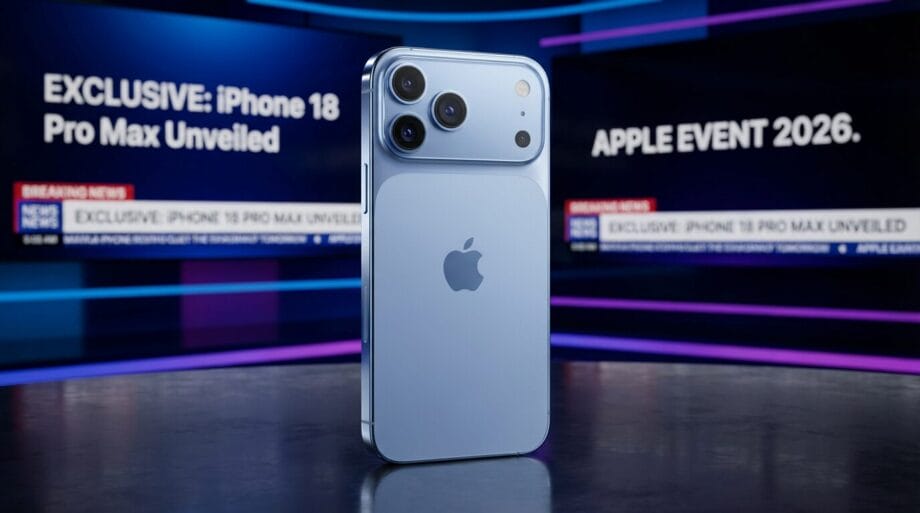
Recently, Apple unveiled the iPhone 18 Pro Max, showcasing enhanced processing power and captivating advancements in its camera technologies.
This release marks the company’s inaugural flagship under the stewardship of new CEO John Ternus. Not to be overlooked, the iPhone 18 Pro also joins the lineup.
A brief note: for our purposes, “18 Pros” will refer collectively to both the 18 Pro and 18 Pro Max. Let’s dive in.
Design: Common Sense
Externally, the 6.9-inch (17.5mm) iPhone 18 Pro Max closely resembles its predecessor, even maintaining similar dimensions.
However, this iteration is noticeably heavier, tipping the scales at 249 grams, an increase of 16 grams that becomes apparent upon first handling.
We tested a case designed for the 17 Pro Max on the new model, and to our surprise, it fit commendably well.
This is somewhat unexpected, as Apple historically adjusts subtle features in new iPhone iterations, often compelling users to purchase new cases.
While 16 Pro cases can accommodate 17 Pros, the fit is not as seamless as it is with the current models.
Continuing with the exterior, the color contrast on the 18 Pro Max’s finishes has been eliminated, resulting in a more uniform appearance.
The camera protrusions have increased marginally—by about 0.5mm—thus necessitating caution when using a 17 Pro case, as it may cause the lenses to protrude slightly. When selecting cases, ensure they are clearly labeled for compatibility with 18 Pros.
All buttons—including the action button and camera controls—remain in their expected positions. The 18 Pros are available in four distinct hues: a profound black, the classic silver, an icy glacier, and our favorite for this generation, burgundy—a shade made all the more special as it reflects the wedding motif of my wife and me.
This color contrasts nicely with last year’s vibrant cosmic orange. However, the burgundy appears darker than the promotional representations might suggest, which could be improved.
Apple has retained its robust build, utilizing an aluminum unibody design complemented by a Ceramic Shield for enhanced protection.
The company asserts that this material boasts three times the scratch resistance of the 16 Pro models (no data on the 17 Pros). Notably, it appears easier to eliminate fingerprint marks from the 18 Pro Max’s surface.
The Dynamic Island feature at the top is now approximately one-third smaller than its predecessors, thereby affording users slightly more digital real estate. Notably, it now supports two simultaneous live activities—one on either side—contrasting with the previous limitation of only a single activity.
Performance
At the core of the 18 Pro Max lies Apple’s newly released A20 Pro chip, employing cutting-edge nanometre technology to integrate additional components.
The company claims that, in comparison to the 17 Pro Max, the A20 Pro can accelerate CPU performance by up to 20 percent and graphics by up to 40 percent.
This advancement indeed renders the device noticeably more responsive. Long-time iPhone users will likely perceive that the 18 Pro Max exhibits a tangible increase in speed over its predecessor.
We placed it alongside a 17 Pro Max and engaged in various swipes and taps to validate this performance boost, ensuring our observations were accurate.
Additionally, Apple has relocated the vapour chamber to the center of the device, facilitating a more uniform heat distribution.
Other than a brief heating spike upon initial startup, the 18 Pro Max maintained a stable temperature. For instance, while we utilized it under the blazing sun for approximately thirty minutes to watch a YouTube video, the device remained cooler than anticipated, never raising a temperature warning.
Moreover, Geekbench testing has indicated that the A20 Pro chip significantly outperforms Intel’s i9 and AMD’s Ryzen 9 processors by as much as 32 percent.
Could this suggest future utilization of A chips in Macs? As one industry colleague put it, that would indeed render a full-circle moment, considering that M chips drew inspiration from A-series technology.
Camera
This year’s flagship iPhone aims to captivate its audience through its camera system. Featuring a triple-lens system, each boasting 48MP, substantial computational enhancements have been enabled by the A20 Pro chip.
The camera app on the 18 Pro Max now permits interface customization, allowing users to select their preferred functions.
By tapping the six-dot icon located in the lower-right corner, users can choose from a selection of options—up to seven—which can then be made conveniently accessible on the interface.
As a casual photographer, I opted for familiar staples such as night mode, a timer, various styles, and Centre Stage, a feature that automatically resizes the display to encompass all subjects within the frame.
For those with more professional inclinations, the app offers advanced features such as shutter speed, white balance, exposure, and a histogram.
This customization enriches the user experience, saving valuable navigation time and allowing swift access to frequently utilized functions.
What may prove most beneficial for users is the 18 Pro Max’s primary upgrade: its variable aperture. Aperture, quantified in f-stops, dictates the amount of light entering the camera sensor; the lower the f-stop number, the more light that penetrates. Four f-stop settings are available—f/1.48, f/1.8, f/2.8, and f/4.0.
This is a mechanical variable aperture system, which implies it operates independently of software, ideally providing more accurate photographic results.
However, it should be noted that this feature is not entirely novel: Samsung incorporated variable aperture in its Galaxy S9 and S10 models, providing f/1.5 and f/2.4 settings, while Xiaomi introduced similar technology in its 13 Ultra and 14 Ultra, although they have since shifted focus towards computational enhancements.
From our perspective, the variable aperture is highly intuitive. To keep it simple: for enhanced subject blurring—especially in portrait shots and close-ups—lower f-stop values are advantageous, while utilizing f/4.0 typically ensures crispness across the entirety of the image.
This mechanical apparatus also delivers superior cutouts between subjects and blurred backgrounds.
Nevertheless, the variable aperture feature isn’t universally applicable. For example, in macro photography, the app automatically defaults to f/2.2 when it detects such conditions.
Interestingly, both the variable aperture and customizable function access are also applicable in video mode.
Battery
The 18 Pro Max boasts a remarkable battery life, reportedly supporting up to 45 hours of video playback—six hours more than its predecessor, positioning it as the best in its category.
In practical testing, we observed that a full charge in the morning allowed for continued usage well into the following afternoon—potentially extending into the early evening had we not engaged in prolonged gaming.
After several hours of streaming YouTube at maximum brightness, we recorded an average battery depletion of 4 percent, which aligns with the 17 Pro Max’s performance.
Apple asserts faster charging capabilities with the 18 Pro Max. A 60W power brick can elevate the battery to 50 percent within a mere 15 minutes, a notable improvement compared to 20 minutes on the 17 Pro Max.
Our trials corroborated this claim, as we reached 80 percent—where charging typically slows—along with maximum battery capacity in a significantly reduced duration.
Pricing
Apple’s iPhone prices have undeniably increased—a fact that cannot be glossed over.
The iPhone 17 Pro Max was priced at Dh5,099 (256GB), Dh5,949 (512GB), Dh6,799 (1TB), and Dh8,499 (2TB).
Conversely, the 18 Pro Max is tagged at Dh5,499, Dh6,349, Dh8,049, and an unprecedented Dh10,599 for the 2TB variant—the first iPhone to exceed the Dh10,000 threshold.
This reality must be acknowledged. Rising chip prices (thanks largely to AI) and persistent supply chain uncertainties have compelled even industry titans like Apple—and even Samsung, which implemented price increases on certain Macs and iPads in June—to adjust their pricing strategies.
There’s no shame in recognizing this fact, particularly in the current landscape; it reflects a new economic reality.
Verdict
Indeed, we may need to retract our previous statements; the iPhone 18 Pro Max constitutes a more compelling upgrade. We are quite pleased with its enhanced camera functionalities, battery longevity, and overall build quality.
Nevertheless, the primary deterrent for prospective buyers may be the elevated price point. Over recent years, Apple has strived to maintain stable pricing for its iPhones, yet it seems they, much like the broader market, have been left with limited options.
Still, we believe the company will thrive. Consider this: despite increased pricing, Samsung achieved record orders for its latest Galaxy Z foldables, indicating robust brand loyalty and marketing prowess, notwithstanding headlines. Accordingly, we anticipate that Apple enthusiasts will remain loyal.
Ultimately, the more pressing inquiry may be: will you opt for a solo (screen) experience now, or will you await the Duo in the future?
Source link: Thenationalnews.com.