Quick Summary
Hyva Theme is a modern, high-performance frontend for Magento 2 that replaces outdated Luma and Blank themes with a lightweight, streamlined stack using Tailwind CSS and Alpine.js. It dramatically improves site speed, Core Web Vitals, mobile experience, and SEO performance – leading to lower bounce rates and higher conversions.
By eliminating legacy dependencies like jQuery and Knockout.js, Hyva reduces development complexity and costs while delivering near-perfect PageSpeed scores. With a mature ecosystem, 1,200+ compatible extensions, and strong support for B2B features, Hyva has become the go-to solution in 2026 for businesses seeking faster, scalable, and conversion-focused Magento storefronts.
Introduction
If you’ve been running your digital store using Magento for a while, you’ve probably noticed that keeping the frontend in good shape takes more effort than it should. Pages load slowly, mobile users don’t convert as well as desktop users do, and every time you want to make a change to the storefront, it takes longer and costs more than expected.
To mitigate this challenge, the Hyva theme was built for businesses using Magento. By stripping away thousands of lines of redundant code and replacing them with a modern, lightning-fast framework, Hyva transforms sluggish sites into high-velocity sales engines, reducing bounce rates, boosting your SEO rankings, and making your storefront as agile as your business needs to be.
What is the Hyva Theme?
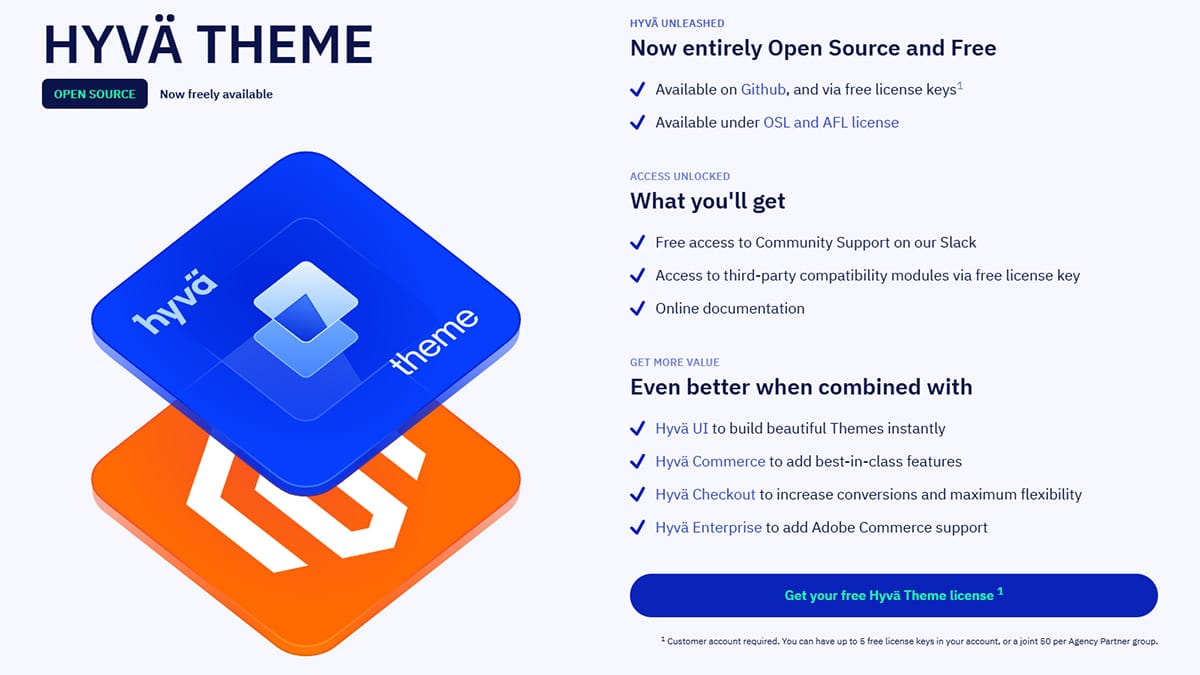
Hyva is the modern frontend standard for Magento 2, engineered to eliminate the performance bottlenecks of Magento’s legacy themes, Luma and Blank. While Luma was once a functional baseline, its reliance on outdated technologies like Knockout.js and RequireJS slowed down browsers and complicated development.
By 2026, Hyva will have replaced Luma and Blank with a more streamlined stack – Tailwind CSS for rapid styling and Alpine.js for lightweight interactivity. This shift doesn’t just make the site feel faster; it delivers near-perfect Google Core Web Vitals scores out of the box.
The ecosystem has matured significantly since its debut. As of January 2026, Hyva powers almost 6400 live websites. Hyva has solidified its position as the engine driving the next generation of high-conversion Magento storefronts.
What Hyva does well
- Consistently achieves high PageSpeed scores and passes Core Web Vitals.
- Reduces JavaScript payload significantly compared to Luma.
- Delivers a smoother, faster mobile experience.
- Makes frontend development faster and less expensive over time.
- Supports a wide range of Magento features out of the box.
- Backed by an active, growing developer community.
- Has a documented track record of improving conversion rates and organic traffic.
How Hyva Works
Hyva does not patch Luma. It replaces the entire frontend while keeping Magento’s backend intact, including the module system, GraphQL/REST APIs, EAV attribute handling, and checkout pipelines.
Alpine.js for Reactive UI
By swapping the bulky Knockout.js stack for the featherweight Alpine.js (~7 KB), Hyva embeds interactivity directly in the HTML.
Instead of making the browser wait for a long chain of background files to load, Alpine.js uses declarative attributes (special HTML attributes (prefixed with x-) that tell the browser exactly what the UI should do directly within the markup) that the browser reads and executes immediately.
In a Hyva store, features like the minicart or product gallery feel instant because they are ready as soon as the page loads.
Example: A minicart component in Alpine looks like this:
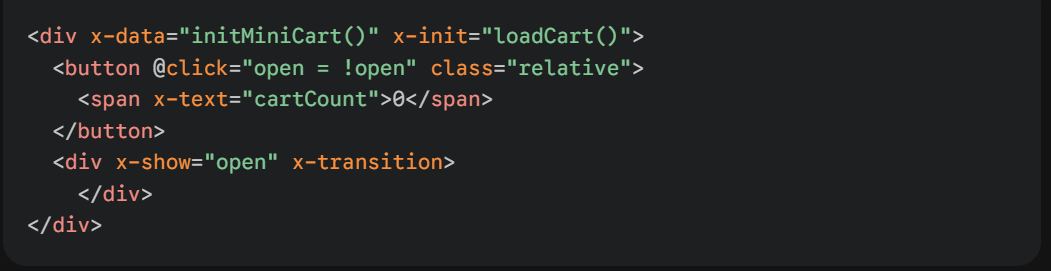
The component state lives in a plain JavaScript object that is initialized synchronously. No module graph, no deferred evaluation, no Knockout observables.
Tailwind CSS for Utility-First Styling
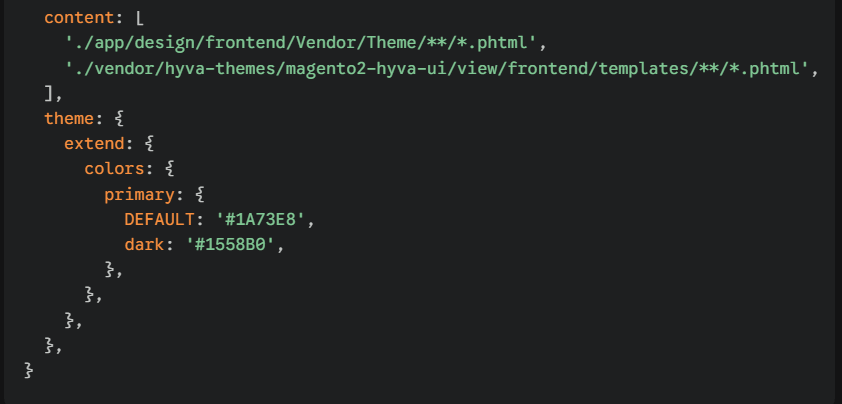
Hyva leverages Tailwind CSS to style using a utility-first approach. Instead of shipping massive, monolithic CSS files, the build process scans your .phtml templates and generates a stylesheet containing only the CSS actually used on your site. This typically results in a production stylesheet of 5–20 KB – a 95%+ reduction compared to the Luma theme.
A Zero-Legacy Critical Path
On CMS, Category, and Product pages, Hyva ships zero legacy dependencies. There is no RequireJS, no Knockout, and crucially for 2026, no jQuery in the critical path. While older builds fell back to Luma for the checkout, modern 2026 implementations utilize the Hyva Checkout (Magewire/React) to ensure a lightweight, sub-second experience from the first click to the final purchase.
Together, these changes significantly reduce page weight, speed up load times, and make the codebase much cleaner and easier to work with. Hyva has been verified to achieve a 100/100 score on Google PageSpeed Insights and to pass all Core Web Vitals metrics.
Hire Magento developers who can help you work with Hyva, so that you don’t have to compromise and stay on Luma and continuously deal with slower page speeds.
Core Web Vitals: What the Numbers Look Like
The practical impact of swapping the Magento stack is evident in Core Web Vitals. In 2026, meeting these metrics is crucial for your website if you want to increase organic traffic.
Largest Contentful Paint (LCP)
The time taken for the largest element on your web page (usually a hero banner) to render is measured by LCP. By removing the JavaScript waterfall, Hyva allows the hero image to load almost immediately after the HTML is parsed. With fetchpriority=”high” and Alpine’s minimal footprint, LCP values of 1.2-1.8 seconds are the norm, compared to 4.5+ seconds on unoptimized Luma sites.
Interaction to Next Paint (INP)
INP replaced First Input Delay (FID) as a core metric in 2022, and the change took effect in March 2024. INP measures the latency of all user interactions (clicks, taps, and keyboard inputs). Interactions that took 300ms+ on Luma consistently dropped to under 50ms on Hyva, providing instant, faster responsiveness.
Cumulative Layout Shift (CLS)
CLS measures visual stability, whether elements on your web page remain stable while the page loads. While CLS is mostly about developer discipline (setting fixed image dimensions), Hyva’s simpler template structure makes this easier to manage. Because Hyva doesn’t rely on JavaScript to build the layout, the page is visually stable from the very first frame.
What Hyva Covers
A common early concern was whether Hyva could keep up with Adobe Commerce’s massive feature set. As of Version 1.4+, Hyva has moved beyond a theme into a comprehensive ecosystem. The Hyva Enterprise package now provides full compatibility with high-end B2B and enterprise-grade tools.
Core Commerce & B2B Functionality
- Total Product Support: Native, high-performance handling of all six Magento product types (Simple, Configurable, Bundle, Grouped, Virtual, and Downloadable).
- Adobe B2B Suite: Complete storefront logic for Shared Catalogs, Negotiated Quotes, and Requisition Lists. These complex B2B workflows are often the hardest to optimize, but Hyva renders them with the same sub-second speed as a standard B2C page.
- Advanced Merchandising: Deep integration with Adobe Sensei AI for product recommendations and Live Search, ensuring that smart features don’t come at the cost of “fast” performance.
Modern Web Standards & Content Control
- Seamless PageBuilder Support: Hyva includes a dedicated compatibility module for Magento PageBuilder. This allows marketing teams to use drag-and-drop tools to build complex layouts while the frontend automatically translates those elements into optimized Tailwind CSS classes.
- SEO & Tracking Native: In 2026, Core Web Vitals are crucial for websites looking to enhance their SEO practices. Hyva provides built-in support for Google Tag Manager (GTM), ReCAPTCHA v3, and advanced Schema.org structured data, ensuring your store is indexed by search engines.
- Privacy First: Integrated, customizable cookie compliance and GDPR-ready newsletter management are standard, removing the need for third-party extensions.
It is important to note that while the Hyva Theme core is now Open Source, access to Adobe Commerce-specific features (such as B2B and Sensei) requires the Hyva Enterprise license. This ensures you have the officially maintained compatibility modules that bridge the gap between Magento’s complex backend logic and the lightweight Hyva frontend.

Time and Cost Required to Install Hyva
| Component | Typical Range |
| Hyva Theme Core | FREE ($0) |
| Hyva UI Library | €250 (~$270) |
| Hyva Enterprise | €2,500/year |
| Hyva Checkout | €1,000 (~$1,080) |
| Premium Template | Varies from template to template |
| Agency timeline: full build | 2–4 months (approx.) |
| Agency timeline: template-based | 4–8 weeks (approx.) |
You can partially migrate if you have a budget or time constraint and can apply Hyva to your highest-traffic pages, product pages, category pages, and landing pages, while keeping the standard checkout in place. This delivers most of the performance benefit without the full project scope in a single phase.
Extension Compatibility
When Hyva first launched, extension compatibility was a genuine concern. Because Hyva replaces the entire frontend, every third-party module that relies on the old Luma logic (Knockout/jQuery) requires a compatibility bridge. In the previous days, this meant extra development time for almost every site.
However, this has changed significantly in 2026:
- 1,200+ Compatible Extensions: The ecosystem has reached over 1,200 officially compatible modules.
- The Compatibility Tracker: The Hyva Compatibility Module Tracker is now the most active repository in the Magento community. It provides a transparent view of which modules are “Ready,” “In Progress,” or “Requested.”
- Native Vendor Support: In 2026, most top-tier extension vendors will build Hyva compatibility directly into their main modules. You no longer have to search for a separate bridge; it often works out of the box.
Who Should Consider Migrating
Hyva is the best option for any merchant who views their website as a revenue engine rather than a static catalog.
- Growth-Focused Brands: If you are investing heavily in Google Ads (PPC) or organic SEO, Hyva is essential. In 2026, Google’s ranking algorithms will penalize sites that don’t have faster load times. Hyva ensures your ad spend isn’t wasted on a high bounce rate caused by 3-second load times.
- Mobile-First Retailers: If more than 60% of your traffic comes from smartphones, but your conversion rate is half that of desktop, you have a Performance Gap. Hyva’s ultra-lightweight mobile delivery closes this gap by making mobile shopping feel like a native app.
- Agile Marketing Teams: For brands that need to launch weekly campaigns or seasonal landing pages, Hyva + PageBuilder is a game-changer. It allows non-technical teams to build high-performance pages without waiting for a developer to fix CSS bloat.
Conclusion

By 2026, the performance gap between legacy Luma stores and Hyva-powered storefronts will have become a chasm. In an era where Google’s AI-driven search and mobile-first shoppers demand instant service, a slow-loading website is not advisable.
Migrating to Hyva is more than just a speed upgrade. Previously, the budget you used to maintain complex legacy code can now be used to accelerate business growth, enhance the user experience, and invest in tools that help you convert leads into loyal customers.
With an open-source core and an ecosystem of over 1,200 compatible extensions, Magento is now more accessible and faster. Both new and existing business users can now use Magento easily, without migrating their digital storefronts to other platforms.
Frequently Asked Questions (FAQs)

1. Do I lose my existing Magento backend features if I switch to Hyva?
No, Hyva only replaces the frontend; your products, orders, customers, and backend logic remain completely untouched.
2. Is the Hyva Theme really free in 2026?
Yes, the core theme is Open Source (Free), though it is advisable that you use the entire Hyva UI Library (€250) to enhance design and speed up development.
3. Can I keep my current checkout while using Hyva for the rest of the site?
Yes, you can keep your current checkout and use a hybrid approach by running the rest of the store on Hyva.
4. How does Hyva impact my Google Search rankings?
It directly improves your Core Web Vitals, which are important factors to gain better organic visibility and lower PPC costs.


