Quick Summary
AI video generation is now essential for enterprises, but choosing the right model means balancing speed, quality, and cost. LTX-2 and Wan 2.5 lead on affordability and speed, making them ideal for fast, scalable production. Sora 2 and Veo 3.1 deliver best-in-class cinematic realism but come with high costs and slower speeds. Ray 3 and Kling 2.5 sit in the middle, offering solid quality at moderate pricing. The best choice depends on whether your priority is budget efficiency, rapid iteration, or premium visual realism.
Introduction
Fast, high-quality video content is becoming table stakes for enterprises, and the right AI generative video model can be crucial to achieving it. With so many video AI models on the market, all promising excellent video output, it can be hard to choose.
This article compares six leading video AI models to help you choose the best for your company.
What You Will Learn
- AI-generated video helps enterprises produce video content.
- High-quality AI video often comes at the cost of price and speed.
- LTX-2 and Wan 2.5 deliver the highest speeds at the lowest costs.
- Sora 2 and Veo 3.1 provide high-quality video but at high costs and low speeds.
- Ray 3 and Kling 2.5 occupy the middle ground.
High-quality video is vital for business success. It’s one of the most effective marketing content types, with 82% of consumers saying that watching a video influenced their purchase decisions, and visitors spending 88% more time on sites with video content.
But as video becomes ubiquitous, enterprises need to produce it faster while meeting high standards. Budget is an important consideration, so content teams are struggling to balance competing concerns of speed, quality, and cost. This is where it becomes critical to choose the right AI video model.
A number of companies have recently released impressive AI video models, and it’s not easy to differentiate between them. This article will examine six outstanding models, with particular focus on speed, price, and quality, to help you compare the options and choose what’s best for your enterprise.
1. Veo 3.1
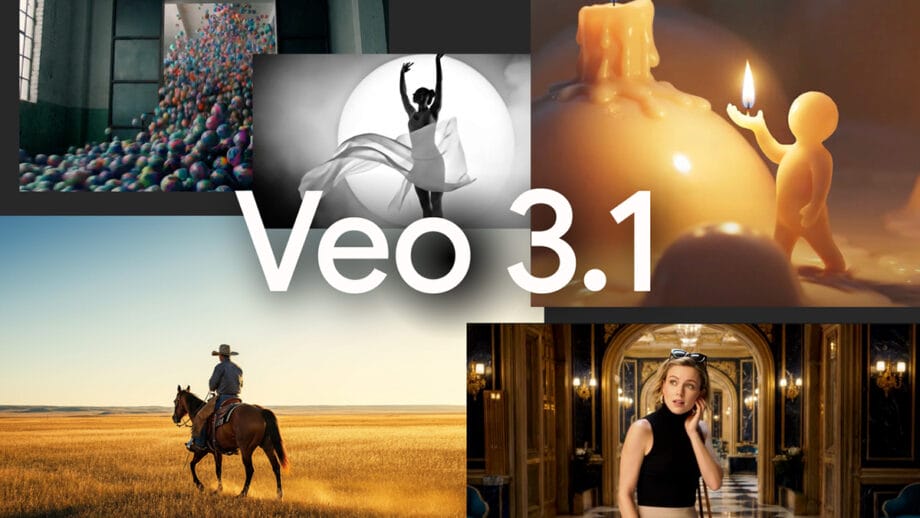
Google’s Veo 3.1 model delivers excellent short-form cinematic realism, with strong physics accuracy and tightly synchronized audio. It excels in visual quality and realism, but it’s not so practical for iterative or cost-sensitive workflows.
Veo 3.1 is computationally heavy and limited to short clip lengths. There’s no public consumer pricing available, but it’s positioned as a premium offering, so costs are high.
Key Capabilities
- Closed, proprietary high-end video generation model.
- Short cinematic clips (~8 seconds) at 720p–1080p.
- Native synchronized audio generation for dialogue, ambience, and sound effects.
- Excellent prompt adherence across cinematic styles.
- Relatively slow inference, optimized for quality rather than speed.
Pricing
- No public consumer pricing.
- Pricing is usage-based and high relative to clip length and speed.
2. LTX-2
LTX-2 from Lightricks is an open-source model that stands out for speed and cost efficiency, delivering high-quality cinematic video and synchronized audio at a fraction of the cost of competitors. Its 4K/50FPS output, rapid inference, and open-source design make it ideal for iteration, experimentation, integration, and scaled production.
Video quality can lag in comparison with closed models like Sora 2 or Kling 2.5. However, the difference is negligible for most enterprise use cases.
Key Capabilities
- Up to 4K resolution at 50 FPS.
- Continuous clips up to ~20 seconds.
- Native, perfectly synchronized dialogue, music, ambience, and SFX.
- Strong creative control via multi-keyframe conditioning and explicit camera logic.
- Supports LoRA fine-tuning.
Pricing
- ~$0.04-$0.06 per second.
- Free trial: ~800 credits.
- Can run locally on consumer GPUs for further cost reduction.
3. Kling 2.5
Kling 2.5 is a closed model that delivers solid quality cinematic video, especially when it comes to physics-driven motion or dynamic camera movement, at a reasonable price.
That said, Kling 2.5 falls down when it comes to camera control, plus the model is significantly slower than open-source models. The 2.5 Turbo model does speed things up, but at the cost of consistency.
Key Capabilities
- Closed, proprietary video generation model.
- Supports text-to-video and image-to-video generation.
- Outputs up to 1080p at cinematic frame rates (~24–30 FPS).
- Optimized for action, movement-heavy scenes.
- Moderate inference speed.
Pricing
- No standalone model pricing.
- Mid-to-high cost relative to open models; cheaper than Sora-class models.
4. Sora 2

OpenAI’s Sora 2 model is one of the best for visual realism and physical accuracy. If you have the time and budget and you’re looking for the highest quality video generator, this is probably it.
However, Sora 2 is also renowned for its slow speeds and high costs. It’s best suited for premium, realism-first use cases rather than fast iteration or cost-sensitive production.
Key Capabilities
- Closed, proprietary multimodal video generation model.
- Outputs up to 4K at ~24–30 FPS.
- Supports long continuous generations approaching ~60 seconds.
- Native synchronized audio for dialogue, ambience, and sound effects.
- Slow, compute-heavy inference optimized for quality.
Pricing
- No public standalone model pricing.
- The estimated effective cost is around ~$4 per second.
5. Ray 3
Luma AI’s Ray 3 is a strong contender for the middle ground. It’s fast and efficient, producing cinematic short clips with strong camera motion and good realism, and the cost is mid-range for a closed model.
However, Ray 3’s realism, physics accuracy, and emotional nuance don’t match top-tier models, and the clip duration is very short. It’s a practical choice for rapid ideation, but less so when realism is important.
Key Capabilities
- Supports text-to-video and image-to-video generation.
- Outputs up to 1080p at ~24–30 FPS.
- Optimized for short, high-quality clips of ~5–10 seconds.
- Strong camera motion and spatial coherence.
- Fast inference relative to large foundation models.
Pricing
- No standalone model pricing.
- Generally mid-priced among closed short-form models.
6. Wan 2.5
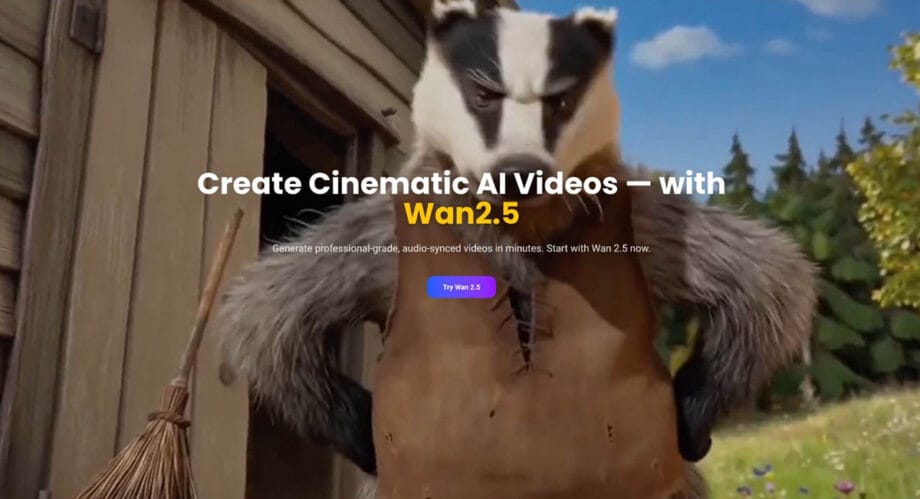
Alibaba’s Wan 2.5 video generation model ranks highly for efficiency and affordability. It brings 1080p video, native audio generation, and strong prompt adherence, raising the bar from earlier models.
That said, visual quality can be lacking. Its motion realism, physics accuracy, and emotional detail lag behind the best video models. Its main advantage is cost and accessibility rather than cinematic quality.
Key Capabilities
- Supports text-to-video and image-to-video generation.
- Outputs up to 1080p at ~24 FPS.
- Generates native synchronized audio for dialogue, ambience, and music.
- Typical clip length is around ~10 seconds.
- Designed for efficient inference on accessible hardware.
Pricing
- Varies by provider, averaging around $0.25 – $1.50 per generation.
- Lower cost per clip than high-end competitors.
Video AI Models Overview
With many good options on the market, enterprises seeking out a GenAI video model are spoilt for choice. Even the lower-quality video produced by these models meets most marketing and enterprise needs. Ultimately, choosing the best AI video generator model comes down to what matters most: budget, realism, or speed.
| Model | Speed (Inference) | Cost | Video Quality |
| LTX-2 | Very Fast | Very Low | High |
| Ray 3 | Fast | Medium | Medium–High |
| Wan 2.5 | Fast | Low | Medium |
| Kling 2.5 | Medium | Medium–High | High |
| Veo 3.1 | Slow | High | Very High |
| Sora 2 | Very Slow | Very High | Best-in-Class |
FAQs

Which AI video model offers the best quality-to-cost ratio for professional creators?
LTX-2 is probably the model that offers the best quality-to-cost ratio. Although Sora 2 and Veo 3.1 can deliver higher quality, they also both cost significantly more. LTX-2 supports fast iteration and convincing, engaging video on a reasonable budget.
Which model is best for high-end cinematic realism versus fast, affordable production?
For maximum cinematic realism and physics accuracy, Sora 2 and Veo 3.1 lead the field. For fast, affordable, and iterative production, LTX-2 and Wan 2.5 are significantly more practical.
Which AI video model is most suitable for long-form or narrative video projects?
Sora 2 is best suited for long continuous shots, thanks to its superior temporal coherence and realism over extended durations. LTX-2 also works well for narrative projects built from shorter, controlled segments.
Which models support native audio generation, and how important is that for production workflows?
LTX-2, Wan 2.5, Veo 3.1, and Sora 2 all generate audio natively alongside video. Native audio reduces post-production work and ensures tighter synchronization, which is especially valuable for dialogue-driven or cinematic scenes.
Which AI video models are open-source or allow self-hosting to reduce long-term costs?
LTX-2 and Wan 2.5 are both open-source models that allow self-hosting.


