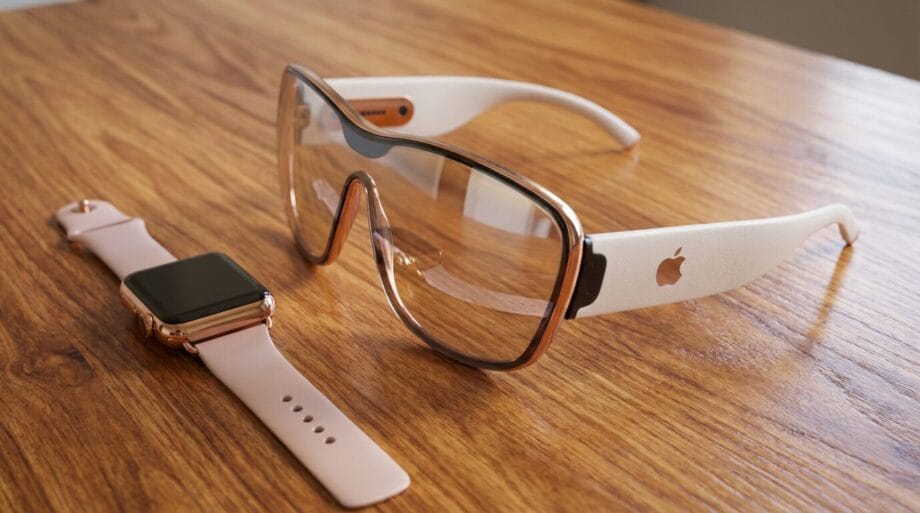
According to a recent report, Apple is on the brink of unveiling smart glasses that will leverage Siri’s artificial intelligence capabilities to navigate applications on an accompanying iPhone. However, software development delays may jeopardize the anticipated launch timeline set for 2027.
Mark Gurman of Bloomberg disclosed on November 15, 2023, that despite the prevailing challenges, Apple is still targeting a demonstration at its developers’ conference slated for June, with the intent to commence shipments by year’s end.
It is worth noting that these benchmarks are internal objectives, rather than confirmed timelines for consumers. Gurman indicated that while the hardware component is largely finalized, the software aspect remains a work in progress.
iPhone applications would manage functionalities
The envisioned eyewear will not require distinct versions of each service. Instead, software developers will facilitate accessibility to existing iPhone applications via Siri, allowing the smartphone to handle the applications while providing an alternative interface for user interaction through the glasses.
Potential applications being contemplated include hailing a car, reserving a table at a restaurant, and ordering a coffee. The implementation of such features will hinge on the respective services integrating support for them.
It is important to clarify that this report does not imply that all commonly used iPhone applications will be operational through the glasses at launch.
Apple’s developer preview for Siri enhancements in iOS 27.3 is designed to give developers ample time to prepare for the projected hardware rollout.
This approach aims to extend the functionalities already developed for the iPhone to the new accessory, negating the need for developers to initiate their work anew for an additional device.
Wi-Fi connectivity would afford limited autonomy
The first iteration, referred to internally as N50, is characterized as eyewear devoid of a display or augmented reality features within the user’s visual field. This distinction sets the product apart from the more compact version of Apple’s Vision Pro headset.
An adjacent iPhone will play a crucial role in the glasses’ functionality. Reports suggest that Wi-Fi connectivity may enable some capabilities independent of the phone, such as continuous audio playback. Nevertheless, this does not render the glasses a full substitute for the smartphone.
The Verge reported that the prototypes operate on a streamlined version of visionOS and utilize a processor derived from earlier Apple Watch models.
The report also mentioned a small magnetic charging accessory that can be employed while the user wears the frames. It is important to note that prototype features may evolve prior to the final retail product.
Software remains the pivotal concern
The proposed system places Siri’s proficiency in executing commands at the forefront of the product’s functionality.
Notifications, messaging, navigation, and music playback are among the routine capabilities detailed in reports referencing Gurman’s insights. Moreover, Visual Intelligence is anticipated to enhance Siri’s responsiveness to visual stimuli perceived through the cameras.
This enumeration reflects Apple’s proposed aspirations rather than a definitive, independently validated product.
Moreover, neither a retail price nor a release date for the Indian market has been established in these reports. Assertions concerning superior audio quality or a sleeker design should not be interpreted as rigorous comparisons with current market offerings.
The concluding analysis
Apple appears to be placing its bet on familiar iPhone applications accessed via voice commands, rather than creating a separate suite of applications specifically for the glasses.
While the June presentation and subsequent shipments remain aspirational targets, the delay in software development leaves the timing of these milestones in flux.
Source link: Businessupturn.com.