AI Ascends as the Dominant Force in E-commerce and Air Freight from Asia
The proliferation of artificial intelligence has heralded a new era in e-commerce, firmly establishing itself as the foremost catalyst for air freight originating from Asia.
This dramatic transformation is driven by burgeoning demand for semiconductors and data center equipment. Explore how this surge is redrawing the logistical landscape and influencing international trade, with significant repercussions for economies such as Taiwan.
Artificial intelligence-related products have eclipsed traditional e-commerce as the predominant force propelling trans-Pacific air freight.
Notably, semiconductors and data center apparatus now constitute a substantial portion of cargo value on Asian routes—a seismic shift that is prompting major airlines, logistics integrators, and freight forwarders to recalibrate their operational strategies.
The statistics reveal the magnitude of this transition. A comprehensive study by DHL in collaboration with NYU Business School indicated that AI-centric goods—including semiconductors and essential data center components—accounted for a staggering 42% of trade growth by value in 2024, surging to 76% in the inaugural quarter of the current year.
Furthermore, calculations from the Federal Reserve Bank of Minneapolis suggest that U.S. imports would have plummeted by 10% absent AI-related inflows.
The International Air Transport Association (IATA) disclosed that approximately 53% of the cargo value transported by its member airlines during the first half of the year was derived from AI-related products.
“AI has fundamentally usurped e-commerce as the primary engine, notably in the U.S. trans-Pacific market and even in Europe,” remarked a journalist specializing in international freight.
This transformation follows a decline in the previous cycle, which was characterized by a surge in Chinese marketplace shipments directed at consumers.
The downturn was catalyzed by the cessation of the de minimis tariff exemption that previously facilitated the entry of low-value packages without duties.
“Taiwan has outstripped the People’s Republic of China as a more significant trading partner—this is purely a value game driven by semiconductors,” asserted Eric Kulisch.
He elaborated that while container traffic from Taiwan has remained sluggish, the dollar value of imports processed through U.S. customs has surged, surpassing that of mainland China in total import value to the United States.
Logistics companies and airlines are collectively pivoting to seize favorable freight opportunities. Airlines such as EVA Air, Korean Air, and Japan Airlines are augmenting their freighter capacities with a focus on AI-related clientele, whereas FedEx and UPS are restructuring segments of their Asia-Pacific and intra-Asian networks to align with this new cargo category.
Recently, Amazon secured a partnership with Kuehne+Nagel, a leading global freight forwarder, to oversee the majority of its AI logistics requirements, particularly in support of AWS server farm development.
Concurrently, cargo security has surfaced as a pressing issue. The theft of a truckload of semiconductors in the U.S. exemplified the precariousness associated with high-value chip liquidation domestically.
Kulisch highlighted that sanctioned nations like China, Russia, Iran, and North Korea provide ready-made black-market clientele, thus rendering export theft an enticing criminal enterprise.
A separate incident involving routed F-35 components through Hong Kong, reportedly a UPS-managed shipment, has heightened congressional scrutiny regarding the logistics firms facilitating Defense Department operations and their engagement with foreign-flag carriers.
A note of caution diminishes the mounting enthusiasm surrounding AI freight in the domestic trucking and construction sectors: despite an impressive $50 billion in data center construction projected for 2024, such ventures constitute less than 2.5% of total U.S. construction activities.
The persistent weaknesses in the residential building sector, exacerbated by high interest rates, alongside a continued softening in commercial office spaces, have offset the surge in data center capacity, leaving overall construction freight demand languishing nearer to stagnation than to a robust upswing.
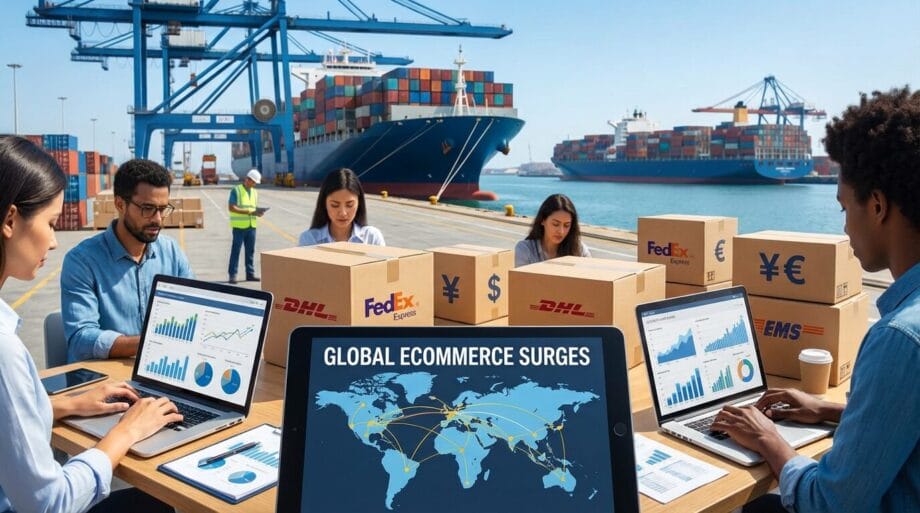
- AI-related goods accounted for 42% of trade growth by value in 2024 and 76% in Q1 2025, according to a DHL/NYU Business School study.
- IATA noted that approximately 53% of air cargo value in the first half of the year stemmed from AI-related commodities, displacing traditional e-commerce as the leading driver across trans-Pacific routes.
- Data center construction is projected to reach about $50 billion in 2024; however, it represents under 2.5% of total U.S. construction, limiting broader freight potential for domestic carriers.
Source link: Finance.yahoo.com.