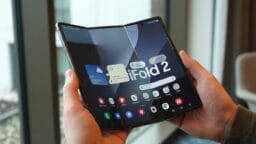
In the evolutionary landscape of mobile technology, the once ubiquitous physical SIM card is gradually being eclipsed by the innovative eSIM.
As more Android devices forgo the SIM card tray, the transition to eSIM connectivity has garnered substantial traction.
The ramifications of this shift are manifold, and discerning which option to adopt can be simplified through an understanding of their essential distinctions.
At the forefront of this transformation is a pivotal difference: traditional SIM cards necessitate the installation of a tangible component, whereas eSIMs feature embedded technology that retains your connectivity information internally.
This facilitates a seamless transition between network carriers, allowing for overwriting of credentials without the cumbersome process of replacing a physical card.
In contrast, utilizing a physical SIM mandates acquiring a replacement from the service provider upon switching networks.
The absence of a removable component not only enhances usability but also augments the security profile of your device.
With an eSIM, the risk of someone removing your SIM card and illicitly accessing your device is substantially mitigated.
Notably, this characteristic exemplifies a divergence between smartphones in Europe and those in the United States.
eSIM: A Paragon of Security
Beyond physical vulnerabilities, eSIMs present a more secure framework than their traditional counterparts.
The risks associated with physical SIM cards—such as theft, duplication, or unauthorized swapping—underscore their inadequacies.
A compromised SIM card could enable nefarious actors to hijack your phone number, potentially granting access to sensitive financial and personal data.
Switching to an eSIM diminishes these threats. Since eSIMs are tethered directly to a device’s IMEI number, any illicit transfer would be futile.
Furthermore, while older physical SIM cards might fall victim to vulnerabilities such as the notorious Simjacker attack, eSIM technology fortifies personal data against such breaches.
If you are still reliant on a physical SIM in an era where eSIM is readily accessible, the time to consider an upgrade is now.
The Convenience Factor: eSIM vs. Physical SIM
An additional advantage of eSIM is its inherent convenience. Unlike physical SIMs, which require users to handle installation and configuration, eSIMs streamline the process remarkably.
Travelers, in particular, can benefit from this technology by effortlessly downloading new carrier profiles, thus minimizing downtime. Transitioning between profiles is a mere adjustment in the phone’s settings, significantly enhancing usability.
Contemporary flagship Android models—including the Galaxy S26 Ultra and Google Pixel 10 Pro—readily support eSIM, with some manufacturers eschewing physical SIMs altogether.
For instance, Apple transitioned to eSIM exclusively for U.S. iPhone 14 models, whereas Samsung and Google retain compatibility with physical SIMs in select devices.
In conclusion, eSIM often represents the judicious choice for the discerning Android user. However, disparities in eSIM adoption may still persist in certain international markets, leading users outside the U.S. to rely on traditional SIM cards for seamless connectivity with their carriers.
Source link: Bgr.com.