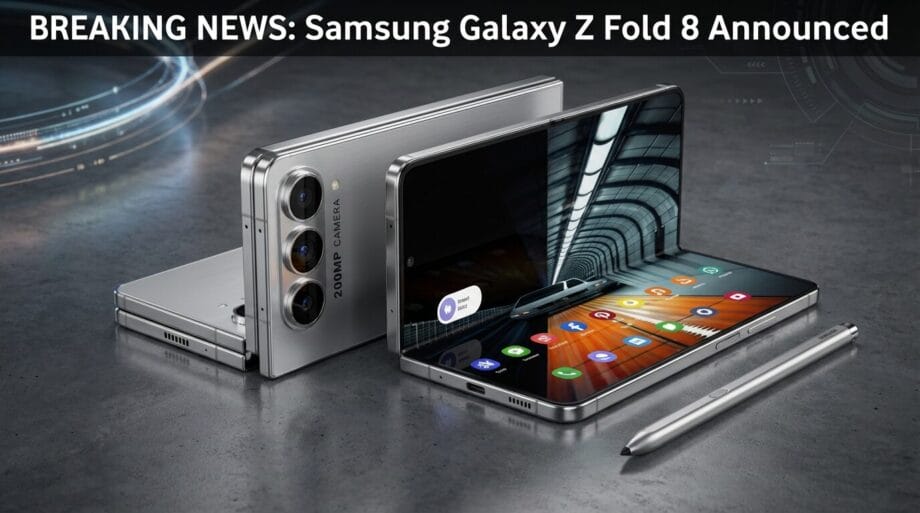
The Galaxy Z Fold 8 marks a pivotal advancement in the realm of foldable smartphones, showcasing a more sophisticated design and enhanced functionality.
Its sleek profile, featherlight construction, and superior battery longevity make the device an enticing option for discerning users prioritizing mobility and ease of use.
Nonetheless, such advancements are accompanied by certain trade-offs, notably the absence of S Pen compatibility and emerging concerns about hinge resilience.
It is imperative for potential users to assess these modifications to ascertain whether the Z Fold 8 meets their individual needs and aspirations. For deeper insights into Samsung’s latest offerings, refer to the video from Greggles TV featured below.
Design: A Refined Take on Foldable Innovation
Samsung has made significant headway in mitigating the unwieldiness often attributed to foldable devices. The Galaxy Z Fold 8 boasts a slender and lightweight profile compared to its predecessor, the Z Fold 7, providing a more user-friendly and portable experience.
– Sleek and lightweight build: This streamlined design facilitates easier handling and transport, especially for users in constant motion.
– Sculpted edges: This aesthetic upgrade not only enhances visual appeal but also provides a firmer and more comfortable grip in its folded state.
With these design enhancements, the Z Fold 8 emerges as an astute choice for those prioritizing portability whilst retaining essential functionality. Its refined silhouette sets a fresh benchmark for foldable smartphones in the current market.
Performance and Battery Life: A Subtle Equilibrium
Equipped with a robust 5,000mAh battery, the Galaxy Z Fold 8 adeptly caters to the power requirements of multitasking and demanding applications.
This enhancement is notably advantageous for users relying on their devices for protracted durations. However, it is crucial to scrutinize the implications of performance alterations.
– Augmented battery capacity: An enlarged battery yields extended usage intervals, rendering the Z Fold 8 more dependable for power-intensive users.
– Processor modifications: In a bid to achieve a more compact design, Samsung has decreased the core count from eight to seven. While this modification assists in effective thermal regulation within a restricted framework, it may impede performance during resource-hungry tasks like gaming or video rendering.
– Thermal management considerations: Striking a balance between sleek aesthetics and optimal performance may not fully satiate users engaged in heavy-duty tasks.
For the majority of users, the benefits of enhanced battery life are likely to overshadow any minor performance drawbacks. However, individuals frequently engaged in resource-intensive endeavors may discern variations in processing prowess.
Hinge Durability: Flexibility Coupled with Ambiguity
The hinge mechanism stands as a fundamental pillar in the architecture of foldable smartphones. The Z Fold 8 features a reengineered hinge that aims to augment flexibility and overall usability.
Although the fresh design promises a smoother folding experience, apprehensions regarding its longevity have surfaced.
– Refined folding mechanism: The new hinge design ensures a more fluid folding and unfolding process, enhancing the overall user journey.
– Durability apprehensions: Initial observations allege that the hinge might unintentionally open at angles below 90°, potentially complicating usability in specific contexts. Over time, repetitive folding may exacerbate these issues, presenting concerns about the device’s long-term viability.
If you routinely utilize the foldable aspect, the hinge’s durability is a vital consideration. While improved adaptability is commendable, the possibility of wear and tear could sway your decision-making.
S Pen Exclusion: An Unfulfilled Promise
One of the more unexpected revelations regarding the Galaxy Z Fold 8 is its lack of S Pen support, a feature eagerly anticipated by many users. This shortfall diminishes the phone’s attractiveness for those with productivity-oriented or creative inclinations.
– Constrained productivity capabilities: In the absence of S Pen compatibility, tasks such as note-taking, sketching, and document annotation become less effective, thus limiting the device’s utility in professional settings.
– Creative restrictions: The omission of S Pen functionality also curtails the options available for users reliant on stylus technology for artistic or design tasks, making the Z Fold 8 less adaptable in comparison to devices like the Galaxy S23 Ultra.
For users who value the precision and utility of the S Pen, this exclusion could represent a substantial drawback, particularly when productivity or creativity is paramount.
Speculated Samsung Galaxy Z Fold 8 Specifications
| Feature / Hardware | Anticipated Specification (Standard Variant Only) |
| Main Display (Inner) | 8.0-inch Foldable LTPO Dynamic AMOLED 2X, 120Hz refresh rate, Dual-layer UTG (Ultra-Thin Glass) for improved sturdiness and significantly diminished screen creasing. |
| Cover Display (Outer) | 6.5-inch LTPO Dynamic AMOLED 2X, 120Hz refresh rate, aesthetically pleasing slim bezels, flat design. |
| Processor | Qualcomm Snapdragon 8 Elite Gen 5 for Galaxy (featuring a global single-chip strategy with customized overclocked CPU/GPU cores). |
| Memory (RAM) | 12GB / 16GB LPDDR5X |
| Storage Options | 256GB / 512GB / 1TB (UFS 4.0 or UFS 4.1) |
| Rear Camera System | Triple Camera Setup: Main: 200MP S-Ultra class sensor (1/1.3-inch, f/1.7, OIS) Ultra-Wide: 50MP (upgraded from the previous 12MP sensor) Telephoto: 10MP with 3x Optical Zoom |
| Front Cameras | • Cover Display: 10MP punch-hole camera • Inner Display: 4MP Under-Display Camera (UDC) |
| Battery Capacity | 5,000mAh (a significant increase of 600mAh from the Fold 7’s 4,400mAh battery). |
| Charging Speeds | 45W Wired Fast Charging (an upgrade from 25W), 15W Qi wireless charging. |
| Dimensions (Folded) | Approx. 158.4 x 72.8 x 9.0 mm |
| Dimensions (Unfolded) | Approx. 158.4 x 143.2 x 4.5 mm (slightly thicker to accommodate the larger battery). |
| Weight | ~210 grams (a marginal reduction compared to the 215g Fold 7, despite the significantly larger battery). |
| Materials / Build | Flat Aluminum Armor frame, Gorilla Glass Victus 2 back panel, carbon fiber-reinforced hinge mechanism. IP68 water/dust resistance rating. |
| Stylus (S Pen) | No integrated slot. Remains omitted to maintain the unfolded thickness at 4.5mm. |
| Software | Android 16 / 17 with One UI 8.5 (primed for One UI 9 beta upon release). |
| Expected Launch | July 22, 2026 (Unpacked Event in London) |
| Rumored US Pricing | 256GB: $1,999 | 512GB: $2,199 | 1TB: $2,499 |
Critical Considerations for Potential Buyers
The Galaxy Z Fold 8 embodies a synthesis of innovation and practicality, featuring significant enhancements in design and battery life.
Nonetheless, its compromises—most notably the exclusion of S Pen support and questions regarding hinge durability—may influence its market desirability. As you deliberate whether the Z Fold 8 aligns with your requirements, contemplate the following:
- Do you value portability and a sleek design over advanced features such as the S Pen?
- Are you prepared to navigate potential durability challenges related to the hinge?
- Will the decrease in processor cores affect your typical engagement, especially for demanding applications?
The Galaxy Z Fold 8 epitomizes a thoughtful progression in foldable smartphone technology, yet it may not cater to the demands of every user.
By meticulously evaluating the device’s strengths and weaknesses, you can arrive at an informed choice that resonates with your personal preferences and needs.
For additional insights, browse through more resources below detailing various aspects of the Galaxy Z Fold 8.
Source link: Geeky-gadgets.com.